Pardon the Disruption is a column that looks at the forces shaping food retail.
Nearly every week, I do a task that reminds me of just how bleak the future looks for grocers.
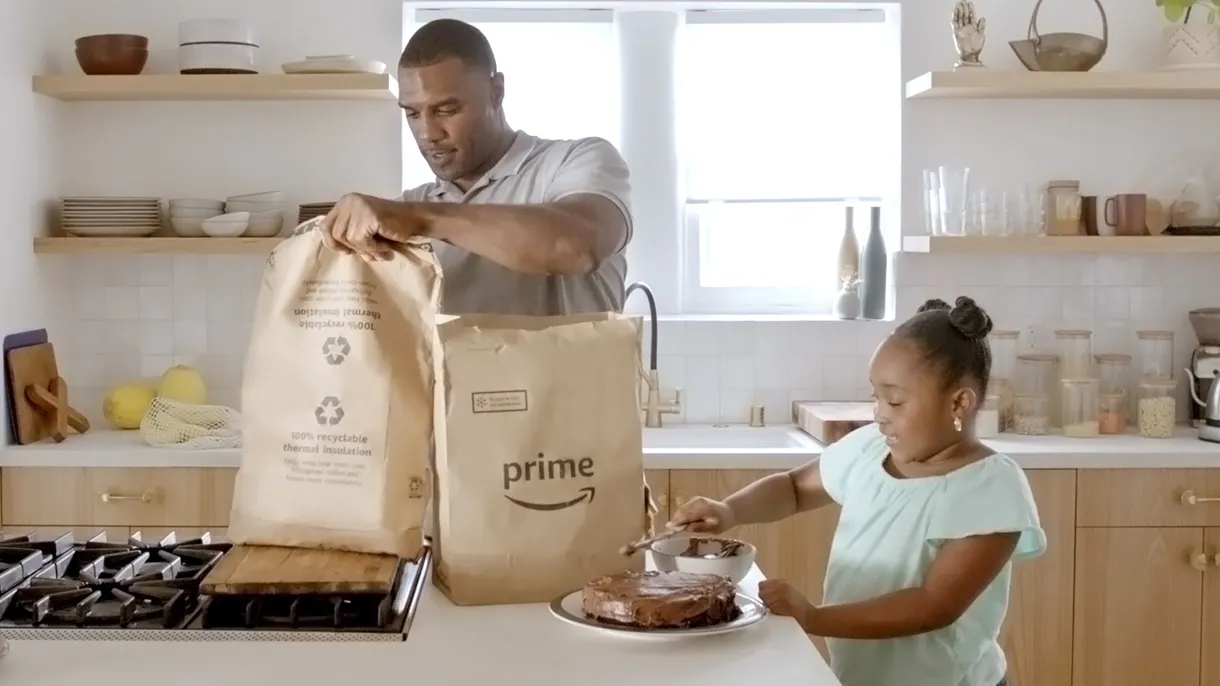
Like millions of people across the country, I go to Amazon’s marketplace and order life’s little necessities. Maybe it’s dental floss or garbage bags or any one of the hundreds of other items the e-tailer refers to as “everyday essentials” that shoppers often need in a pinch, but don’t have time to go out and buy.
Over the years, Amazon has honed its ability to get these items to people quickly, in many cases within an hour of ordering. That has cut into spending at grocery stores, which have long profited from shoppers tossing toothpaste, sunscreen and other nonfood items into their baskets.
Now, Amazon is turning the screw even further. When I go to check out that online order, a page pops up: Would I like to add some fresh groceries to go with my purchase?
From failed Amazon Fresh stores to its ho-hum e-commerce service, Amazon has struggled to crack the grocery code. But the company is nothing if not persistent, and the addition of fresh groceries to same-day ordering on its marketplace seems to be finally moving the needle.
That’s millions of Amazon customers who can now add apples or milk or the chicken cutlets they forgot to buy during the weekly grocery shop to their order of batteries and baby wipes. That’s at least one less item — and quite possibly one less trip — snatched away from competing grocers.
During Amazon’s most recent earnings call, CEO Andy Jassy noted that perishables are fueling strong gains in the company’s same-day delivery service. Fresh groceries and everyday essentials accounted for around half of all units Amazon sold in its third quarter.
“We really are excited that we feel like we found something with shipping perishables out of our same-day facilities,” Jassy said during the call.
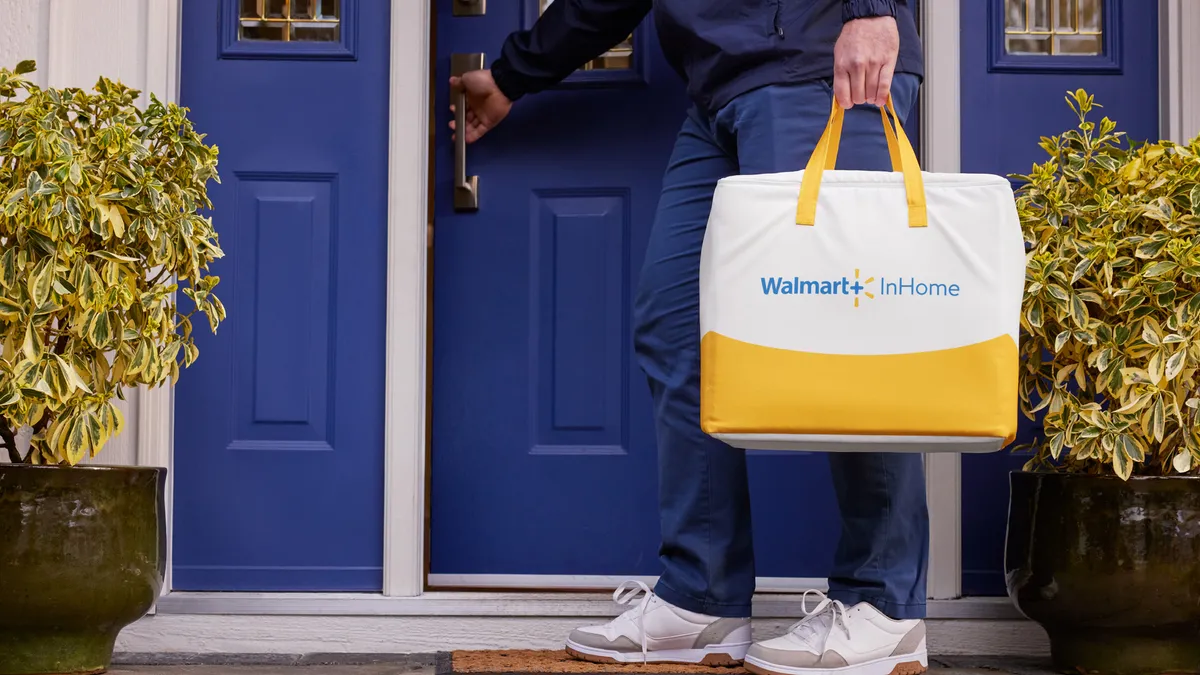
This breakthrough underscores how the future of online grocery belongs to the behemoths. Walmart, too, has been speeding up its delivery service across the U.S. and dabbling in futuristic concepts like in-home and drone delivery.
The innovations will keep coming from both companies as they duke it out, resulting in ever greater convenience for shoppers in a channel where convenience is everything. Faster delivery has produced considerable online grocery gains for Amazon and Walmart recently, with the latter approaching a 40% market share in the channel, according to a Brick Meets Click report from June.
If a shopper has a good experience with a retailer online, they’ll likely spend more of their dollars with that company. In an increasingly omnichannel industry, digital shopping is accelerating the consumer shift away from traditional grocers toward low-price and innovative competitors.
InstaDash to the rescue?
Can grocers do anything to answer Amazon and Walmart in digital?
DoorDash and Instacart would like retailers to believe they are their white knight. Executives with both tech firms have stated that their proposed combination would offer a level of scale and tech wizardry that grocers can harness to battle the behemoths.
“We feel very deeply that this combined ecosystem will allow us to further scale [technology investments] and lower that cost to serve on the delivery side through greater efficiencies, greater scale, and that is something that we would be able to then reinvest into the industry,” Instacart Chief Commercial Officer Ryan Hamburger told Grocery Dive earlier this month.
Grocers have relied heavily — perhaps too heavily — on Instacart to power their delivery and e-commerce services over the past several years. Instacart’s marketplace is a grocery shopping bazaar for users, and nearly 400 grocery e-commerce sites run on its Storefront Pro tool, CEO Chris Rogers said during a keynote at the Groceryshop conference in September. DoorDash has come on strong of late, adding loads of grocers and big names like Costco to go along with its vast catalog of restaurant partners.
But grocers should be careful about continuing to lean on these two companies — whether they operate separately or together — in the future. Both firms’ core model still involves sending workers into stores to shop orders as a proxy for the customer. That model works fine at low ordering volumes, but it becomes increasingly inefficient as sales rise (and they are rising rapidly). It also struggles to keep up with stock levels, often resulting in substitutions and the back-and-forth messaging that shoppers don’t like.
Can Instacart and DoorDash help grocers navigate the next generation of e-commerce fulfillment? It’s possible, but I wouldn’t bet on it. Just like I wouldn’t bet on their interests not conflicting with grocers as they continue to jockey for advertising dollars and the critical consumer data that will undergird artificial-intelligence-enabled shopping.
In the current operating environment, with unit sales declining and shoppers feeling financially pinched, grocers seem to have put e-commerce investments on the back burner. But online sales are growing at a more than 20% rate each year and account for around one in every five dollars spent in the industry, according to Brick Meets Click.
The time to think about the future of digital isn’t a few years down the road, when conditions hopefully normalize — it’s now.
Burnishing the digital brand
While Amazon and Walmart have been busy innovating in e-commerce, grocers have been backpedaling.
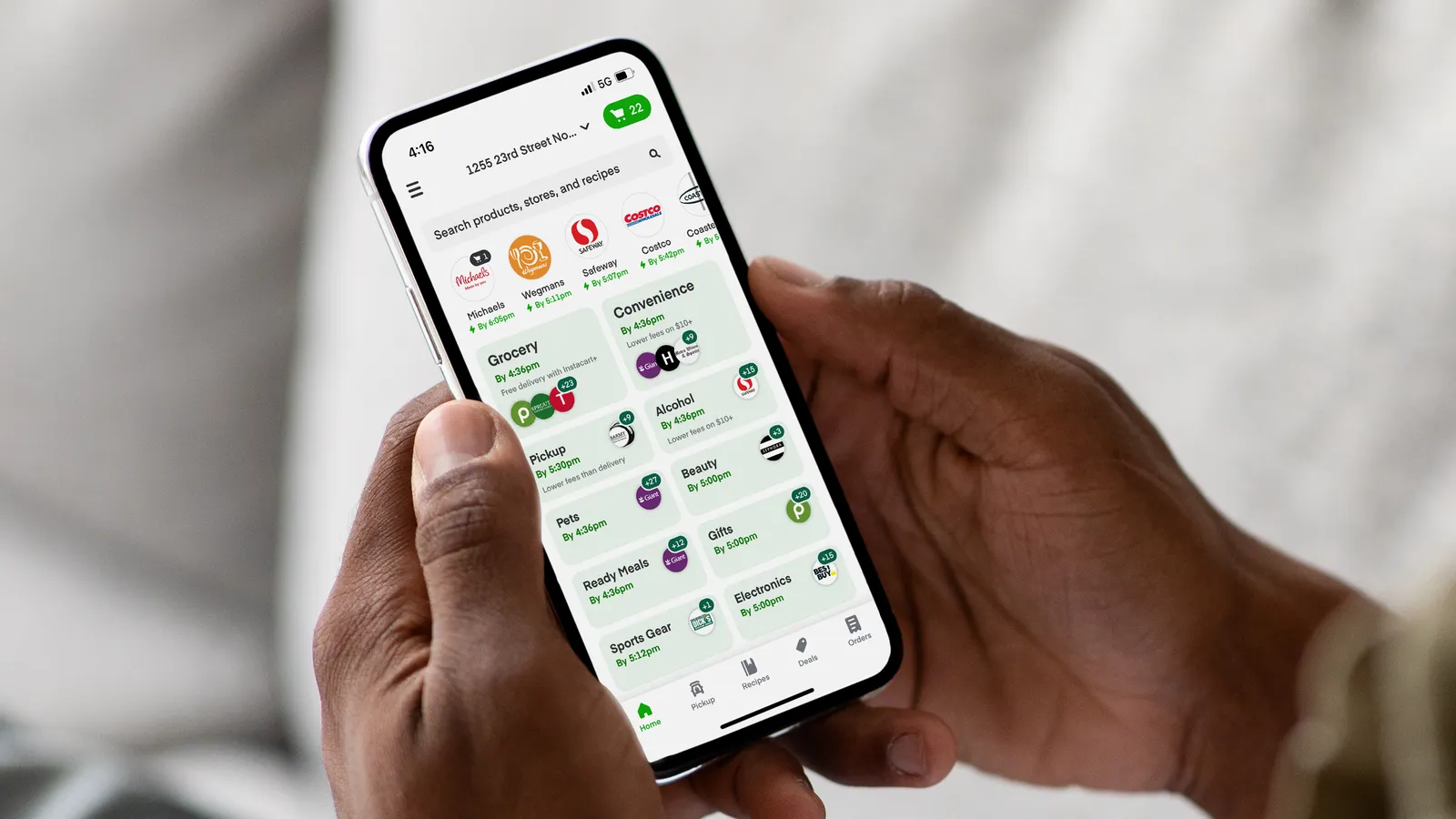
Specifically, they’ve been cutting prices on the goods they list on Instacart’s vast marketplace to bring them in line with in-store prices — a move ostensibly aimed at helping retailers retain valuable digital customers, but that erodes their margins because they’re swallowing the fees they pay to Instacart.
On a superficial level, the move highlights how price-sensitive shoppers are and the ease with which they can shift their online grocery dollars to other retailers. But on a deeper level, it exposes the degree to which grocers still rely on these marketplaces for digital engagement.
If those digital customers are so valuable, why aren’t grocers taking more steps to own the relationship with them? Why give consumers an additional reason to shop on a third-party marketplace where retailers’ brands are secondary to the digital shopping mall experience?
While grocers have neither the scale, resources nor the expertise to compete directly with Amazon and Walmart in e-commerce, they do have valuable relationships with their shoppers that they can deepen through digital.
Matt Van Gilder, the former director of e-commerce at SpartanNash and now head of omnichannel with consulting firm NexChapter, told me grocers have made solid progress in recent years building first-party online platforms.
However, that’s just the first step. As competition rises and marketplace companies grow ever more powerful, grocers need to entice shoppers onto their first-party platforms, where the margins are better and they can gather valuable shopper data.
Grocers need to study their customers’ shopping journeys, see where their main challenges lie and consider how digital tools could help solve them, Van Gilder said. They need to continue customizing their online storefronts for users, reward them for shopping online and build retail media experiences that actually help customers rather than just maximize revenue.
Most important of all, grocers need to see digital shopping as more than just a separate business, but as a core piece of their customer loyalty and retention strategies.
“It’s more than just e-commerce,” Van Gilder said. “Now we’re talking about loyalty and incorporating the platform into the overall customer journey and experience to help facilitate their buying and making it easier for them.”
I think grocers understand this point on some level, given how much they talk about omnichannel shopping. But I’m not sure they appreciate just how important it will be and how hard they will need to work, even amid a challenging macroeconomic period, to get shoppers transacting digitally with them. And how important that direct relationship will be as AI-enabled shopping, which runs on consumer data, becomes more prominent.
Right now, retailers are watching as Amazon, Walmart, Instacart and DoorDash continue to set the rules of grocery e-commerce. It’s about time grocers started clawing back some of that power for themselves.