Pardon the Disruption is a column that looks at the forces shaping food retail.
I can’t fault grocers for lack of effort.
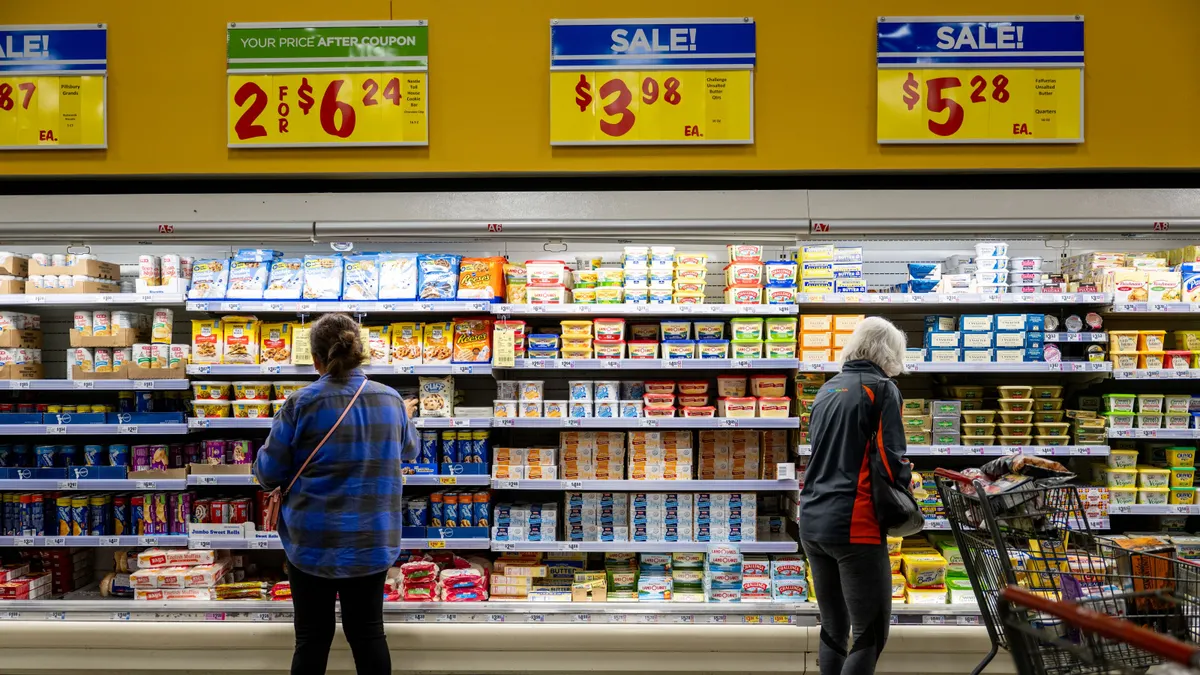
Over the past several months, as economic pressures have rained down on consumers, food retailers across the country have gone all in on savings. Walk into just about any store and you’ll be awash in yellow tags and red tags and all the signage reminding you that this store has low, low, low, low (did we mention low?) prices.
Grocers have also revamped their loyalty programs to make it easier to rack up rewards, offered fuel savings to help people fill up their tanks and touted price drops on key items.
But that’s not all! Knowing low-price messaging alone rings hollow to many shoppers, retailers are trying to show value that goes beyond dollars and cents by offering freshness guarantees, spotlighting their meal solutions and putting more marketing muscle behind their private labels, among other measures.
Despite all these efforts, the clouds continue to darken with regard to consumer spending. An analysis by Bain & Company and NielsenIQ shows a prolonged decline in monthly unit sales. In just about every month over the past year, unit sales have dropped, and the losses seem to be accelerating this year, with the past three months showing year-over-year unit declines of around 2% on average.
Here’s the kicker, according to Bain: While inflation helped cover for these unit losses last year, the declines are steep enough now to be a drag on business.
“Pricing growth and inflation can no longer hide that shoppers are buying fewer items,” the firm’s report stated.
Unit sales have declined each month this year except for one
Grocers are now taking on more water than they can bail out. And relief likely isn’t coming any time soon, since it isn’t just one factor that’s exerting all that pressure on consumers. It’s high gas prices, a pullback in SNAP benefits and the steady drumbeat of rising prices across consumers’ lives. And oh yeah, housing costs are out of reach for many. And healthcare insurance premiums continue to rise.
According to Bain’s report, 80% of consumers say they’re trying to spend less and 28% say they’re trying to pull back on how much they spend on groceries.
A recent Washington Post-IPSOS poll paints a similarly bleak picture. Sixty-six percent of consumers interviewed in that survey said groceries have become unaffordable. Even among households with incomes over $100,000, more than half (56%) of respondents said the price of groceries is too high.
This is an incredibly difficult operating environment for retailers of all types, but particularly for conventional grocers and independent operators that can’t even get close to matching prices with Walmart, Amazon, Aldi and Costco.
Not only that, but these low-price retailers are doing a better job than conventionals of displaying their value to shoppers. Aldi is driving excitement with its store openings and savvy social media game. That New York City location it just debuted isn’t just a grocery store — it’s also an interactive billboard in the heart of Times Square. Walmart is leveling up its stores and investing in private label, while Amazon is asking millions of online shoppers if they’d like to add fresh lettuce and a carton of milk to go with the earbuds and the pack of batteries they’re about to purchase.
So where does that leave retailers? What else can they do in this pressure cooker of an environment? As someone who closely follows the winners, losers and the latest trends in this industry, I have a few thoughts.
Solve actual problems for shoppers
Retailers are valuable to shoppers when they solve daily challenges. This could mean helping them find great snacks for their kids, shaving time off dinner prep or helping them put together a killer summer cookout.
Trader Joe’s, for example, excels at giving home cooks a leg up. From minced garlic to microwaveable brown rice and 10-minute farro, the grocer focuses a great deal of its curated assortment on making meal prep faster and easier.
Grocers should talk to their customers and find out what their biggest challenges are. And then they should promote and discount those items that help solve those daily conundrums.
Tell a “value story”
In its report, Bain said all the discounts, loyalty updates and strategic moves centered on value need to ladder up to a big-picture narrative.
“The edge goes to [retailers] that price sharply on products shoppers notice most and that use promotions, loyalty, and private brands with precision to tell a value story shoppers can trust,” the firm stated.
What does a value story look like? To me, it means rooting savings in the identity of a company. Fareway, which operates around 150 stores in the Midwest, prides itself on being a destination for fresh meat and focuses a lot of its discount messaging on that department. A recent company Instagram post listed its “famous meat counter” as one of five things the retailer offers that are worth spending on.
A blizzard of sale tags isn’t particularly memorable to shoppers. A good story, however, will stick with them.
Don’t forget about the store experience
It’s easy for grocers right now to think that price — and price messaging — is everything. But companies simply can’t overlook the value of giving their customers a pleasant, reliable shopping experience amid all the economic turmoil.
Most major retailers seem to grasp this on at least a basic level. Ahold Delhaize USA banners, including The Giant Company, have steadily updated their stores.
What really caught my eye recently, however, was news that Kroger plans to roll out Wine Shops, in-store departments where customers can not only buy bottles but attend tastings and get advice from wine stewards. Yes, this is a move focused on a premium offering at a time when people are trying to save money, but it gives people a reason to visit stores and do more than just fill up a cart.
Imagine if the grocery store was a respite for shoppers amid all their economic worries. Now that would be offering a true value.