Number Sense is a regular column that uses data to help understand the grocery landscape.
By almost any measure, Albertsons is big. As the nation’s second-largest traditional supermarket operator, the company runs more than 2,200 stores under 22 banners in 35 states and Washington, D.C. Add to those statistics the fact that Albertsons brings in more than $80 billion in annual sales, employs about 280,000 people and operates 19 manufacturing facilities, and someone with an untrained eye could be forgiven for assuming that such a sprawling enterprise would be worth a hefty sum.
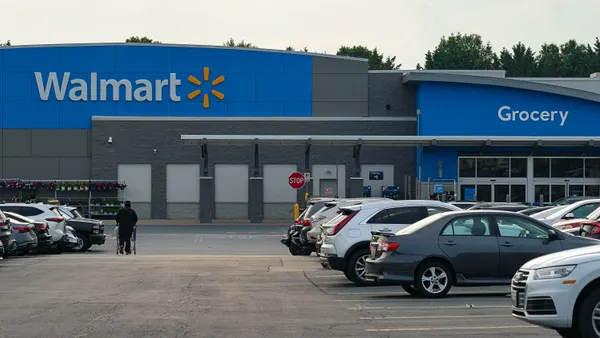
But a look at Albertsons’ stock market capitalization — the total value of its outstanding shares — tells a much different story. Through that lens, Albertsons appears a whole lot smaller: As of Monday, the company is worth a little under $7 billion — far less than Walmart’s current market cap of about $1 trillion. Put another way, Walmart is currently worth more than 140 times as much as Albertsons.
The math is almost as striking when you hold Albertsons up to Costco, another key player in the grocery industry. As of Monday, Costco’s market cap is approximately $460 billion — about 65 times as much as the value investors assign to Albertsons.
Albertsons isn’t alone among conventional grocers in commanding a stock market valuation that pales in comparison with what Walmart and Costco are worth, although the comparisons aren’t quite as breathtaking.
Kroger, for example, has a market capitalization of about $40 billion — just 4% of Walmart’s market cap. Meanwhile, Ahold Delhaize’s American depository receipts, which allow investors to buy a stake in the company in the United States even though the Dutch supermarket operator's shares are listed in Europe, value the grocer at about $31 billion. Both of those companies control a major share of the supermarkets in the United States, with Kroger’s more than 2,700 grocery stores making it the largest supermarket chain in the country.
Walmart is worth more than the nation’s three largest conventional supermarket operators combined
Of course, Walmart is a significantly larger company than any of the supermarket chains it competes with for shoppers’ grocery dollars. The retailer has more than 4,600 supercenters in the U.S. alone, and its net sales from just those operations topped $480 billion during the company’s latest fiscal year. But while Walmart’s massive size is hard to ignore, the path the company’s stock price has followed in recent years makes clear that investors are simply more bullish about its prospects than they are about the traditional grocers whose very existence Walmart threatens.
Walmart’s stock price has risen by more than 150% over the past five years, and its shares are up by well over 10% so far this year. The company’s stock growth during those periods has outperformed that of Kroger, Ahold Delhaize and Albertsons, magnifying the gap between the mass retailer and the conventional grocers.
Remarkably, Walmart’s market capitalization is more than 12 times the size of the market caps of Kroger, Albertsons and Ahold Delhaize combined.
Walmart’s stock has significantly outperformed shares of Kroger, Ahold Delhaize and Albertsons over the past five years
The comparison between Albertsons and Walmart is especially noteworthy. While Albertsons has seen its sales fall in recent quarters, Walmart has posted a markedly better performance. In a reflection of Albertsons’ weak financial results, the company’s shares have slid about 20% since the start of 2026 and shed more than half their value over the past five years.
Kroger has done significantly better than Albertsons, with its shares up around 7% so far this year and about 60% over the past five years.
Target is perhaps the most vivid example of a publicly traded company with a presence in the grocery retail sector that has managed to turn around investor sentiment in 2026. After sagging during much of the past five years as the company’s performance raised questions among investors, Target’s stock price has soared by around 60% since the beginning of January.
That has pushed Target’s market cap to about $70 billion and reflected strong investor sentiment following the arrival of Michael Fiddelke as the company’s CEO in February. Target’s financial performance improved markedly in recent months, with its grocery operations helping to power its turnaround.
Sprouts Farmers Market’s stock performance is on an opposite trajectory. The produce-focused specialty retailer’s share price shot up more than 700% between 2020 and early 2025 as investors bought into its rapid growth story. But as Sprouts’ lofty comparable-store sales lost their momentum, its stock price lost much of its value — and has declined about 30% this year alone. But some of that aura remains: Sprouts’ shares more than doubled over the past five years.
In a stark illustration of the disconnect between how investors value companies and the size of their operations, Sprouts’ approximately $5 billion market cap is only a little smaller than the valuation the stock market currently assigns to Albertsons, even though Albertsons has five times as many stores and annual sales that are nine times larger. That comparison alone underscores just how hard the nation’s supermarket companies need to work to impress investors.