Dive Brief:
- Kroger’s planned acquisition of Giant Eagle could increase concentration in the grocery industry and harm consumers, Sen. Elizabeth Warren wrote in an Oct. 5 letter to the Federal Trade Commission and the Department of Justice.
- The $1.65 billion deal, which the grocers announced this summer, is one of three major proposed acquisitions in the food industry that would each “raise competition concerns,” Warren claimed.
- Together, the mergers “appear to reveal a growing consolidation trend, driven by weak antitrust enforcement under President Trump, that raises costs and hurts consumers, restaurants, and small businesses,” Warren wrote, asking the agencies to “carefully scrutinize the potential anticompetitive implications under the three pending transactions.”
Dive Insight:
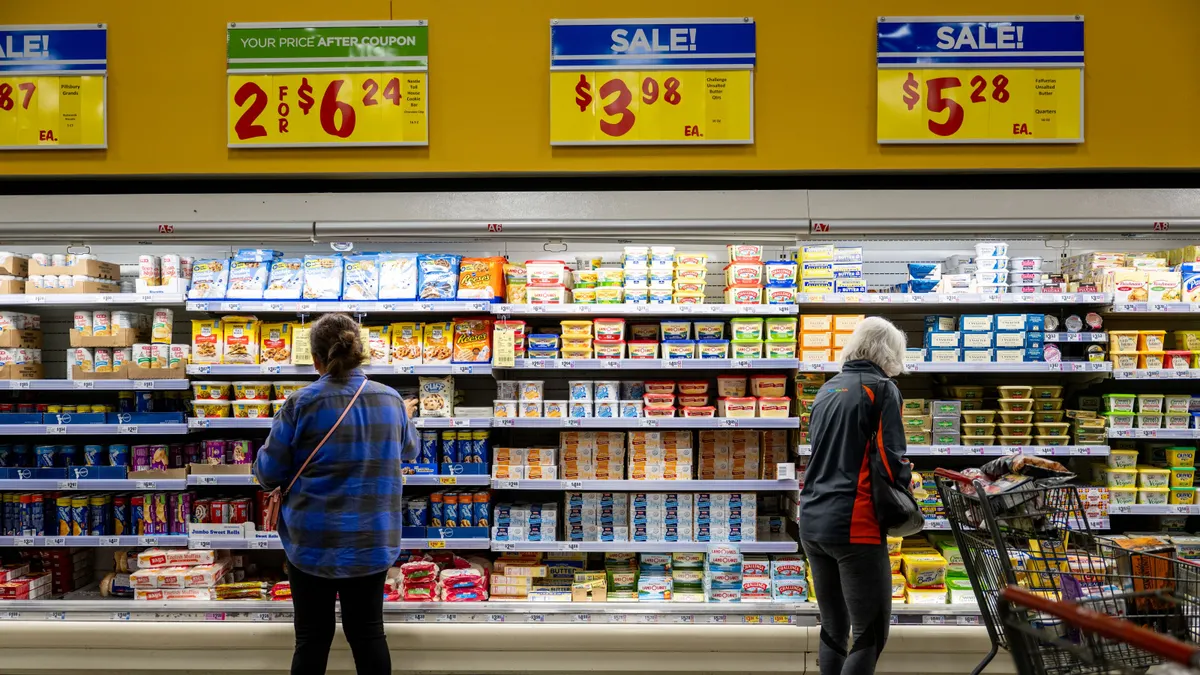
Warren’s letter to the two regulatory bodies that assess the antitrust implications of proposed M&A comes as the grocery industry continues to grapple with ongoing concerns over grocery affordability.
“[F]amilies are paying higher prices for food and groceries while dominant food industry conglomerates continue to rake in sky-high profits,” Warren, a Democrat from Massachusetts, wrote in the letter.
Kroger’s plan to buy Giant Eagle as well as Sysco’s proposed acquisition of Restaurant Depot, and McCormick’s planned purchase of Unilever’s food business could further consolidate the food and grocery markets, leading to increased prices for consumers, store closures and lost jobs, Warren wrote.
Warren raised concerns that the large store footprint of Kroger, as well as its overlapping presence with Giant Eagle in several markets, could lead to reduced competition in certain areas.
While Kroger’s plan to merge with rival Albertsons was struck down by a federal and a state court, Kroger’s plan to buy Giant Eagle appears poised for a smoother regulatory review, in part due to the tightened scale of this deal, antitrust lawyers told Grocery Dive.
Kroger has said it plans to divest an unspecified number of stores in its bid to win regulatory approval for the Giant Eagle deal. Warren pointed to the divestiture debacle tied to Albertsons’ purchase of Safeway in 2015 as well as the closure of nearly 20% of the stores divested in the 2016 merger of Ahold and Delhaize.
If Kroger provides a robust store divestiture plan in markets where it overlaps with Giant Eagle, the grocers likely have a solid chance of alleviating regulatory concerns, Spencer Waller, a professor at Loyola University Chicago School of Law who specializes in antitrust law, told Grocery Dive earlier this year.
In announcing the deal, Kroger CEO Greg Foran said that the Giant Eagle acquisition would expand the supermarket giant’s reach into “attractive adjacent markets.”