Publix has long enjoyed an enviable position in the U.S. supermarket industry. People love to shop in the retailer’s stores and crow about its customer service — and it reliably draws shoppers in with offerings like its highly regarded sub sandwiches.
Those advantages have helped Publix dominate the grocery industry in its home state of Florida, which is by far its largest market. Publix’s strong reputation has also helped fuel the regional chain’s expansion in other Southeastern states, like Kentucky and Virginia. The chain has drawn praise from analysts for its ability to charge higher prices than competitors.
But while Publix’s powerful brand and rock-solid customer loyalty have helped it thrive for decades, the employee-owned company’s time-tested recipe for success has not insulated it from the forces now shaking the grocery industry.
In a stark illustration of that, Publix reported a decline in comparable-store sales during its most recent quarter, continuing a slide that began during the second half of 2025. The company’s net sales have also lost steam over that period, edging up by only 1% during this year’s second quarter of this year, which ended June 27. By comparison, Publix’s sales rose 7.3% and its comps grew 6% during the second quarter of 2025.
Those trends mirror the weakening sales other supermarket chains have posted in recent quarters. Kroger, for example, posted nearly flat comparable-store sales growth during its most recent quarter, while Albertsons reported negative same-store sales when it published its latest financial results.
“I think what we can discern is that Publix overall, including in core grocery, is fairly soft, and I think that does raise some questions around whether the proposition is still delivering, whether consumer behaviors are changing,” said Neil Saunders, managing director of GlobalData Retail. “That is very much in line with what a lot of other mainstream grocery stores are seeing, so I think there’s definitely a dynamic there that’s unfavorable for Publix.”
Publix’s sales growth has been steadily declining
In its latest earnings statement, Publix said its sales have been under pressure because of the Inflation Reduction Act, which has reduced Medicare reimbursement rates for certain drugs and caused headaches for many grocers. Publix also pointed to “economic conditions impacting consumer spending” as a factor in its performance during the second quarter.
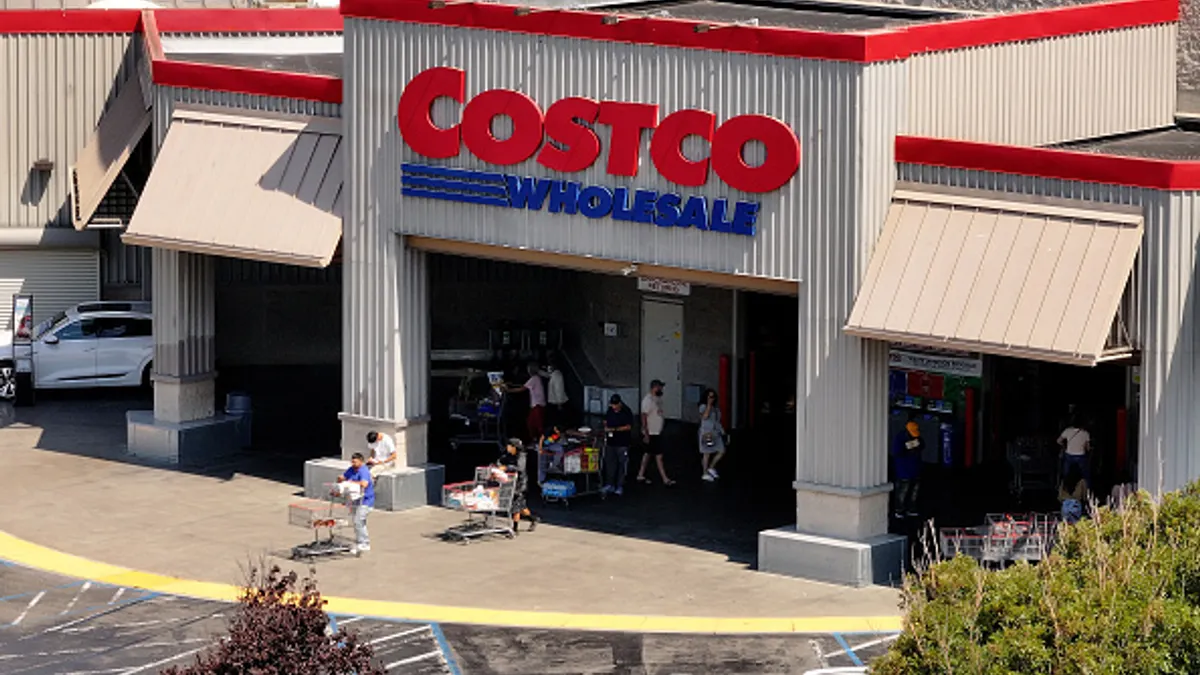
Publix is encountering these challenges as it tries to hold onto sales from shoppers that are increasingly turning to retailers like Walmart and Costco for many goods, especially staple items.
“They do have a point of difference in the market, but unfortunately, in the present market, even that is not always sufficient to drive the sales growth because the volumes are under so much pressure,” Saunders said, referring to Publix.
These competing chains, which also include Trader Joe’s, Aldi and Amazon, are relentlessly pressing ahead with their value propositions, according to analysts.
“It has historically been that conventional grocers competed against conventional grocers, and so you needed to be a better conventional grocer to win. That’s increasingly not the case anymore,” said Tom Furphy, a former Amazon and Wegmans executive who is CEO and managing director of venture capital firm Consumer Equity Partners. “Competition and real market share is coming from [formats] that stand for something very definitive.”
Furphy said that while Publix continues to command a large share of the grocery market in areas where it runs stores and remains a standout operator, it will need to refocus its pitch to shoppers to keep its business from eroding further.
Scott Mushkin, CEO of R5 Capital, noted that Publix is just as susceptible to the dynamics that are crimping sales growth across the food retail landscape. Those headwinds include the rising popularity of GLP-1 medications, which are leading people to cut back on how much food they buy and gravitate to different products, as well as demographic shifts that are holding back population growth, he said.
Another factor Publix is dealing with is that Walmart, Amazon and Costco have all raised their games in grocery, allowing them to take market share and strengthen ties with shoppers, Mushkin said. For instance, Amazon improved its same-day fresh delivery service and Walmart enhanced its fresh selection, he said.
“They’re just taking a lot of share in a market that doesn’t have any to give,” Mushkin said.
Meanwhile, Walmart’s delivery capabilities mean shoppers can make regular purchases from the retailer without ever going into its stores, Mushkin noted, pointing to its Walmart+ subscription service as an especially potent tool to incentivize customers to make e-commerce purchases.
Mushkin added that his firm’s research shows that Amazon has become particularly aggressive in how it prices groceries, adding to the pressure it poses to other grocery sellers.
“It’s a really tough macro environment. I think it’s the toughest I’ve ever come across in 30 years for traditional supermarkets,” said Mushkin.
Still, Publix’s history of success and strong brand position it well to overcome the headwinds conventional grocers are dealing with, Furphy said — if it is able to pivot.
“There is a great opportunity to be a really trusted, valuable resource to the shopper,” Furphy said. “You’ve got to get the basics such that you’re able to offer compelling value to kind of stem the share loss … and then maybe some new innovative programs to begin to build share back up.”
Publix stands to benefit from doubling down on areas like fresh and other perimeter departments where it is already strong while also stepping up its efforts to innovate and experiment, Furphy said.
“I think that good, strong regionals — Publix is one of the greatest examples of them — still have a great opportunity to come out on top,” Furphy said. “It’s not going to be through the traditional playbook. They’re going to have to shuffle the plays around a little bit and shift strategies a little bit to focus on the areas that they can undisputedly win.”