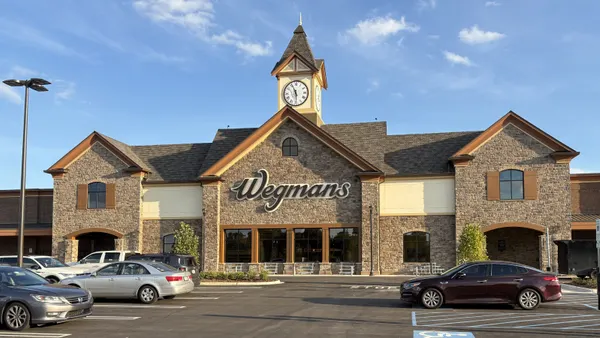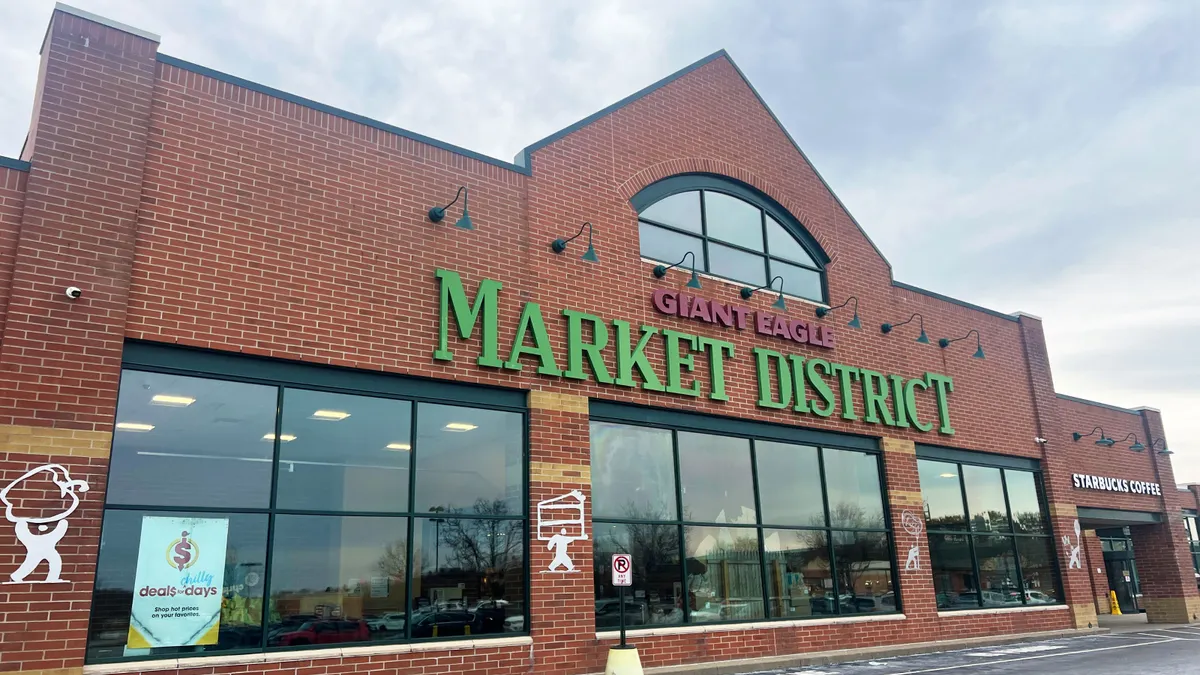
As Kroger tries to win government approval to take over Giant Eagle, the grocer is likely to confront demands from regulators to conclusively demonstrate that the deal will not harm competition in the markets where the supermarket chains operate, according to antitrust attorneys.
But unlike Kroger’s ill-fated effort to merge with Albertsons — which ran into a buzzsaw of opposition from the Federal Trade Commission and wound up in court — the company’s plan to absorb Giant Eagle should be much easier to push to the finish line, these experts said.
In addition to the fact that the Giant Eagle deal involves far fewer stores than the much larger Albertsons transaction, the change in presidential administrations since Kroger and Albertsons abandoned their plan has dramatically changed the dynamics for would-be merger partners, said Barry Barnett, a partner at law firm Susman Godfrey who handles antitrust cases.
A key factor is that the FTC — which, according to experts, is likely to handle Kroger’s application to acquire Giant Eagle — is operating in a political environment where formerly independent agencies are more answerable to political considerations than they were under the Biden administration, said Barnett.
“I expect that they’re [going to be] much more friendly towards the merger, not because of anything having to do with the merger, [but] just because they’re friendlier to mergers,” Barnett said.
Through its $1.65 billion deal to buy Giant Eagle, announced July 1, Kroger is angling to acquire a chain that operates just under 200 stores across Pennsylvania, Ohio, West Virginia, Maryland and Indiana. Only about 7% of those supermarkets are within 5 miles of a Kroger location, according to an analysis of the deal from Thomas Paulson, head of market insights at location data firm Advan Research.
“Advan’s data indicates that Giant Eagle’s business is stable and performing well, and it’s a nice tuck-in/expansion acquisition for Kroger,” Paulson wrote in a report shared by the firm. “The store footprint and customer mix match up well.”
Kroger said it intends to “make limited Giant Eagle store divestitures,” without indicating how many stores it plans to unload, where they are located or whether it has identified a potential buyer.
Spencer Waller, a professor at Loyola University Chicago School of Law who specializes in antitrust law, said that under the Trump administration, the FTC has indicated interest in reaching settlements with merger partners rather than pursuing litigation, as it has in the past. That suggests that as long as Kroger presents a robust plan to divest stores in areas where its operations overlap with Giant Eagle, the companies likely have a good chance of assuaging concerns that their combination could hurt consumers, Waller said.
Kroger and Giant Eagle have significant overlap in Columbus, Ohio
Obstacles could still lie ahead for the grocers
Waller, who served as an adviser to the FTC under the Biden administration, added that Kroger is still likely to face what the FTC calls a second request for information as it works to secure approval for the Giant Eagle deal, as the supermarket chain did during the Albertsons merger review.
The agency only makes such a request, which halts the clock while merger partners gather and present more details, in rare cases, but doing so can demonstrate that regulators are taking a serious look at a transaction without necessarily indicating that it is imperiled, Waller said.
Waller noted that a second request from regulators can still create problems for companies that want to combine, because an extended review process allows time for competitors to respond while delaying the merging parties from coordinating their operations.
Waller added that a potential complication for Kroger is that state attorneys general could oppose the merger or request that the company come up with a more robust divestiture plan. He pointed out that legal officials in several states joined the FTC in filing suit to force Kroger and Albertsons to abandon their merger, with officials in Washington state and Colorado filing separate lawsuits to block the deal.
“The price of everything has gone up, but where do people feel it? They feel it in their rent, their groceries and their gas,” Waller said. “And so even your average relatively conservative attorney general or governor will certainly think hard about whether this is going to make things worse for consumers in their state.”
Jeffrey Cross, an antitrust attorney who is of counsel to the law firm of Smith, Gambrell & Russell, said Kroger’s main challenge will be to show that its deal for Giant Eagle will not unduly distort competition. He said Kroger should approach the FTC with a well-developed divestiture plan, including details about a buyer equipped to mount robust competition through stores it would take over.
Cross noted that Kroger is in a position to make Giant Eagle more competitive by investing in the chain, which he said would bolster the company’s ability to satisfy regulators.
If the grocers divest in areas where there’s overlap, and Kroger shows that it will be able to strengthen Giant Eagle, “this should go through,” Cross said.