Thomas Weinandy, who has a doctorate in applied economics, is principal research economist at technology company Upside.
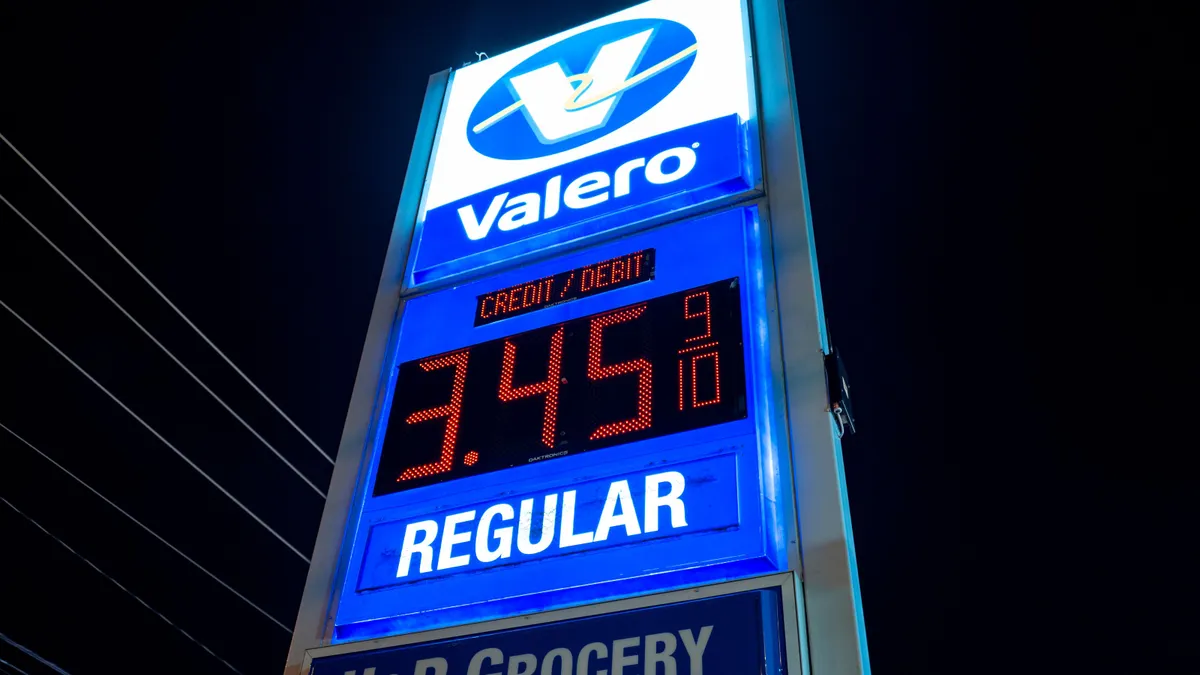
Gas prices have started climbing again. After sliding through June, the national average ticked back up as the U.S.–Iran ceasefire faltered and traders watched the Strait of Hormuz — the same tensions that pushed this spring's spike to $4.56 per gallon in May.
The price of gas is one of the only economic indicators people actually watch. Like the price of eggs or a gallon of milk, it’s shorthand people use to judge whether times are good or tight. So when it climbs, they feel it fast and start adjusting that very same week.

Grocers can watch that same number. The harder question is what a spike actually does once it reaches their aisles. Higher pump prices clearly reshape how people shop, from how often they come in to what they put in the cart, but the size and direction of that effect have never been pinned down with much precision until now. A grocer who knew exactly how a spike moves the basket could see the shift coming instead of reacting after the fact.
So we measured it. We ran a survey in April, in the middle of that spike, with gas above $4 a gallon. That let us catch shoppers reacting in real time, not remembering how they felt months later. Here’s what we found, and what grocers could have done differently.
What happens in the aisle when gas gets expensive
When gas gets expensive, shoppers don’t overhaul their grocery habits overnight. They make a series of small, sensible adjustments, three of which came through clearly in our study.
They consolidate their trips. With every mile costing more, shoppers cut down on driving. About a third told us they were making fewer grocery runs specifically to save on fuel, and a quarter said they were choosing whichever store sat closest to their normal route. Fewer, more deliberate trips became the norm.
The trips that remain get leaner. More than a third of shoppers stopped buying “extra” items like snacks and specialty foods, and a similar share switched from name brands to store brands.
Grocery spending drops, just not by much. We found that when gas prices go up, grocery revenue goes down. The popular idea is that grocers come out ahead because people eat out less and cook more at home, but that notion isn't supported by the data.
Groceries aren’t a luxury, so people keep buying them, and spending falls reliably but modestly. What's interesting is how.
What our study showed is that a fuel spike sets off a handful of very predictable adjustments in how people shop — shifts a grocer who sees them coming can prepare for, rather than just take the hit.
The numbers behind the shifts are telling
The clearest evidence comes from the transaction data. Across three years and more than 1,000 stores, every 1% increase in gas prices lined up with a 0.51% drop in grocery visits and a 0.59% drop in grocery revenue. Revenue fell faster than visits, which tells you the damage isn't only fewer people walking in. The baskets that leave the store are lighter.
Two things are worth noting about the size of that effect. It showed up reliably from even small changes in gas prices and not only during big price swings. Second, consumers' moderate reaction wasn’t one-to-one, as you would have expected from a necessity. Households don't abandon the grocery store when fuel climbs. They keep coming and quietly spend less, which makes the drag persistent and easy to miss.
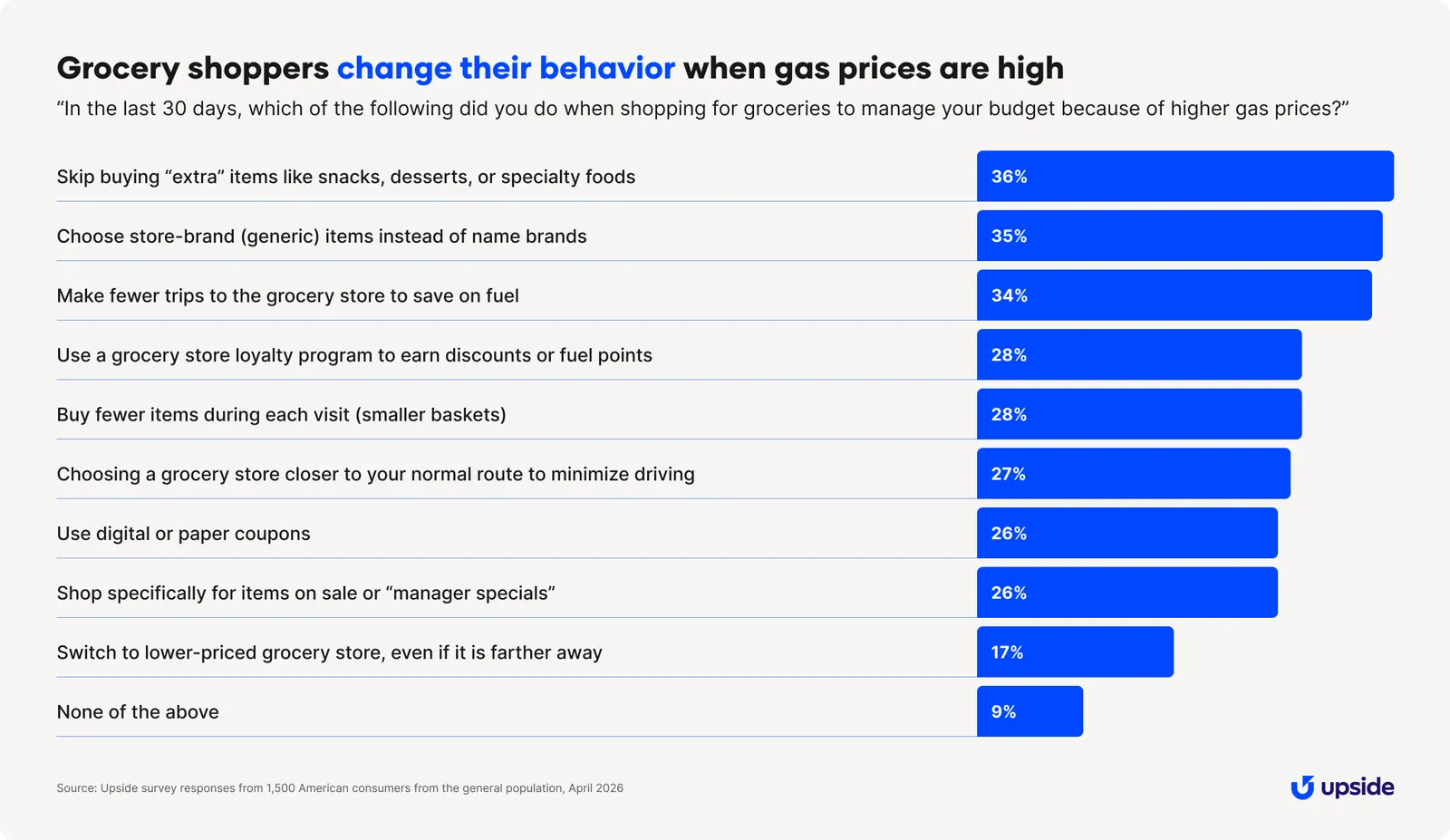
The survey data shows how wide that belt-tightening runs. Of the 10 tactics we asked about, eight were each used by more than a quarter of shoppers, and fewer than one in 10 had tried none of them. This isn’t a fringe of extreme budgeters trimming the edges. It’s shoppers buying more of their food at the grocery store while spending less money doing it. As one shopper we surveyed put it, “I now use coupons and do my grocery shopping at four different places.”
At first, the value hunting favors discounters — when shoppers go looking for the lowest price, the stores they already trust on price get the first look. As Collage Group's Mike Black told Grocery Dive, it’s the difference between having to prove value and already being believed. But “value” isn't the same as “cheapest.” What shoppers say they want is the most for their money, and that’s a contest a store can still win without being the low-price leader.
How grocers can get ahead of the next fuel spike
A sustained fuel price spike is one of the few occasions when consumer behavior becomes genuinely predictable. That predictability is worth something if a grocer treats the spike as a signal to act on rather than a storm to wait out.
Read the sign early. A local fuel price that climbs and holds is your advance notice. Expect leaner baskets that same week and in the weeks that follow, and get your assortment and plans set before the softer trips arrive.
Put value where it actually moves a trip. A spike is the rare stretch when you know which way behavior is bending, so it’s also when a well-aimed offer earns the most and a blanket one wastes the most. The shoppers worth reaching are the ones on the margin — deciding between you and the store down the road — not the regulars who were coming anyway. Spend where it changes the trip, not where it subsidizes one you’d have gotten regardless.
A fuel-driven dip usually isn’t yours to fix. A soft week during a spike is often the whole market moving at once instead of any single store losing ground. When fuel is the cause, cutting prices won’t lift the dip.
Read the sign, don’t just watch it
None of this requires a subscription or a forecasting team. When a local fuel price climbs and holds, that’s your advance notice. Leaner, less frequent trips tend to follow in the weeks afterward. It’s the window when a well-aimed offer does the most work, and when a soft week is likely the whole market moving, not any one store’s problem. The gas price is already up on the sign, weeks before its impact on consumer spending reaches the sales data. The grocers who come out ahead are the ones reading it, not just watching it.