As BJ’s Wholesale Club debuts its first location in Texas this week, the club retailer is looking to drive customer interest by leaning into a high-profile measure of affordability that has lately become even more prominent: gas prices.
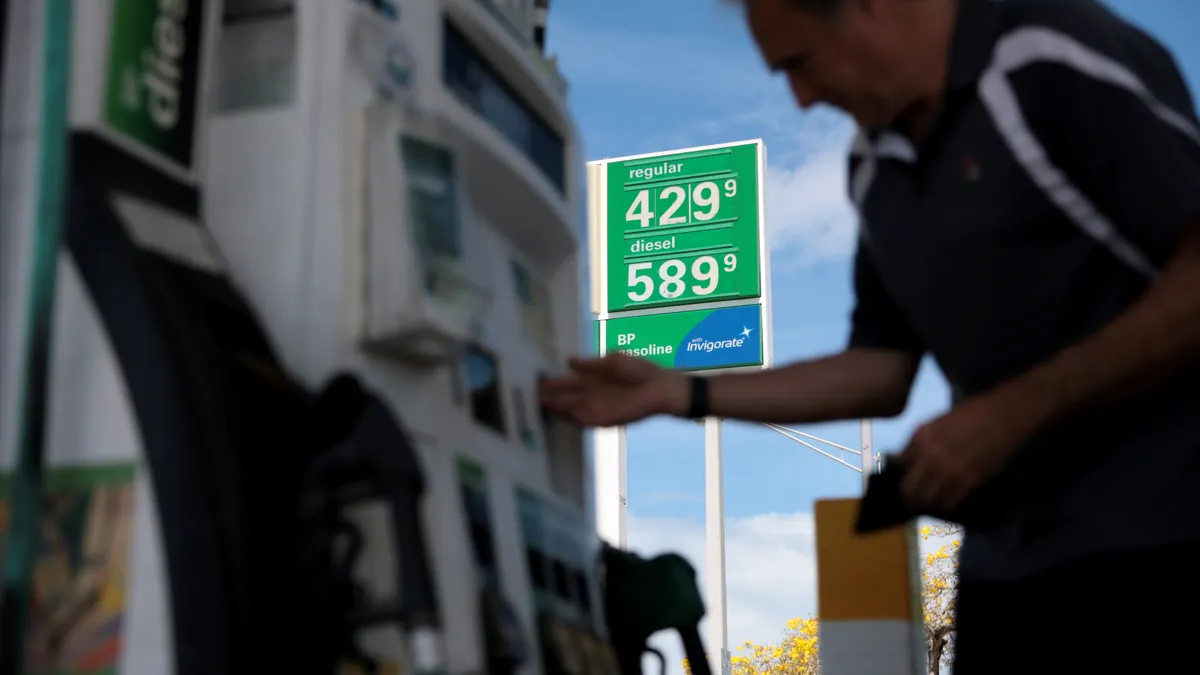
On Wednesday, the retailer will sell regular gas at the BJ’s fuel station outside the new store near Dallas for just $2 per gallon — well below the statewide average of about $3.60 per gallon as reported by AAA, and less than half of the $4 national average.
While BJ’s attention-grabbing promotion is set to last for only a day, it highlights an issue that economists expect to remain top of mind for consumers for much longer.
Gas prices surged quickly after the Iran war caused oil prices to skyrocket, and while prices for the commodity have bumped around in recent weeks as the conflict has unfolded, they remain sharply above their prewar levels. Even if oil prices lose momentum during the coming weeks, prices at the pump are likely to subside much more slowly as gas station operators seek to recover losses they incurred by holding down increases when the energy crisis began, The New York Times reported.
Grocers have recorded only a muted impact from the increase in gas prices over the past few weeks, according to industry executives.
Albertsons is seeing shoppers show signs of stress as they deal with higher gas prices, but the impact is concentrated among those at the lower end of the income spectrum, CEO Susan Morris said during the company’s earnings call last week. The grocer has responded by strategically adjusting prices while limiting the impact to its own finances, she said.
“We’re trying to improve the value perception where it changes behavior … while protecting long-term returns through productivity funding,” Morris said.
Albertsons also expects an “uplift” in its fuel rewards program because of the increase in gas prices, Morris said.
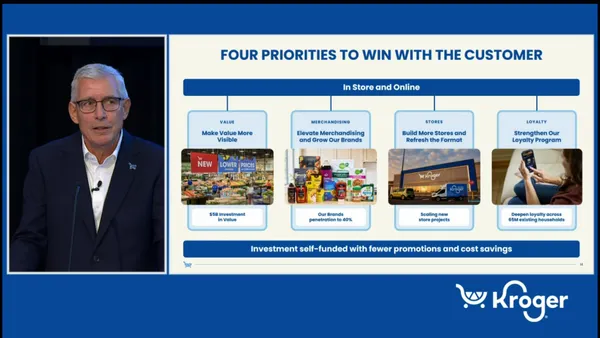
Kroger also recently highlighted its fuel stations as a connection between shopping in its stores and softening the blow of higher gas prices. During a weekend in late March and another early April, the chain gave shoppers four times the normal level of fuel points on groceries and other items.
Walmart CFO John David Rainey said earlier this month that he believes shoppers are in a better position to deal with elevated energy costs than conventional wisdom would suggest.
“I am probably more constructive on the consumer than what one would glean from reading the headlines of news publications,” Rainey said on April 8 during the J.P. Morgan Retail Round Up Forum. “There’s a lot of alarmest headlines [about] what the impact can be on the consumer. But the consumer continues to be very resilient.”
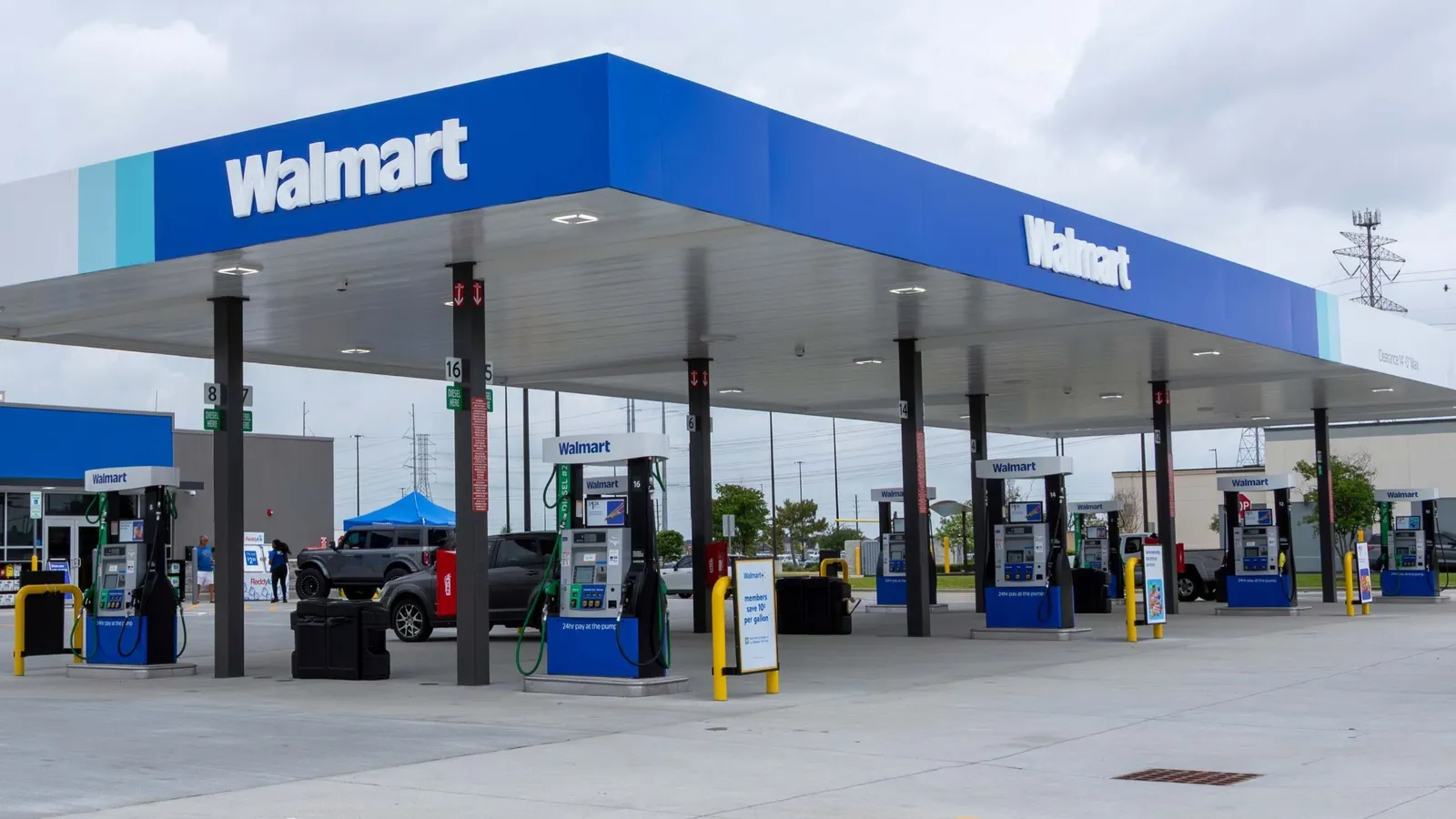
The surge in oil prices has not yet had a significant impact on Walmart’s operations, Rainey added. “Certainly the higher fuel prices and higher oil prices have an impact on us, but well within our ability to manage at this point in time. I think the thing that we're focused on is consumer health and what can happen there,” he said.
Rainey said during the J.P. Morgan event that Walmart is in a stronger position to weather elevated oil prices now than in the past, in part because the commodity has become more readily available to energy companies through techniques like horizontal drilling and fracking. He noted that oil prices hit $130 per barrel during the 2000s — equivalent to almost $200 today when adjusted for inflation.
“I think we’re in a much better position globally from a supply perspective to be a little more insulated from some of the shocks than maybe what we were at that point in time,” Rainey said.
Rainey said it could take time for higher fuel costs to affect food prices.
“I think it’s too early probably to provide a verdict on the impact of fuel prices because how high those go and how prolonged that is can certainly have an impact as you get into cost inputs like fertilizers and things like that, that can then bleed into food prices,” he said.
In a sign that higher fuel prices don’t necessarily lead to higher food prices right away, grocery inflation eased in March. Still, the industry is concerned that food costs could start to rise because of the conflict, according to FMI — The Food Industry Association.
“Fuel is a critical input at every stage of the food system — from powering farm equipment to processing, packaging and transporting products to store shelves. As energy prices increase, the costs associated with producing and delivering food also rise,” FMI Vice President of Tax, Trade, Sustainability and Policy Development Andy Harig said in a statement.