Pardon the Disruption is a column that looks at the forces shaping food retail.
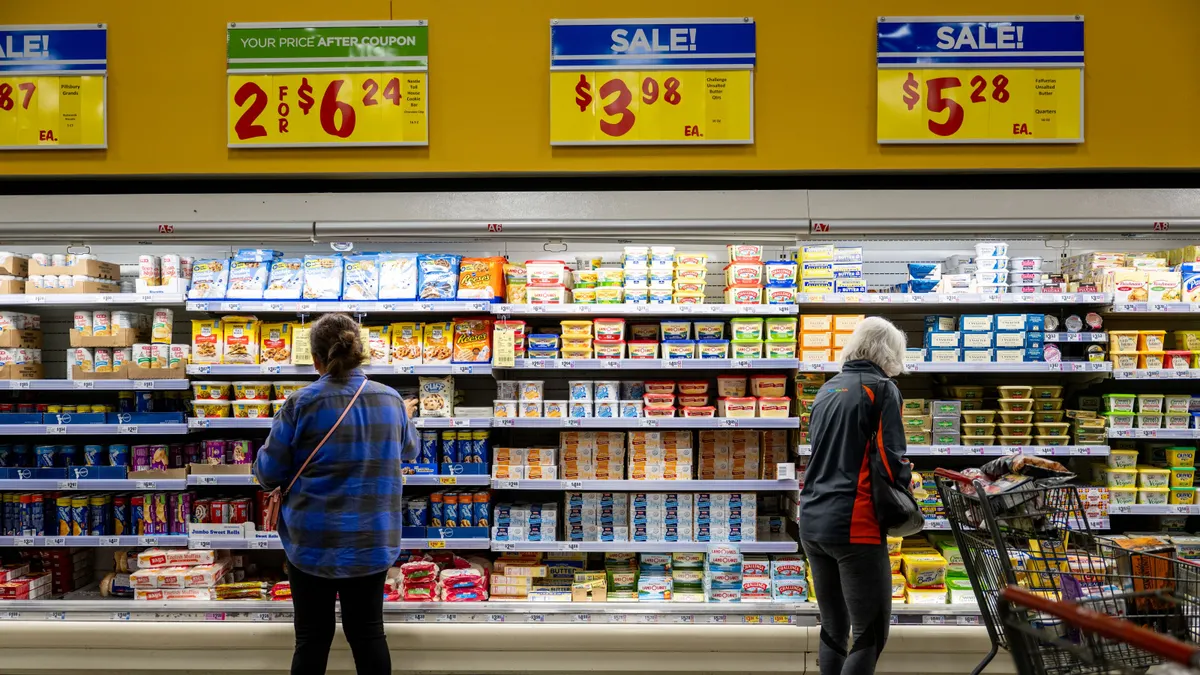
At Grocery Dive, we recently spent a few weeks reporting on how retailers not known for low prices are trying to show they’re actually a good value for shoppers in these tough economic times.
These efforts — which include everything from spotlighting service departments and company dietitians to implementing “price locks” for weeks at a time — are well timed, even creative in some instances. But they’re not holding back the enemy at the gates.
A recent report indicates many consumers are done trading down products at the supermarket. They’re instead ready to trade out to lower-priced retailers.
The report by consulting firm Alvarez & Marsal found in its survey of 2,100 consumers that:
- 35% plan to switch to less expensive brands at their current store — down from 49% who said the same last year about their shopping plans for the fall.
- 42% plan to switch to a less expensive grocer this spring — up from 31% who said the same about their fall shopping plans.
- 27% plan to buy the same brands they currently buy, but at a less expensive store — up from 16% who said the same for the fall.
All of these numbers together tell a story. It’s a story about consumers who have hit their limit in seeking deals at their current stores. It’s about shoppers who want lower prices, but who don’t believe conventional grocers — despite their many pleas and promotions — have them.
With gas prices eye-wateringly high and with no end in sight, shoppers will keep trading out of their local grocery store in favor of Walmart, WinCo, Trader Joe’s, Costco, Aldi and the like.
Traditional grocers are clearly worried about all of this, as evidenced by their frenzied push to justify themselves as places worthy of shoppers’ hard-earned money. But I’m not sure they fully grasp that when consumers trade out of their stores, many of them may not come back.
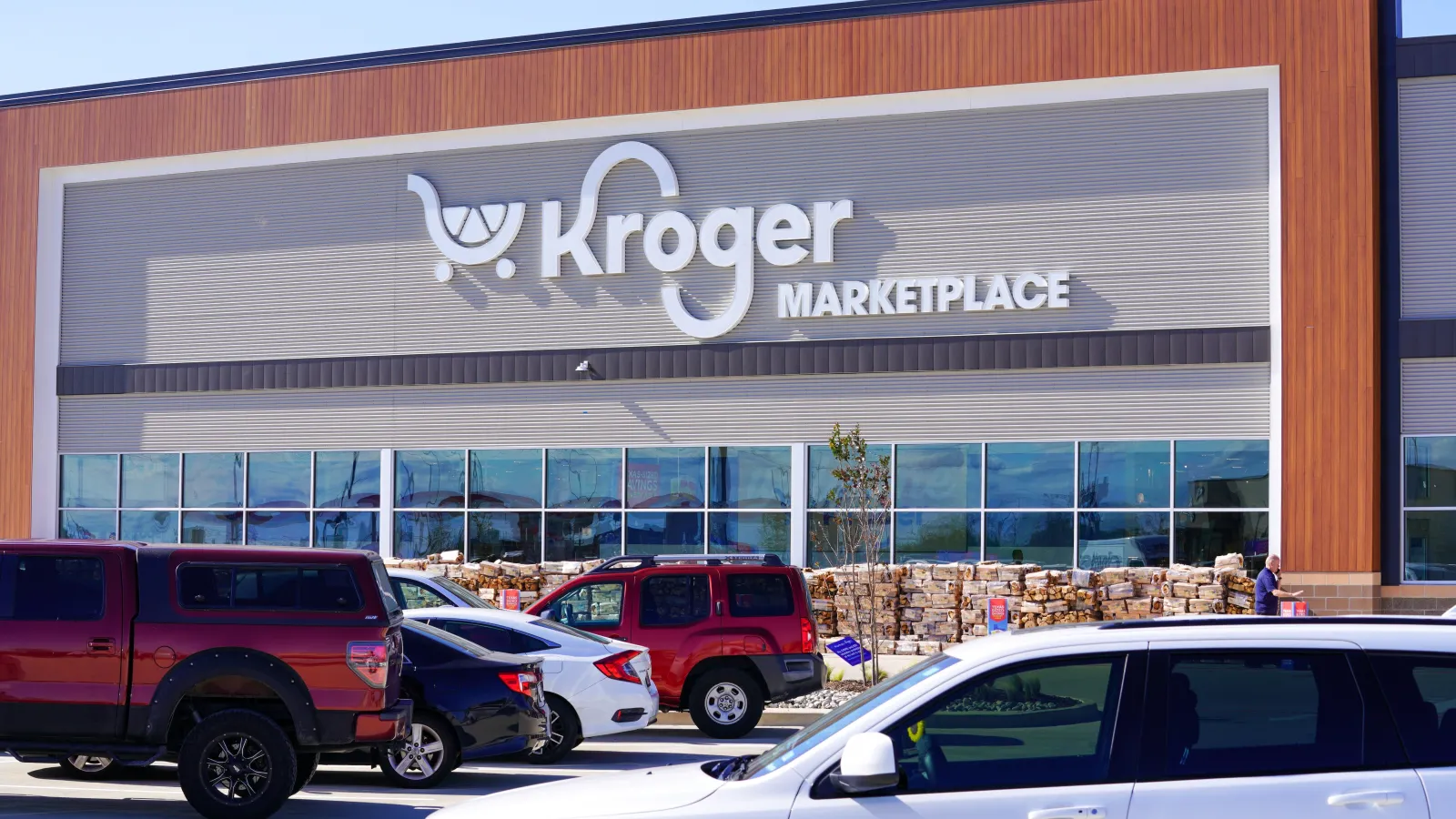
The current game plan isn’t working
After we published the first story in our “Beyond Yellow Tags” series, a reader named Mike Black reached out to me with some very interesting feedback.
Black is chief growth officer with Collage Group, a firm that measures brands’ “cultural fluency” — or how well they meet consumers’ needs and reflect their values. He told me that his company’s research found that consumers perceive the value of low-price retailers like Walmart, Costco and Aldi more clearly than that of traditional grocers like Kroger and Publix.
In a survey of 4,500 shoppers, Collage found that Amazon, Walmart and Costco are leading the pack in cultural relevance, while Kroger and Publix are “trailing brands” because their businesses lean “heavily on commoditized factors[,] price and promotions to compete.”
“It’s essentially the difference between having to prove value versus already being believed,” Black told me via email. “This helps explain why closing the ‘value gap’ is harder than it looks and why some retailers are still pulled into competing on price.”
Low-price retailers like Walmart, Aldi and Costco don’t just have lower prices than conventional grocers — they’re also strong brands with strong cultural identities. They’re value retailers, but they also offer a better shopping experience today than what value retailers have historically provided.
Over the past decade or so, these low-price retailers have rapidly grown and elevated their stores and digital offerings, while traditional retailers have mostly sat back and continued to do business the way they have for decades.
I think about all of this when I see Walmart revamping its largest private label brand and building stores that seamlessly connect online and in-store shopping. Or when I read about Aldi’s and Trader Joe’s growing fanbase that’s hungry not just for deals but for hip, limited-time merch drops.
Traditional grocers think they still have the advantage in quality, freshness and a great shopping experience, but research increasingly shows that’s not the case. More than two-thirds of shoppers surveyed by Alvarez & Marsal said that low-price grocers offer a selection that’s as good as what traditional grocers offer, while 63% said low-price grocers offer customer service that’s as helpful as traditional grocers’.
In other words, conventional grocers are attacking a weakness that increasingly does not exist at low-price retailers.
“[Low-price grocers] are increasingly viewed as viable alternatives to traditional grocers with switching behavior more likely to stick the longer consumers pursue these options with favorable experiences,” the report by Alvarez & Marsal noted.
Want further proof? Just look at this year’s Retailer Preference Index by Dunnhumby, widely viewed as the authority on which grocers are resonating with consumers. With the exception of H-E-B, the top 5 spots are almost all value retailers: Aldi, Costco, Market Basket and Woodman’s Market, an Upper Midwest chain with just 20 locations but a legendary reputation for low prices and selection.
Justifying their value
So what can traditional grocers do?
I don’t think there’s an easy fix here. The strategic advantages these retailers have long relied on — one-stop shopping, freshness and a wide assortment — are rapidly deteriorating against a very dynamic, motivated class of discount retailers.
Traditional grocers need to do more than just market themselves better. I’ve said this in past columns and I’ll say it again here: They need to be open to making deep, disruptive changes to how they do business.
Improving efficiency and operational discipline is imperative. Kroger and Ahold Delhaize recently broke with tradition in naming new CEOs who are company outsiders but who have track records of whipping large, sprawling retailers into shape and positioning them for the future. Cutting costs, boosting freshness and doing a better job of delivering on core promises are things every grocer should be doing.
But grocers that operate in close proximity to discount competitors should also take a hard look at how they define their value to consumers. They need to not just review shopper data but also do qualitative research on how customers utilize their stores and how they can better serve their needs. What are the biggest challenges shoppers face in getting meals on the table? What do they wish their local grocer did better? What do they like about discount retailers besides just low prices?
For inspiration, traditional grocers can turn to their competition. I’ve written about the deep work The Fresh Market did to improve its positioning. I can also point to Aldi, which gets a lot of press for its rapid growth but has paired that with an overhaul of its store design and product mix to better reach shoppers across income brackets and market areas.
Both of these companies figured out where they needed to fit in the marketplace and in shoppers’ lives, and then they made it happen.
Traditional grocers have been tested mightily over the past decade or so as low-price retailers have chipped away at their advantages. That pressure will only grow over the next 10 years.