Number Sense is a regular column that uses data to help understand the grocery landscape.
Looked at in a vacuum, the latest data on food prices paints what looks like a relatively encouraging picture for the grocery industry. After hitting a three-year high in April, the annual pace of grocery inflation moved down in May and held steady at 2.7% last month, which could suggest that the forces that have relentlessly pushed prices up over the past few years have lost some of their kick.
The Bureau of Labor Statistics’ readings on inflation indicate that even the surging energy prices brought on by the war with Iran this year have yet to cause grocery prices to start a significant upward climb, at least when looked at year over year. Couple that with the fact that grocery inflation has remained in a relatively tame range by historical standards for more than two years, and you’d be forgiven for thinking that grocers and shoppers should be feeling pretty good.
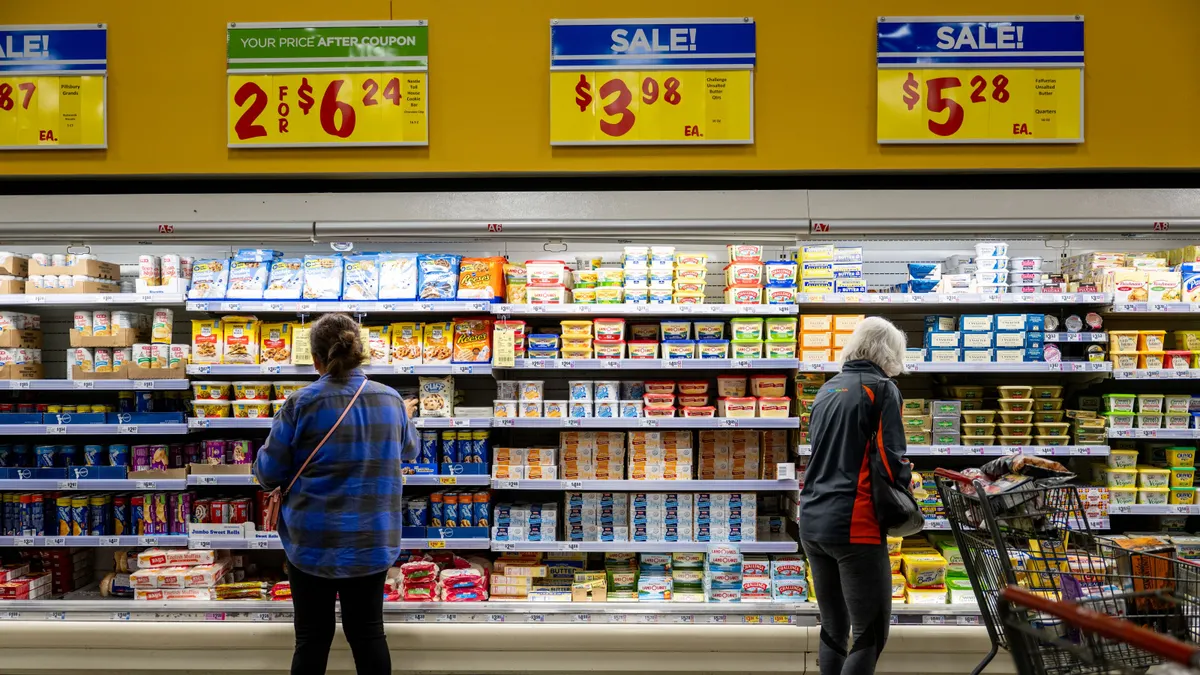
The reality, of course, is very different. Shoppers across the political spectrum are carefully watching their grocery spending amid uncertainty about the economy’s trajectory — and stories about the affordability crisis gripping the nation continue to drive the news cycle. The fact that grocery inflation is far lower than back in 2022, when it soared to its highest rate in more than 40 years, matters little to consumers who know simply that things cost more now.
The disconnect between statistics that depict moderate food inflation and the actual conditions people are experiencing presents a continuing challenge for grocers, who must balance the need to try to hold prices down with the fact that they need to be profitable to stay in business.
Retailers have been working for years to convince consumers that they are taking steps to hold down prices, and many are investing in bringing costs down. Kroger’s new CEO, in fact, has made clear that leaning into lower prices is at the heart of his strategy for bringing the nation’s largest conventional supermarket chain back to growth mode.
That said, even though grocery budgets typically eat up a significant chunk of consumers’ incomes, food retailers are hardly in a position to shift the broader economic trends buffeting consumers. People are spending more on big-ticket items like cars, health insurance premiums are way up and housing costs are out of hand for many. Against a backdrop like that, it’s understandable that shoppers have been paring back at the grocery store.
Sales figures from Circana published this week by 210 Analytics underscore just how challenging it is for grocers to navigate the mismatch between what official statistics say about the economy and how people actually feel.
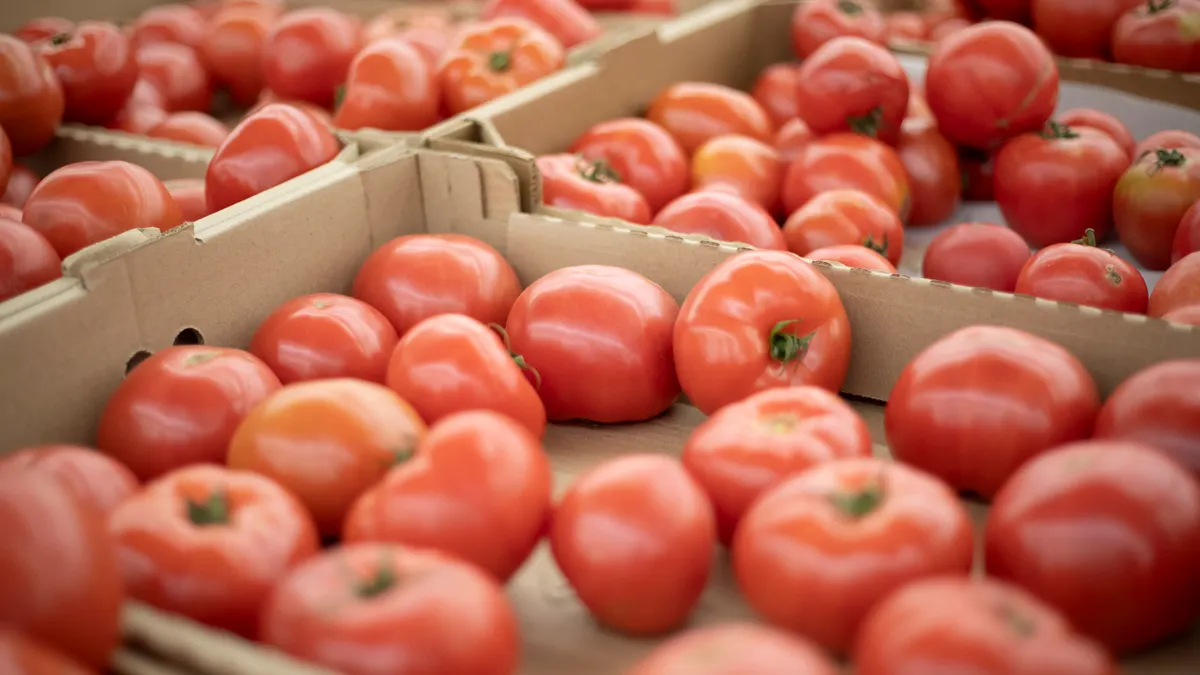
Although fresh foods have become an essential differentiator for grocers, data for June shows that consumers reduced fresh produce purchases and bought more frozen fruits and vegetables that month. In addition, the price of fresh produce rose by almost 5% last month compared with the same month in 2025, while the cost of frozen fruits and vegetables was up only 2%.
The fact that shoppers seem more inclined to buy goods from the freezer should raise alarm bells for the traditional supermarket industry, which analysts have said is losing market share in the critical category to other types of retailers.
For context on what these trends mean, I reached out to Andy Harig, vice president of tax, trade, sustainability and policy development at FMI — The Food Industry Association.
Harig pointed out that grocers have a unique opportunity to build ties with shoppers by stepping up their efforts to display certainty and stability in their stores.
“I think that the companies that are going to win are the ones who really are able to engage that base and say, ‘We get this and we’re going to work with you on this,’” he told me when we spoke earlier this week.
“Shoppers are really savvy. They understand what’s going on, and they’re just really looking for people to be honest with them and to help them navigate this,” Harig added.
The elephant in the room, though, is that grocers have little wiggle room to keep cutting prices, and they run the risk of putting people off if they raise prices even a little bit.
Harig noted that while the impact of the higher tariffs that the federal government imposed on imported goods had a muted effect on grocery prices, rising energy prices present a more potent threat. Fuel costs hit everything from transportation to powering stores.
Harig also stated in a FMI blog post that rising energy prices can hit hard and fast, and that passing higher costs on to consumers — many of whom are already stretched financially — is a tall order.
That brings me back to the existential questions lurking for grocers behind that 2.7% inflation figure the government put out on Tuesday. Under normal conditions, people might have correctly interpreted the number as a sign of a healthy relationship between grocery prices and U.S. consumers. But these are not normal times; shoppers are anything but calm and numbers are only a piece of an unpredictable story that continues to unfold.
Grocers have worked for years to find their footing in an unpredictable economy — first as they scrambled to keep shelves stocked when the COVID-19 pandemic hit, then as inflation hit double digits and now as a new set of economic shocks keeps shoppers off kilter. Data aside, they clearly still have a bumpy road ahead.