Dive Brief:
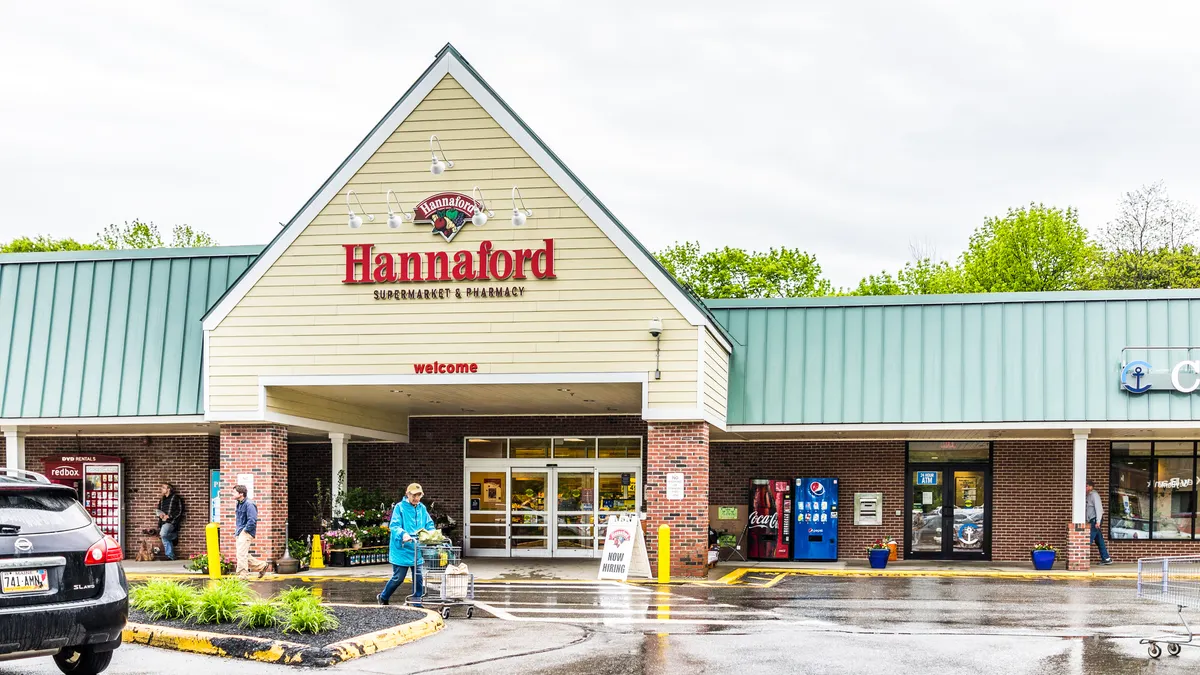
- Hannaford has brought stands featuring fresh fruits and vegetables from local farms back to its stores, the New England supermarket chain announced Wednesday.
- The grocer is working with more than 125 farmers and growers to source produce for the stands, which Hannaford said are a “seasonal fixture” in its stores.
- Hannaford’s effort to highlight locally grown foods in its stores comes as traditional supermarket operators look to derive competitive advantages from their fresh assortments.
Dive Insight:
Hannaford described the in-store stands as an element of its commitment to help shoppers access healthy foods while also supporting local growers.
The seasonal stands feature items including carrots, corn, squash, apples and potatoes.
Hannaford said producers it works with include Leary Farm of Saco, Maine, and Brookdale Fruit Farms of Hollis, New Hampshire, both of which are family-owned.
“By building lasting partnerships with farms across the Northeast, we can help growers expand their reach while connecting our customers with the fresh, seasonal foods they value,” Norm Daigle, Hannaford’s vice president of category management, said in a statement.
In late August, Hannaford announced that it donated $500,000 to the Northeast Farmers Fund, a project that provides farmers with financial and technical assistance to help them grow and sell foods produced with regenerative agricultural practices. The fund, which is part of the Wolfe’s Neck Center for Agriculture & the Environment, will use the money to provide grants to producers in Maine, New Hampshire, New York and Vermont.
Owned by Ahold Delhaize USA, Hannaford runs 188 supermarkets across Maine, Massachusetts, Vermont, New York and New Hampshire.
Food retailers have lost substantial produce sales because they have missed chances to build interest among shoppers in fresh fruits and vegetables, according to a Circana report published in January. Circana expects produce sales to increase at an annual rate of about 2% in 2026, but said that figure would probably be higher if the grocery industry took more aggressive steps to promote the category.
Grocers’ produce sales are also facing headwinds because of this summer’s cyclospora outbreak. The crisis also raised consumers’ interest in buying local produce and knowing the source of foods, according to local news reports.