Gary Schneider is senior retail sales manager at Bay Food Brokerage.
For consumer packaged goods (CPG) brands, getting a product authorized by a major retailer can feel like the big win. It may have taken months — sometimes years — of preparation, buyer meetings, product presentations and negotiations before a brand finally earns a spot on a retailer’s shelf.
Of course, it is a huge win and worth celebrating. But a brand can have distribution across hundreds or thousands of locations and still underperform at retail for a variety of reasons.
Too many brands overlook the much bigger driver of long-term success: execution at the store level. We see retailers more heavily scrutinizing SKU performance, consumers remaining highly value-conscious, and brands increasing investment in advertising and marketing. Poor in-store execution has become an increasingly costly blind spot.
CPG executives aiming to maximize sales at the cash register must understand that securing retailer authorization means their brand has only made it to the starting line — there’s a lot more work needed to cross the finish line in a strong position.
Distribution only creates the opportunity for a sale
Distribution is an important measure of a CPG brand’s growth. But manufacturers do not generate revenue based on the number of authorized stores. They generate revenue when consumers purchase products.

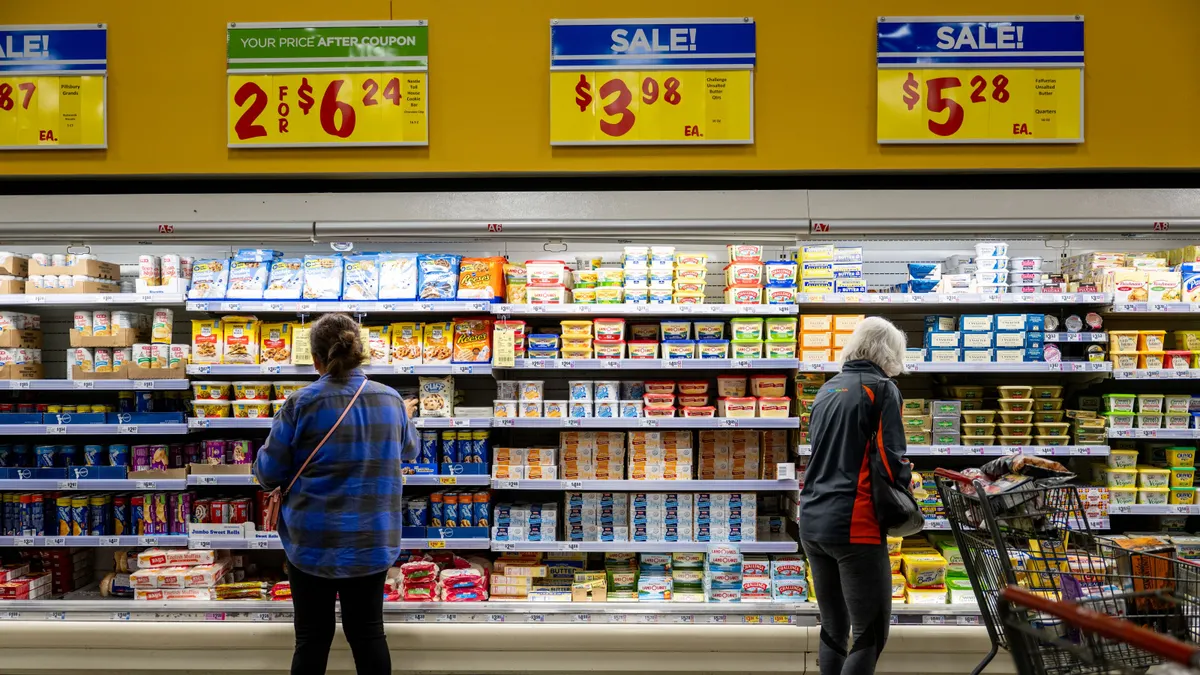
A product may technically be distributed to a location and still be difficult or impossible for shoppers to buy. It might be sitting in the back room rather than on the shelf. The shelf tag may be missing. The price may be incorrect. The product may have been placed in the wrong section or behind competing items. An expected display may never have been built.
On a distribution report, nothing looks amiss, as the product shows as delivered. To the shopper looking for the product, it is either effectively out-of-stock, or it’s incorrectly or poorly merchandised.
Small execution problems can quietly erode sales
Store-level execution problems do not always produce obvious warning signs. That doesn’t mean they won’t have a big impact on sales and a product’s overall success.
Consider an out-of-stock example: If a shopper comes to the store planning to buy a particular product and it’s unavailable, the manufacturer doesn’t simply lose that unit sale. The consumer may select a competing brand instead, and this could potentially change future buying behavior.
Pricing errors create another problem. A promotional price that fails to appear correctly on the shelf can undermine a campaign intended to drive trial. An incorrect everyday price could negatively impact how shoppers perceive the product’s value, which is particularly harmful in an era when consumers are closely comparing prices.
Placement matters, as well. Even a fully stocked product can underperform if shoppers have trouble finding it.
When manufacturers invest in advertising, digital marketing, trade promotions or retailer programs to generate demand, poor in-store execution creates an especially frustrating disconnect. The brand has spent money persuading consumers to look for a product that the store experience does not allow them to easily purchase.
In-store execution errors can stop new products before they even start
Even small retail execution errors can become catastrophic when it comes to a new product launch. A new SKU must demonstrate that it deserves its shelf space, because retailers evaluate whether new products are generating enough sales and productivity to justify remaining in the assortment.
If a new product repeatedly goes out of stock, is improperly merchandised or is not available where shoppers expect to find it, weak sales might reflect execution problems rather than a lack of consumer demand.
Manufacturers should pay close attention to in-store execution during and after a launch, both to maximize sales and to ensure that retailers are evaluating the product based on a fair representation of its potential. I have seen new brands fail at some retailers within six months, at which time the retailer replaced the underperforming brand with one that did not make the initial plan-o-gram only because room was not available.
Manufacturers need to see what shoppers see
The first step toward better retail execution is visibility.
A manufacturer can’t address an out-of-stock issue that it doesn’t know exists. It can’t correct an inaccurate shelf price on a tag it’s never seen. And it can’t determine whether a promotion was executed properly without some way of verifying what actually happened in stores.
That means brands need a consistent process for evaluating conditions in the field.
The exact approach will vary by company, category and retailer. But manufacturers should be looking to answer basic questions, like: Is the product on the shelf? Is it in the correct location? Is inventory available? Is the price correct? Are promotional tags and displays in place? If something is wrong, has the issue been documented and routed to the person who can resolve it?
All these questions need verifiable answers, with in-store data, analytics and photography to back them up.
The goal is two-fold: identify isolated problems and find patterns. A pricing error in one store may be an anomaly. The same issue appearing across dozens of locations may signal a larger problem that needs a different response.
Retail execution needs ownership
One reason retail execution can become complicated is that multiple organizations may touch a product between the manufacturer and the shopper. Depending on the retailer and supply chain, manufacturers, brokers, distributors, retailer teams and individual stores may all play some role.
That can make it easy for execution issues to fall into gaps between organizations. Someone needs to know what was supposed to happen, determine whether it happened, identify why something went wrong and make sure the issue reaches the right person for resolution.
Consider establishing a structure where the manufacturer aligns itself with a trusted, reliable partner who is already an expert at the retailer. That partner should have clear ownership and accountability for in‑store execution, supported by a defined process that consistently feeds needed information, priorities and insights to succeed.
The brands that perform best are not necessarily the ones that never encounter execution problems. Especially in a large retail network, problems will arise. What matters is how quickly brands can identify them and respond.
The shelf is where distribution becomes a sale
Getting authorized by a retailer should be celebrated. It is difficult work, and gaining distribution creates an enormous opportunity for a CPG brand. But getting on the shelf is not the finish line.
Authorization gives a product the chance to compete. What happens next determines whether shoppers can actually buy it and whether the sales justify keeping it on the shelf.
Manufacturers need to think about retail execution as part of their growth strategy, not simply as an operational task that begins after authorization is secured. Because, ultimately, distribution only creates the opportunity for a sale. Effective in-store execution is what turns that opportunity into long-term success.