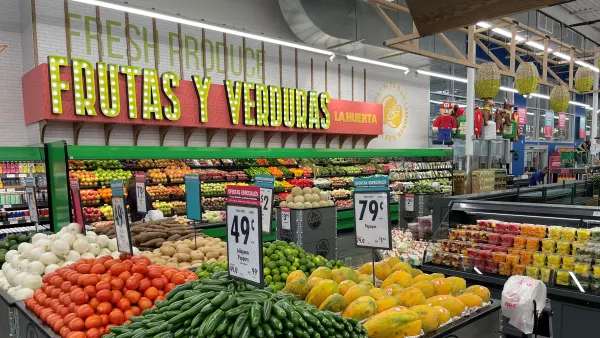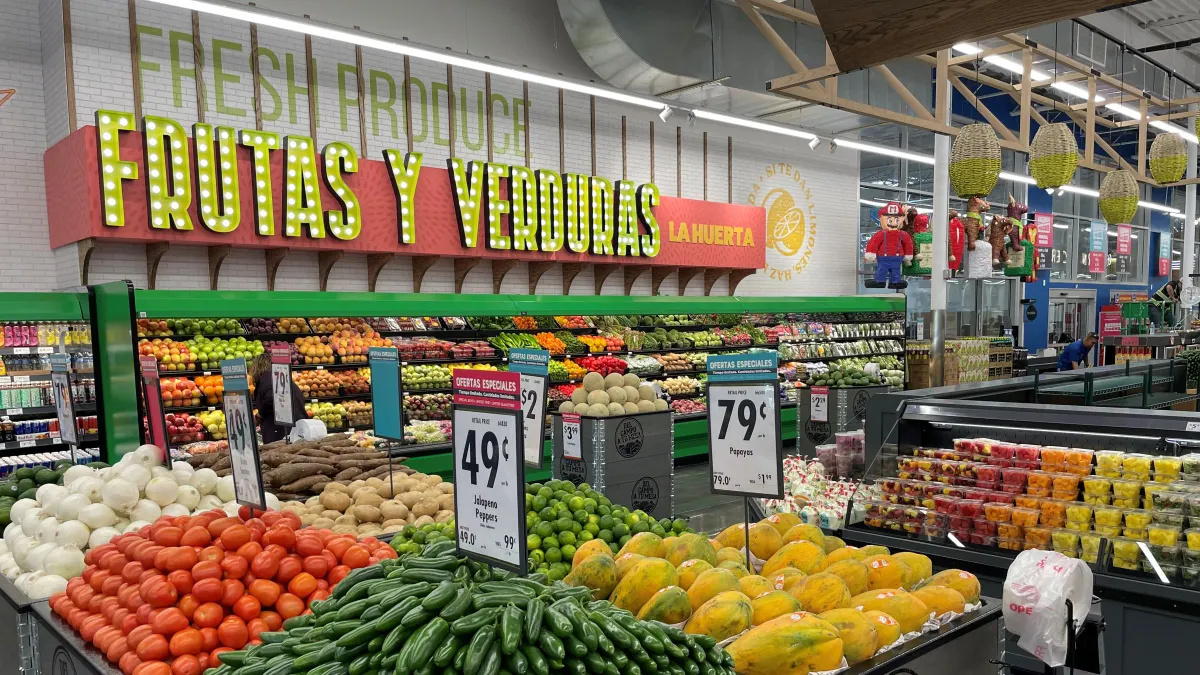
With multicultural grocery continuing to grow, from international chains to the offerings within the aisles of a traditional supermarket, retailers are looking for a way to showcase authenticity — and bilingual signage and packaging is a common tactic companies are using to forge strong connections with shoppers.
However, if done improperly, bilingual marketing can have the opposite effect.
While there’s no one-size-fits-all way to properly incorporate languages other than English into a store, there is a north star grocers can look to, experts say: Viewing bilingual signage and packaging not as a mere act of translation, but as a form of communication.
“Translation doesn’t actually compensate for a store that really isn’t reflecting the broader community, and it’s simply serving as a touch point to say, ‘Hey, we get you,’ because that’s not authentic, and it’s not going to come across as authentic,” said Diana Leza Sheehan, CEO and founder of PDG Insights.
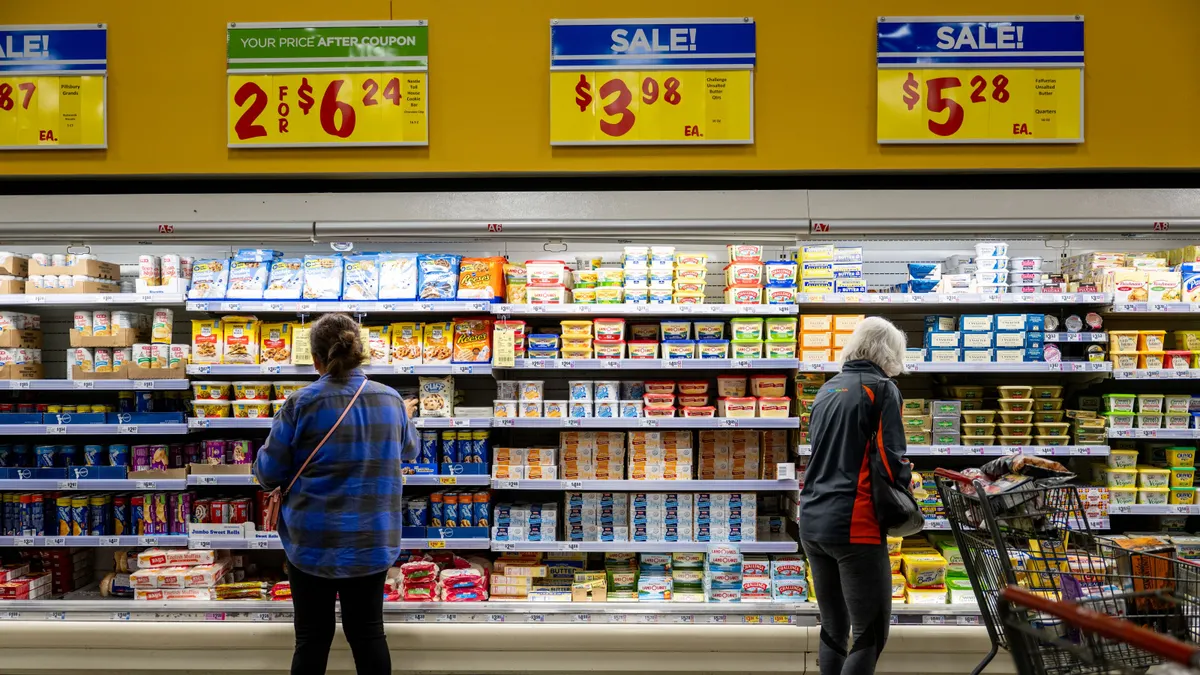
Retailers must consider the complex interactions shoppers are having within their store, Sheehan said. For instance, although aisle markers are a staple store navigation tool, they are less impactful as spots for bilingual signage because shoppers refer to them less as they become familiar with their neighborhood market. Bilingual signage explaining promotions or shelf tags detailing a product in dual languages, on the other hand, are more compelling for customers, she said.
Know who you’re speaking to
Bilingual signage and packaging primarily center on the Spanish language, which is the country’s second-most-spoken language and the fastest-growing one. But Spanish spoken in Mexico differs greatly from Spanish spoken in Cuba — a difference that is just as prevalent in the U.S.
“The misconception is that people see the Hispanic customer and want to cover it with one broad stroke — and that’s just a big mistake because the customer knows,” Heritage Grocers Group Chief Experience Officer Adam Salgado said in an interview.
A Hispanic grocery chain that consists of four distinct banners, Heritage Grocers has a clear understanding of the demographics shopping at each, allowing for a more well-curated and thoughtful approach to bilingual marketing, Salgado said.
The company’s El Rancho Supermercado chain in Texas prioritizes using Spanish in its signs and other in-store marketing, Salgado said. Meanwhile, Tony’s Fresh Market in Chicagoland and Cardenas Markets based in California are more English-forward, he said.
Deciding whether a store will predominantly use Spanish or English is based on the customer base it is serving, Salgado said. But Heritage also looks at individual stores to see if it needs to make any adjustments in how each location communicates with its customers.
“Tony’s is more English-forward, but even within Tony’s, half the stores are in very highly Hispanic-dense markets. So then they leverage Spanish a little bit differently,” Salgado said. “Cardenas, it’s more English-forward, but on Facebook, it’s primarily Spanish because it’s more of a core older generation that’s on Facebook.”
Heritage also has local social and creative teams within its marketing department. These more localized units are tasked with crafting messaging for each banner, Salgado said. The goal of these teams is to incorporate natural language and cultural nuances into their work. This local voice becomes especially persuasive when used in local initiatives, he added, pointing to Tony’s Fresh Market’s recent tailgate promotion for a Chicago Bears NFL game as an example.
Leevers Supermarkets, a Hispanic grocer that works with Save A Lot to open and run Hispanic discount supermarkets, similarly relies on grassroots marketing efforts to ensure a natural tone in its messaging, Leevers President and Chief Operating Officer Jon Koontz said.
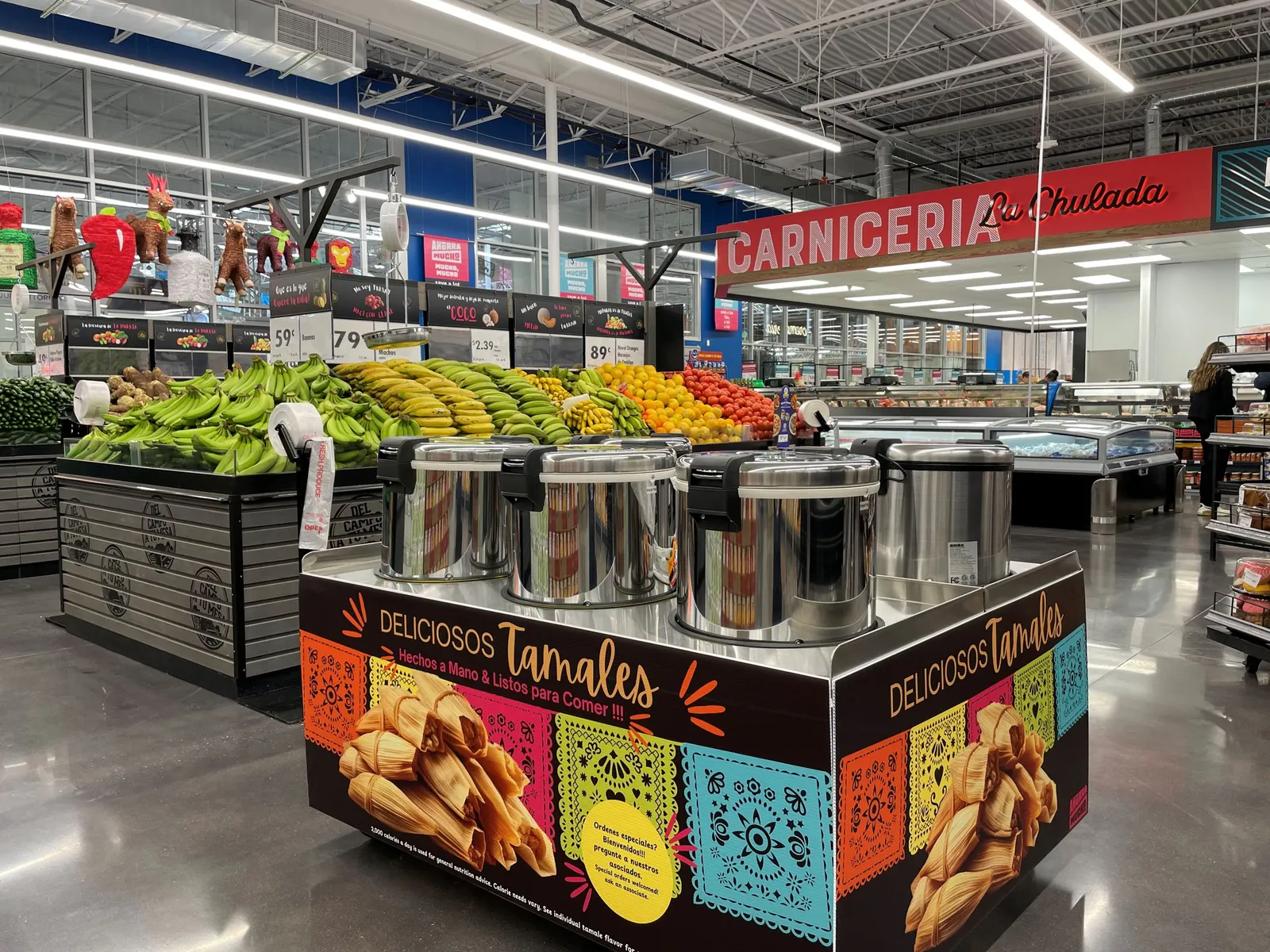
Koontz, who has worked on Save A Lot’s Ahorra Mucho and Save A Lot y Mas Hispanic store concepts, noted that the company will vary its tone when communicating with customers.
“There are things we want to message to them in an informal and friendly way versus a formal way,” he said. “Those types of nuances exist in all languages, and something that we take into really careful consideration as we’re going through the editing and revision process, and relying on experts, relying on those who speak the language at home, at work, with friends and family, is really the best way to do that.”
According to Koontz, there is no quicker way to lose validation or a customer’s trust than to circulate messaging that isn’t only inaccurate, but doesn’t make sense when translated.
“If you’re speaking to customers in a language that does not resonate with them, then that lack of [authenticity] is going to be felt throughout your store,” he said.
The broader store experience
Bilingual signage and packaging in-store cannot stand alone, Sheehan said. It needs to be reflected throughout product assortment, meal offerings and the staff itself.
“It can’t be the sole thing that says, ‘Hey, we’re here for you.’ And I think part of it is [that] it really has to be an embedded part of the broader store experience,” she said.
Not all grocers will need to incorporate bilingual signage into their stores, and they shouldn’t do so if it’s not going to get properly embedded in the store experience, Sheehan said. Albertsons’ Jewel Osco locations in Chicago do a “respectable job with assortment” and show a valiant effort in offering a relevant and authentic assortment in stores that cater to Latino communities, she added.
“Integrating the Spanish language as a part of the [shopping] experience is actually a nod of respect,” said Sheehan. “But if it’s only a nod of respect, then it’s actually completely and totally not going to get what retailers are trying to get out of it.”