
Dive Brief:
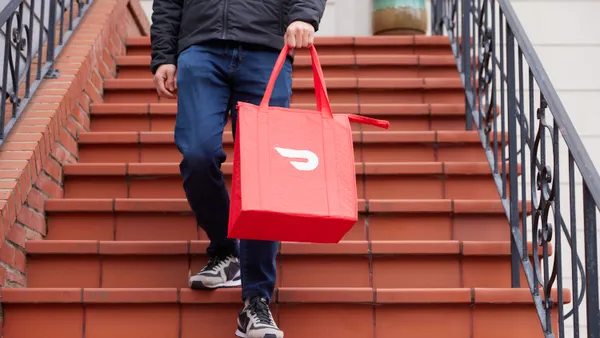
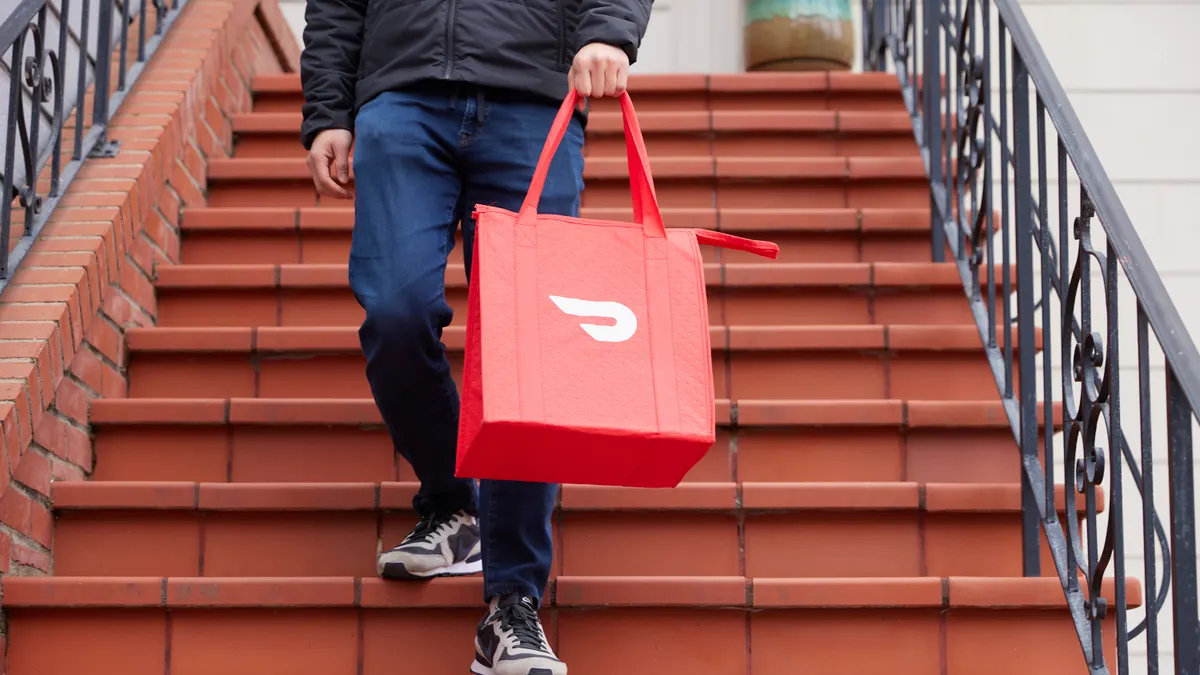
- DoorDash said on Tuesday that consumers ordering the same items from the same store will see the same prices, in a rejection of surveillance pricing practices.
- The delivery giant said that it does not personalize prices or change them based on phone type, order history or protected characteristics like age, race, religion or gender.
- The delivery giant’s pricing principles declaration comes several weeks after the Federal Trade Commission ordered several airlines, rideshare and delivery companies, including DoorDash, to permit the commission to study their pricing practices.
Dive Insight:
DoorDash disclosed that it sometimes charges weather-related fees, but said it does not alter core pricing “in real time” based on surges in demand.
The aggregator said it sometimes offers consumers discounts based on frequency, and that vendors can offer discounts to consumers who have purchased similar products in the past.
The delivery giant said it backs a ban on surveillance pricing, but that any such regulation ought to exempt “the deals that help people save money every day, like coupons, discounts, or loyalty programs.”
Fees on the platform “vary based on factors such as the delivery address and how much work it takes to fulfill [an] order,” DoorDash said, but not on demand; the tech firm argued that this pricing structure is not dynamic and is not based on surveillance of consumers.
State legislatures and federal regulators have begun targeting dynamic pricing practices for regulation and scrutiny. For example, Sen. Elizabeth Warren (D, MA) and several other lawmakers recently sent a letter to McDonald’s CEO Chris Kempczinski regarding reports on the chain’s use of machine learning in price-setting, claims the chain has already denied.
Those moves come at a moment when the political salience of the pricing of consumer-facing goods has increased significantly and civil society and trade groups look to leverage affordability rhetoric in policy battles ranging from immigration enforcement to data center development. At the same time, public opinion is shifting against various technologies associated with artificial intelligence and surveillance.
Delivery aggregators may be particularly vulnerable to public anger over pricing practices. Third-party delivery firms tend to charge consumers direct fees and collect a commission on orders from restaurants, causing upward price pressure on food as restaurants raise prices on delivery to recoup margins.
This dynamic has also opened the industry to commercial pressure: Olo recently launched a delivery app that leverages the prevalence of white-label delivery agreements with set fees rather than percentage commissions to offer consumers lower delivery prices.