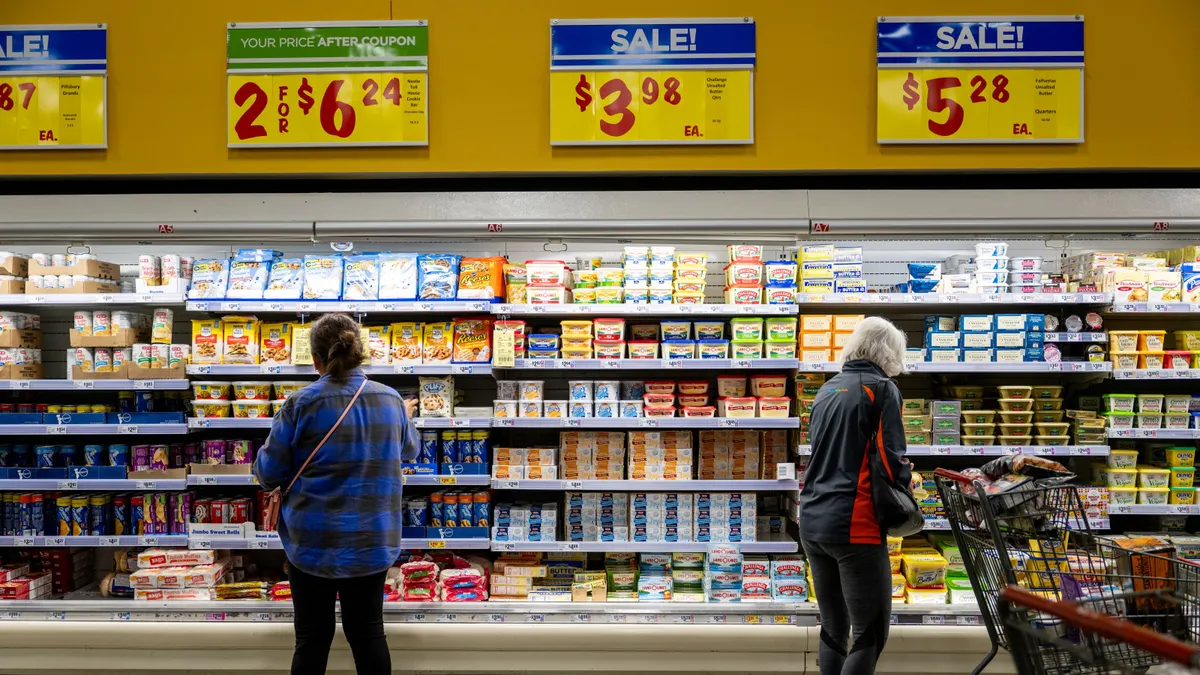
As food retailers demonstrate they are committed to combating people’s affordability challenges, a growing number are doubling down on formats built squarely on the premise that shoppers define value as saving money.
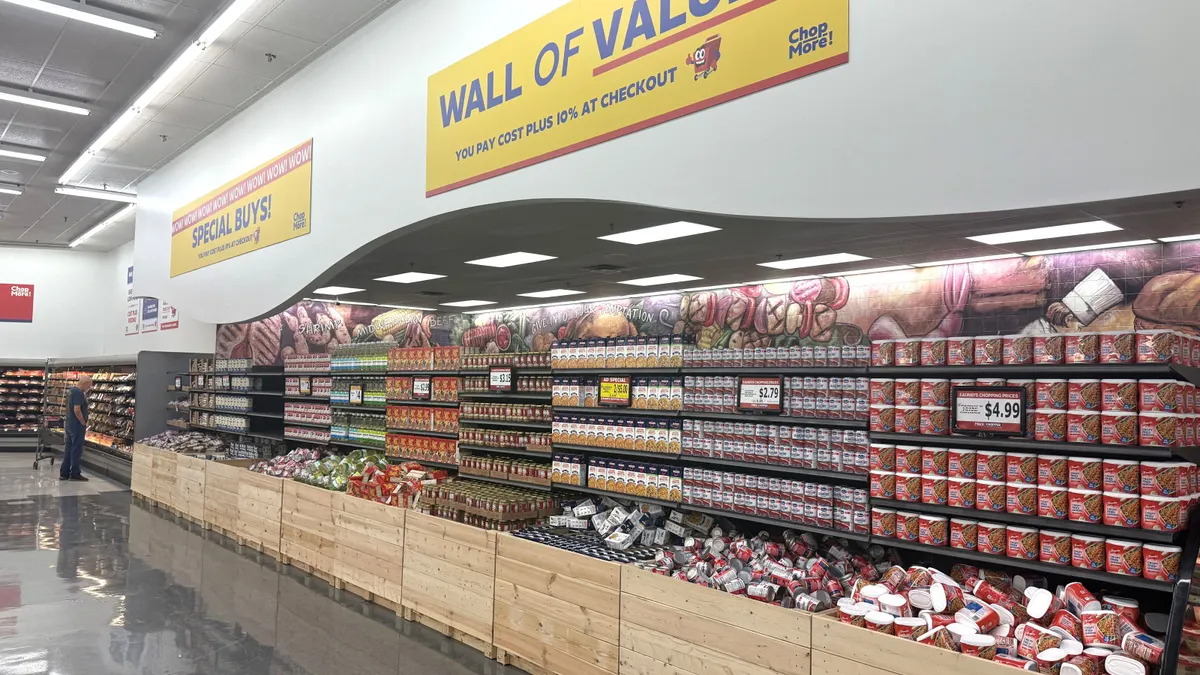
Midwestern grocery chain Cosentino’s Food Stores last month debuted a new format known as ChopMore! that places an even heavier focus on low prices than other stores in its existing fleet, which includes several locations under the discount banner Price Chopper. The first ChopMore! store, located in Kansas City, Missouri, differentiates itself with a no-frills business model built around selling groceries at cost plus a flat 10% markup to pay for overhead.
Also last month, Kentucky-based Houchens Food Group announced the launch of Food Saver, a new format whose name emphasizes that it is a place to score bargains. The banner includes three stores across Georgia and Tennessee that are “designed to provide customers and communities with quality grocery offerings and a strong focus on fresh meat and produce,” the retailer said.
Late last year, meanwhile, West Coast supermarket chain The Save Mart Companies reopened its Maxx Value discount grocery store in Modesto, California. The store, which is smaller than other stores run by Save Mart, includes a “Wall of Value” with pallets of items at low prices.
These formats are in line with data showing that many shoppers are dealing with acute financial stress that is crimping their ability to afford food. More than a third of shoppers in the U.S. have skipped a meal or ate less to save money, according to retail data firm Dunnhumby’s latest Consumer Trends Tracker.
The new savings-focused initiatives underscore the delicate balancing act supermarket operators have to navigate as they aim to capture people’s food budgets in an era when discount titans like Walmart and Aldi enjoy a commanding presence in the grocery industry, analysts said.
“Those retailers that have some of the strongest emotional connection with their shoppers and are growing are ones that do offer great affordability for the basic requirement of being able to feed one’s family, with the caveat that it’s not all about just savings,” said Erich Kahner, head of strategy and insights for North America for Dunnhumby.
For grocers, walking that tightrope means coming up with strategies that allow them to stand out with shoppers through their assortments, shopping experiences and other measures of value — all without compromising their ability to remain financially healthy, said Tom Furphy, CEO and managing director of investment firm Consumer Equity Partners and a former Wegmans executive.
“You can’t just slap a low price image on something and expect that it’s just going to work,” Furphy said. “You’ve got to deliver it with a cost structure that’s sustainable, and [the] differentiation between that and your traditional format” has to be clear to shoppers.”
Accomplishing that means demonstrating to customers — even those who are especially cash-strapped — that a store offers more than just low prices, Furphy said.
“It’s about what you feel versus what you get, and I think that in retail, what you feel and how you appeal to someone’s heart is a very powerful draw,” Furphy said
Retailers also need to be mindful of the success Walmart and Aldi are having in encroaching on the strengths traditional grocers have historically enjoyed, Kahner said. Dunnhunby’s data show shoppers believe both of those retailers have improved their assortments and shopping experiences while maintaining an edge in pricing, he said.
“I think the retailers that are the best allies for customers are those that make it really affordable to feed your family … without having to feel like they’re sacrificing a lot on the taste or the nutrition and what they’re buying,” Kahner said.
Grocers also need to find ways to reduce costs to support their efforts to deliver low prices, which can stretch their ability to invest in other aspects of their operations that help them avoid becoming known only for bargains. That means running stores more efficiently and squeezing costs out of supply chains while also providing assortments and store experiences that people will find attractive, said Furphy.
Inflation is also rearing its head, with factors such as high fuel prices and unfavorable weather conditions pushing up food prices and putting pressure on retailers as they try to keep prices down. Compounding that, shoppers think grocery prices are rising more quickly than they actually are, Dunnhumby reported.
Grocers that have chosen to spotlight low prices at some locations also face the challenge of maintaining the value proposition of their other stores that don’t place as much of an emphasis on low prices, Furphy pointed out.
Furphy observed that some grocers, like Wegmans, have developed a highly differentiated image that emphasizes affordable prices while also placing a premium on aspects of the shopping experience that draw people’s attention away from prices.
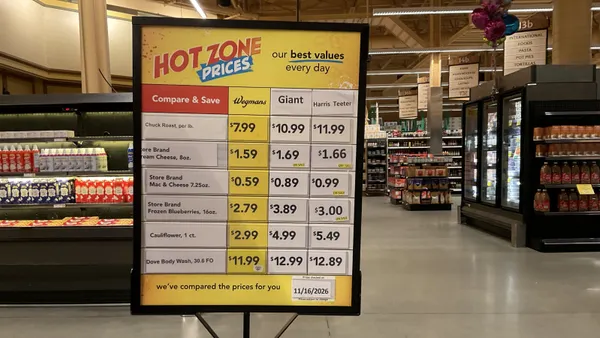
When Wegmans was preparing to open its first store in Charlotte, North Carolina, last month, the East Coast chain sent out mailers to people making the case that it charges less for a basket of many common goods than local stalwarts Food Lion and Harris Teeter.
Wegmans’ ability to deftly balance affordability and a differentiated assortment took years to develop, Furphy said. That doesn’t mean other grocers shouldn’t try to avoid the trap of being known only for low prices and then having to make sacrifices to hold onto that reputation, he said.
“[Wegmans understands] how every foot of that store operates and how to deliver the customer experience of literally every foot of that store. … It’s not accidental that they’re able to do that, and it’s very hard for other retailers to do it. But it’s not impossible,” Furphy said.