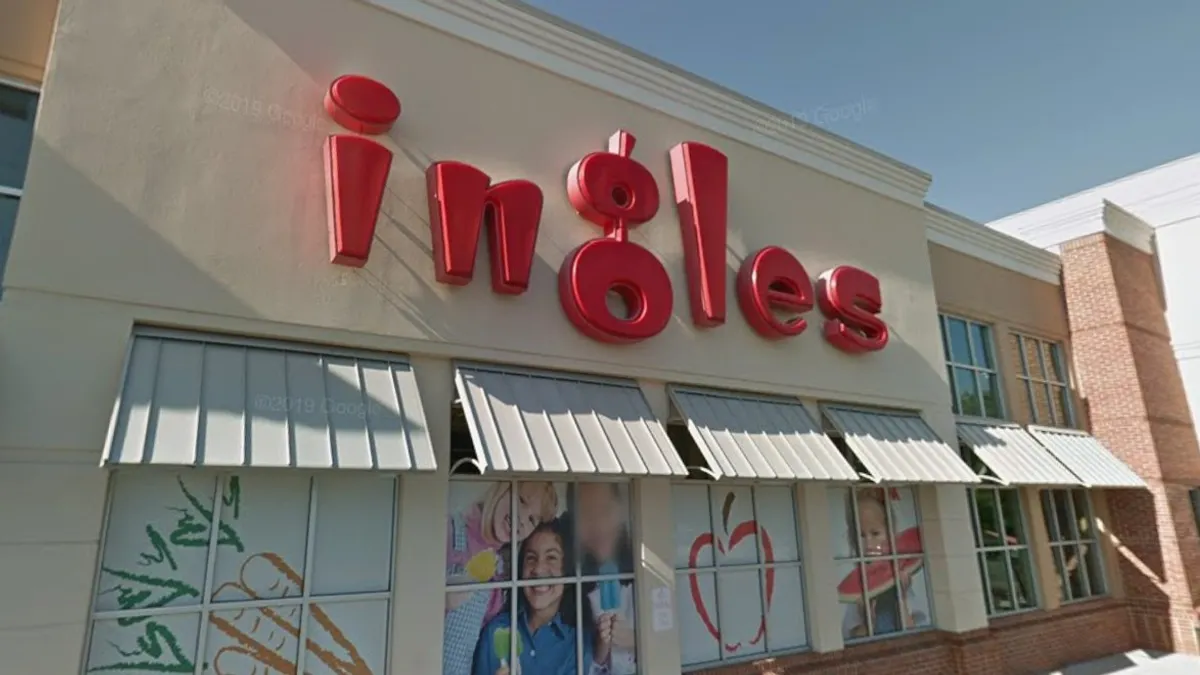
As Ingles Markets braces for shareholders to vote this week on whether to elect a change-minded outside investor nominated by a vocal activist investment firm to its board of directors, the chain’s real estate strategy has emerged as a key flash point.
Summer Road, the activist investment firm that is trying to persuade investors to vote for that nominee, Rory Held, during Ingles’ annual meeting on Thursday, contends that Ingles has allowed hundreds of acres of land to sit “fallow and in disrepair, dragging down corporate returns and failing the communities Ingles serves.”
Summer Road says it is the beneficial owner of about 3% of the outstanding shares of Ingles’ Class A common stock.
The investment firm added in a proxy statement filed with the Securities and Exchange Commission that it believes Ingles has underperformed compared with other grocery store operators, in part because it has not effectively used the land it owns. “The Company has allocated significant resources to acquiring land and buildings – often former competitor sites – that appear to sit idle or earn no meaningful economic return for shareholders,” Summer Road said.
In a statement Summer Road provided to Grocery Dive, Held said he is concerned that Ingles has not developed land it owns into new stores or shopping centers or “put to other productive uses.”
“Ultimately, the company’s inaction has resulted in stranded costs and significant lost economic opportunity for shareholders and for the communities in which it operates,” Held said in the statement.
Ingles said the investment firm has vastly overstated the grocer’s real estate holdings, adding that undeveloped land “is strategically important to our long-term growth.” Summer Road’s claims illustrate that it has a “total lack of understanding of Ingles’ real estate holdings,” Ingles said.
Ingles also argues that the company’s properties — which include the land that 174 of its 194 supermarkets sit on — enable it to remain agile by giving it the “flexibility to expand and rearrange store offerings to address evolving customer preferences.” In addition, the grocer also says that owning land strengthens its balance sheet, adding that it has received more than $30 million in gross rent from its tenants.
“For grocers broadly, owned real estate is one of the most important drivers of long-term value. For Ingles in particular, strategic ownership of assets provides competitive value creation advantages, including operational control and growth opportunities,” Ingles said in a presentation aimed at dissuading shareholders from voting for Held.
If elected to Ingles’ eight-member board, Held will push the company to investigate dividing the retailer’s real estate and grocery operations into two separate companies, according to an April 1 statement from Summer Road. “This separation would likely result in a material re-rating of the Company’s valuation, optimize the capital structure of both entities and potentially catalyze strategic interest from larger grocers,” Summer Road said.
Separating the company as Summer Road has suggested would amount to a sale-leaseback strategy that “would be value destructive to Ingles,” according to the grocer.
“Charging rent to every store would wipe away profitability and compensation that our valued employees benefit from,” Ingles said.
A spokesperson for Ingles said the company did not wish to comment and pointed to the grocer’s published statements about Held’s nomination.
The dispute over Ingles’ approach to managing its real estate points to a fundamental issue retailers routinely grapple with as they decide how to deploy resources, said David Halliday, associate teaching professor of strategic management and public policy at the George Washington University School of Business.
For retailers, deciding whether to own or lease land for their facilities includes examining how they want to deploy capital, because investing money into land means those funds are unavailable for other uses that might deliver a higher rate of return, Halliday said.
Part of making that choice for a given store involves assessing the risk that the retailer might not be able to renew its lease, which could be problematic if developing the facility requires costly work.
Another factor retailers have to consider is that grocers’ stores tend to be attractive tenants for real estate investment trusts, which own many of the nation’s shopping centers, Halliday said.
“There is a very massive, very deep pool of capital available for reasonable projects and grocery stores are one of the most sought-after REIT investments, especially considering that the real estate developers can get a 20-year leaseback once they build the property,” Halliday said. “Their goal isn’t to take advantage of the grocery stores. Their goal is to build a market-rate, high-quality asset that returns a solid future investment,” Halliday said.
Ingles is not alone among publicly traded grocers in owning a high percentage of the properties its stores occupy, although food retailers that fall into that category tend to be national chains.
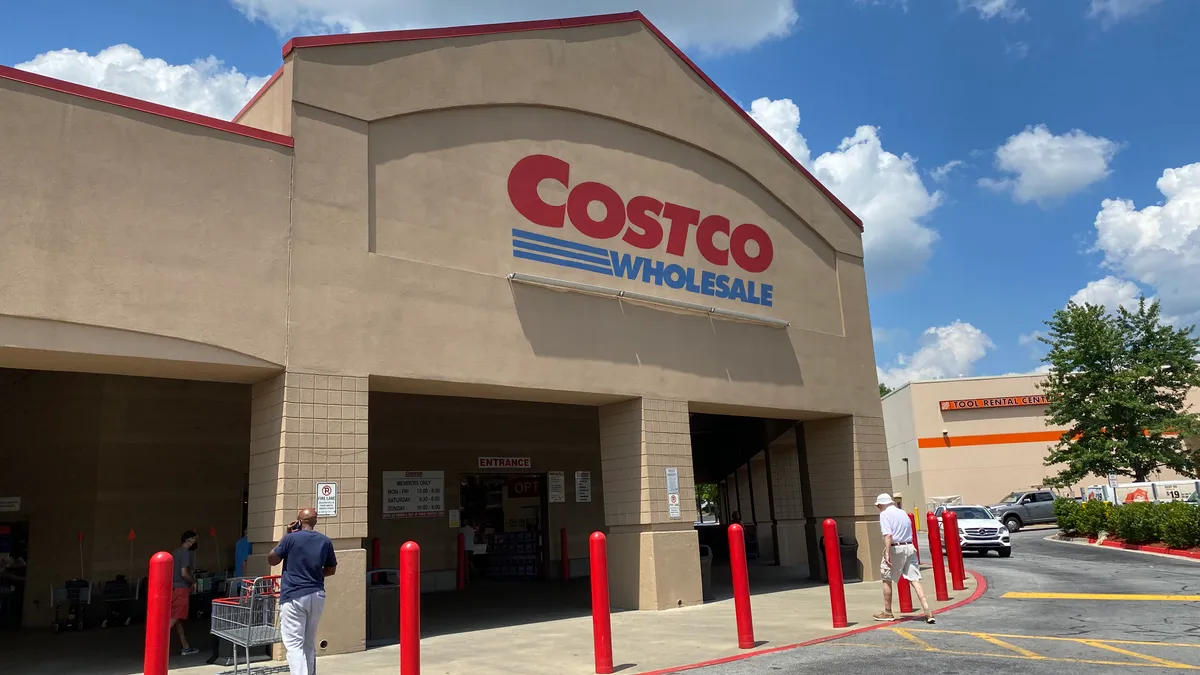
Walmart, for example, owned more than 3,700 of the over 4,600 stores it runs in the U.S. as of Jan. 31, while Costco owned the land and buildings that are home to 512 of the 629 membership warehouses it operated in the U.S. and Puerto Rico as of Aug. 31, 2025.
By contrast, Kroger owned just over half of the facilities that are home to its nearly 2,700 supermarkets as of Jan. 31, although some of those sit on land the company leases. Meanwhile, about 40% of Albertsons’ 2,244 stores were in facilities the company owns or leases as of Feb. 28.
Weis Markets owned 108 of the 202 grocery stores it operated as of Dec. 27, 2025.
Ingles has also asserted that Held’s role as chief investment officer of Summer Road would pose a risk to the company and its shareholders because the investment firm manages money that belongs to the Sackler family, which formerly controlled opioid medicine maker Purdue Pharma. That company was forced into bankruptcy in connection with its links to the opioid crisis.
The grocer has urged shareholders to vote for its two nominees to the board: Dwight Jacobs, a former Duke Energy senior executive, and Rebekah Lowe, a former regional bank president.