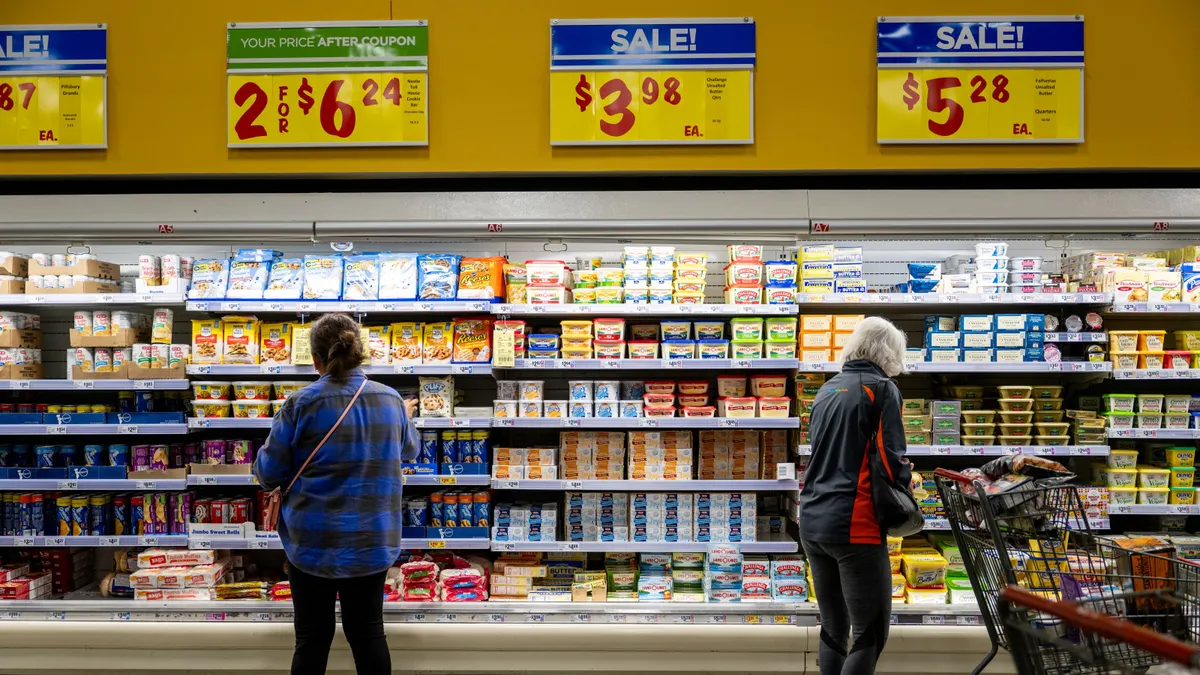
It’s no secret GLP-1 medications are drastically changing shopping behaviors. Baskets are shrinking as people using these drugs shift away from pantry staples and “carb-centric” goods toward protein- and fiber-rich items, seafood, functional nutrition and more intentional snacking, according to Numerator’s GLP-1 usage tracker in August.
Spending from this shopper cohort — which accounts for over $660 billion in consumer spending across CPG, general merchandise and quick-service restaurants — has declined nearly 4% compared to similar households not using GLP-1 medications after one year, Numerator found.
In response, grocers are working overtime to establish themselves as GLP-1 destinations. For instance, The Giant Company offered store tours to customers this past month to help them find food that pairs well with the weight-management medications. ShopRite launched wellness kits designed for customers new to GLP-1 medications, and Costco introduced more protein-focused products to its private label line.
But GLP-1 usage for weight loss and management is only temporary. So how can grocers support shoppers after they come off the medication?
The short answer: Grocers need to play the long game.
Research shows consumers’ grocery shopping habits stay the course for the first few months after coming off GLP-1 medications, but by the six- to 11-month mark, that behavior “largely converges back toward non-user norms,” Sherry Frey, vice president of Total Wellness at NielsenIQ, said in emailed remarks.
That could mean creating dedicated protein and fiber destinations and merchandising complementary products together while also highlighting nutrient benefits on shelf, she suggested. Grocers can also offer meal solutions built around satiety and balanced nutrition and use loyalty programs to personalize recommendations, she wrote.
Like many grocers, Hy-Vee has implemented wellness initiatives designed for shoppers taking GLP-1s for weight management. However, CEO Jeremy Gosch said Hy-Vee is trying to focus on the broader picture and support shoppers once their stint on the medication ends.
“We all know about GLP-1s, but the problem with GLP-1s is it’s going to help you eat less. It’s not going to change what you eat,” Gosch said during his keynote address at the Groceryshop conference in September.
With this issue in mind, Hy-Vee focuses heavily on educating customers about GLP-1s. In July, the grocer introduced a wellness program that aims to both help individuals taking the medications and also establish healthy habits they can continue practicing once they’re off the medication.
Unlike other grocers’ GLP-1 initiatives, Hy-Vee is focusing on long-term lifestyle changes. The six-week, self-guided online course it offered included one-on-one check-ins with a Hy-Vee registered dietitian, video modules and personalized goal setting. The course also helped participants establish lifelong habits such as staying hydrated; eating smaller, more frequent meals; and preparing meals ahead of time.
Gosch, like fellow food retailers, wants to cater to GLP-1 users, but he is also looking to keep this consumer cohort — as well as their new healthy eating practices — once their time on the medication ends.
“When they come off of the medication, they’re putting the weight back on,” Gosch said. “So we’re trying to make it so they have the ability to eventually not be medicated anymore because they’re going to change what they’re eating.”