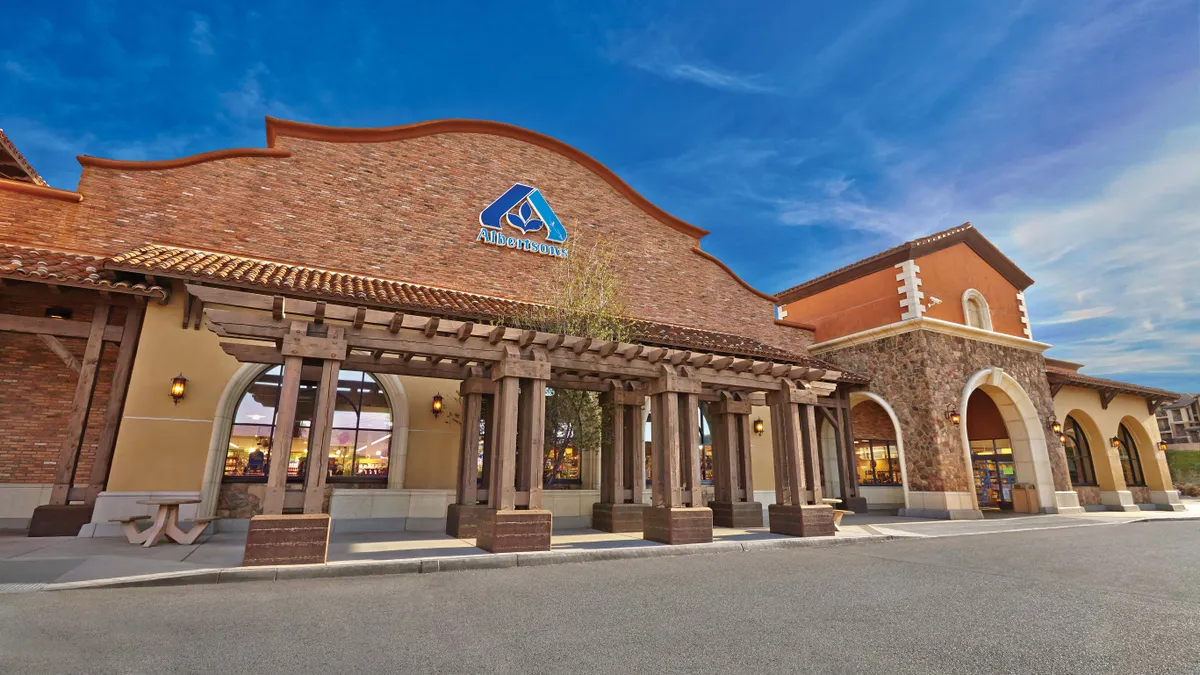
Albertsons’ recent steps to sharply increase the size of its board of directors give the company access to additional expertise but also might suggest to investors that it is unsure of its course at a time when it urgently needs stability, corporate governance experts said.
The company’s decision over the past few weeks to bring on five new directors, including an executive chair, also pushes it into the realm of a relatively small number of public companies with boards that have more than a dozen directors, raising questions about why Albertsons suddenly concluded that it needed to sharply expand, these experts said.
The fact that Albertsons has been dealing with weak sales and poor share price performance only adds to the intrigue, they added.
“Having such a large board is essentially waving their hands up and down on Wall Street saying, ‘We’re not doing very well. We don’t have a strategic direction right now.’ It’s a really bad sign,” said David Halliday, an associate teaching professor of strategic management and public policy at the George Washington University School of Business.
Albertsons currently has 15 board members, well above the average of eight to 12 directors typical of companies in the Russell 3000 stock index, according to data published last December by the Harvard Law School Forum on Corporate Governance show. Only about 6% of companies in the index, which Albertsons is part of, had more than 12 directors in 2025, and the statistic has trended downward since 2022, according to the corporate governance group.
Adding multiple new directors represents a large change for Albertsons’ governance structure, said Jason Schloetzer, associate professor of business administration at Georgetown University’s McDonough School of Business.
“It suggests that the current board had some gaps in skill, rather than the current board was underperforming,” he said.
Albertsons’ new board members include Meg Ham, former president of Ahold Delhaize USA banner Food Lion. Food Lion stood out among Ahold Delhaize’s U.S. grocery chains during Ham’s tenure, posting an extended record of quarterly sales increases and repeatedly drawing accolades from Ahold Delhaize’s top management on earnings calls.
Albertsons also looked outside the grocery industry in its quest to bring on new directors, naming senior executives of hardware store chain Lowe’s Companies and data center developer and manager Aligned Data Centers to the board last month, along with Ham. The company brought its board to 15 members earlier in October, when it named Harmit Singh, chief financial and growth officer of Levi Strauss & Co., as a director.
Perhaps most significantly, Albertsons named Meg Whitman, a former CEO of Silicon Valley icons HP and eBay, as its first executive chair, thrusting a high-profile technology specialist into a management role that gives her broad latitude to influence the grocer’s operations and top management.
“It might be the case that they’re looking at some short-term wins on the operating dimension. But it certainly looks like they’re setting themselves up for a longer term change in who they are,” Schloetzer said about Albertsons.
Schloetzer said changes to a company’s board makeup can signal that it is preparing for bigger changes down the road, noting that only a minority of companies appoint an executive chair instead of relying on an outside member to sit atop the board.
“It just seems odd that a board would suddenly decide, ‘We haven’t done a good job, we need new people.’ That seems like something that they … could have decided a long time ago,” Schloetzer said.
Halliday noted that it can take time for changes to a company’s board to yield improvements.
“They have this real expertise. But [to translate] real expertise into real-world action, either cost savings or revenue and profit increases … they’ve got a lot of work to do,” Halliday said about Albertsons.