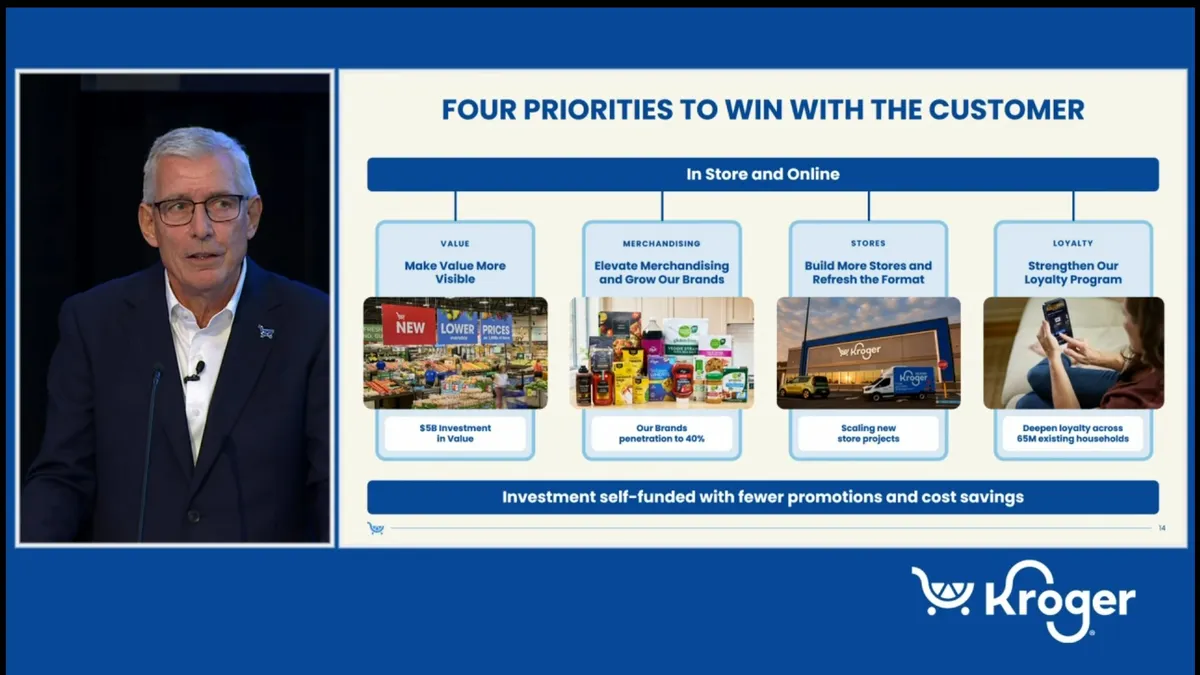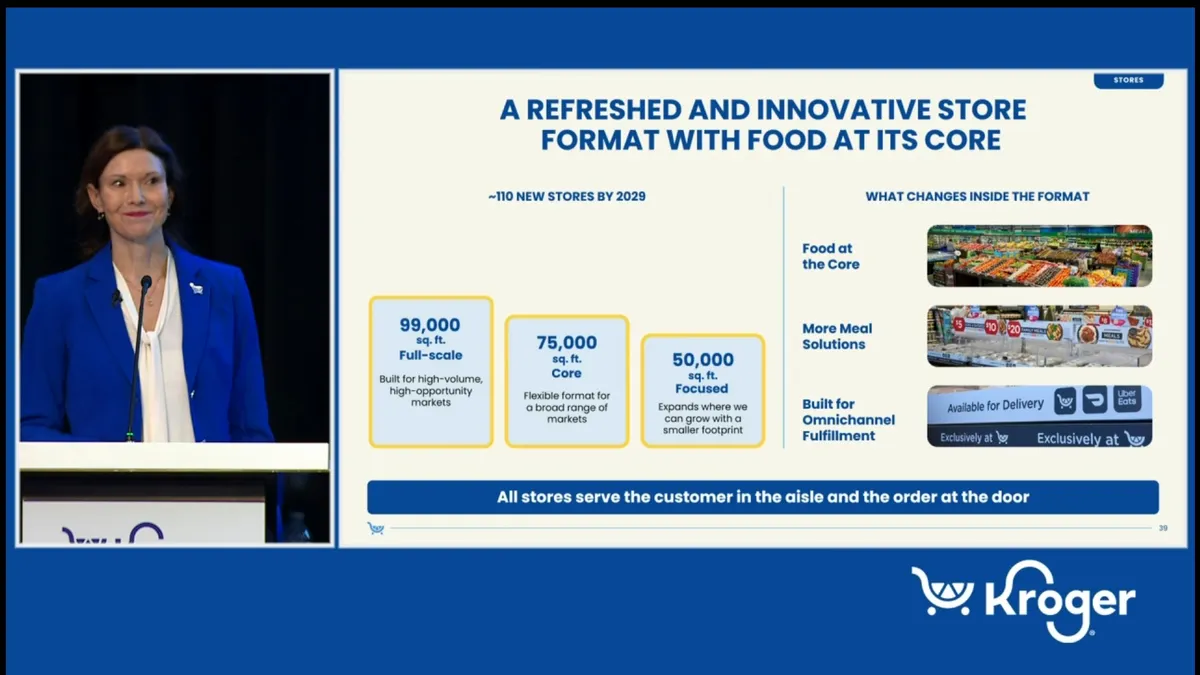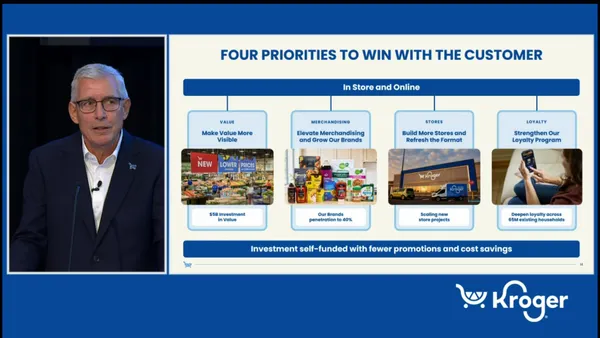
As Greg Foran settles into his new role as Kroger’s CEO, he has made clear that the path forward for the nation’s largest supermarket chain has to focus on offering lower prices.
“We need to grow sales faster, and in my experience, that comes down to giving customers a compelling reason to shop with you,” Foran, a former top executive of discount king Walmart who took over leadership of Kroger in February, told investors in early March. “Customers need to trust that they’re getting a fair deal every time they walk into our stores.”
Just a few months later, Foran’s assertion has only gained currency as grocery prices continue to rise against a shaky economic backdrop punctuated by higher fuel prices and unfavorable weather patterns that could affect global food supplies.
Foran has since underscored his resolve to make Kroger more competitive with retailers that shoppers have long associated with bargains, like Walmart and Aldi, telling Bloomberg in an interview last month that Kroger plans to roll out widespread price reductions.
Kroger is hardly alone among the nation’s food retailers in declaring that it sees lowering prices as job one.
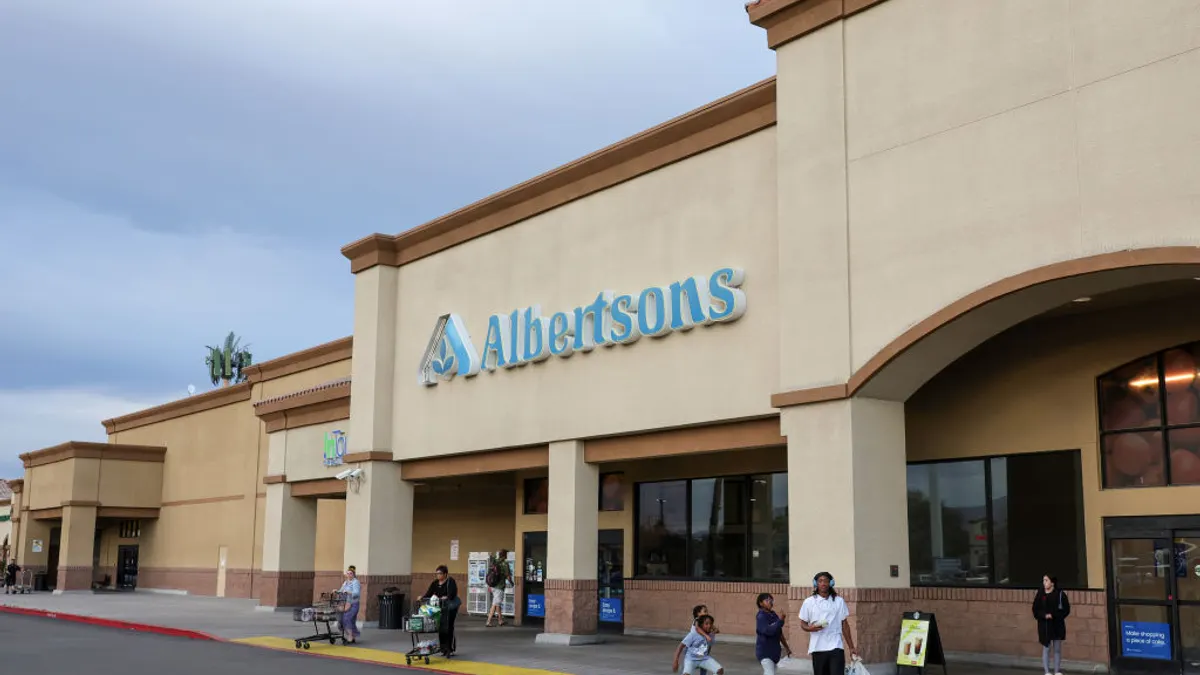
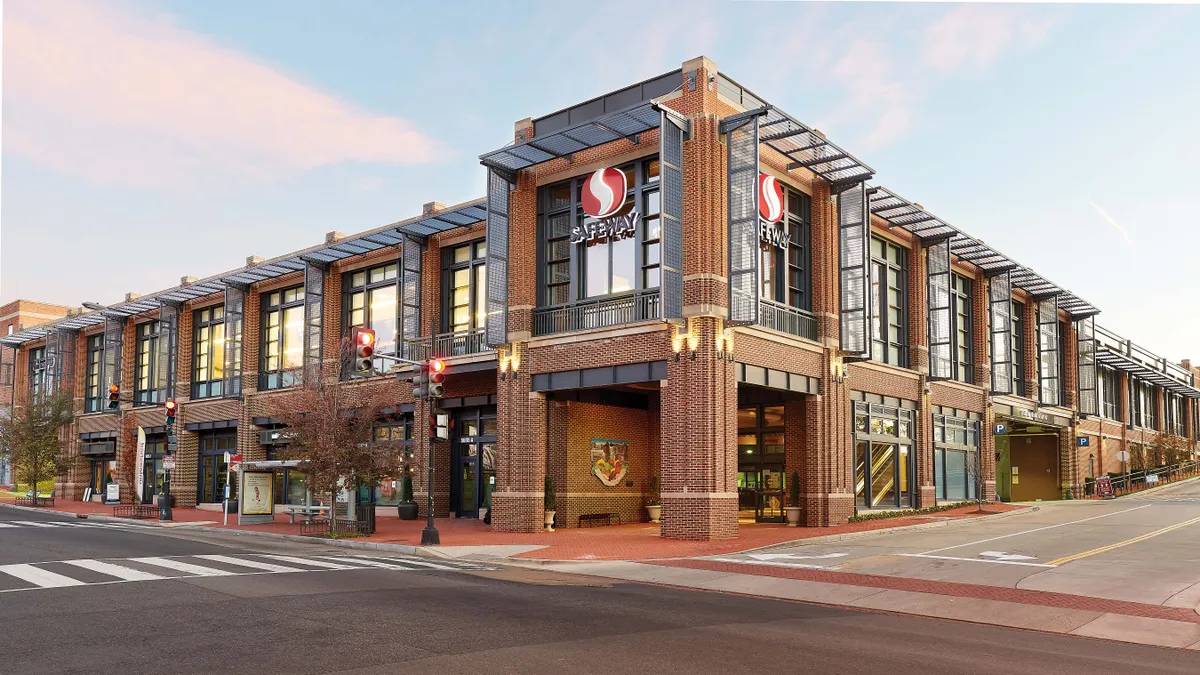
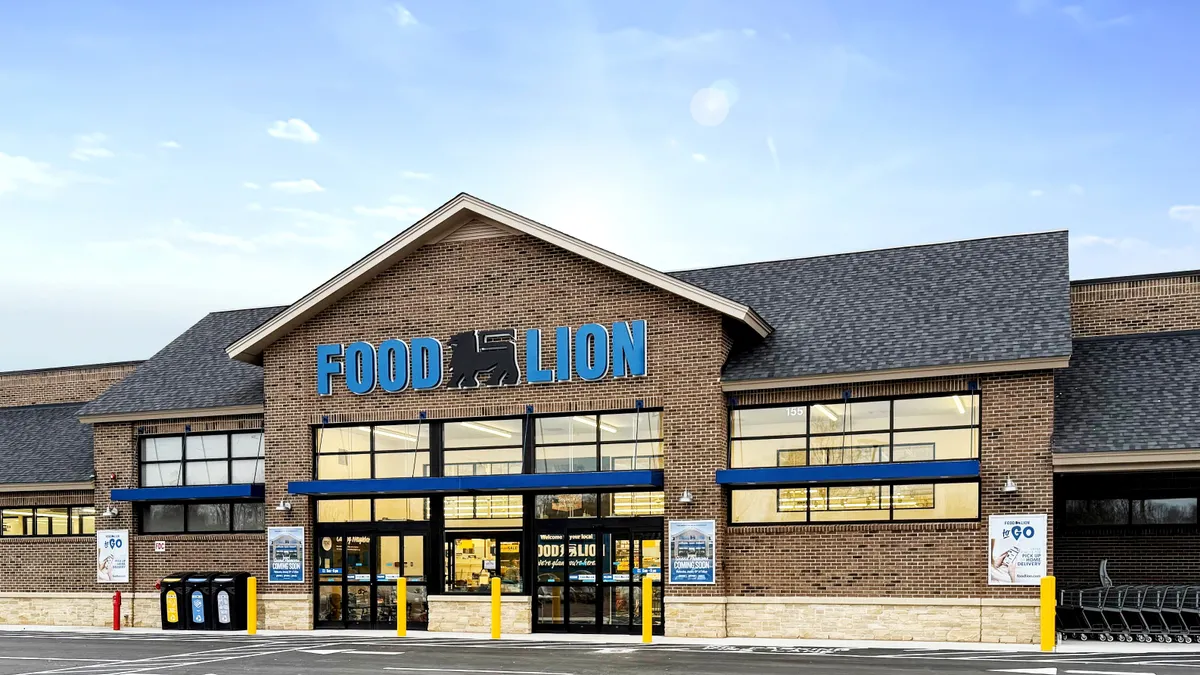
In May, Stop & Shop — which has been trying to restore its luster after years of underperformance — announced that it had finished bringing lower everyday prices across its fleet of more than 350 stores. On Wednesday, fellow Ahold Delhaize USA-owned chain Food Lion started a three-week “savings event” that will give members of its loyalty program up to 50% off on certain products.
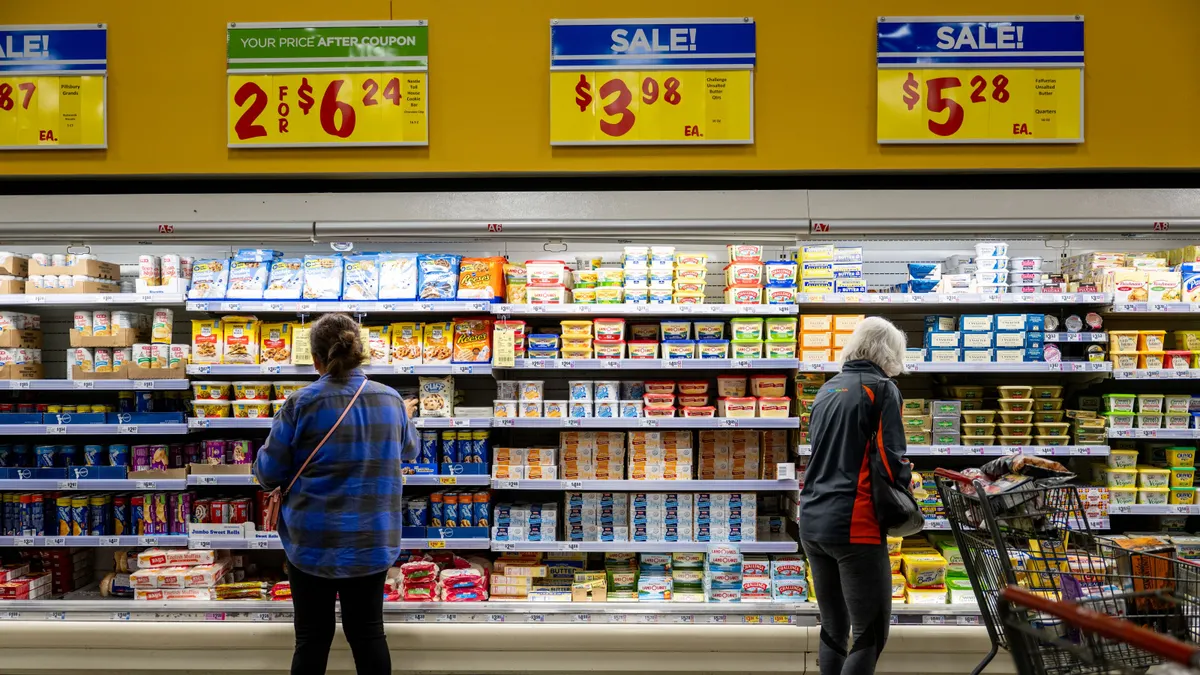
Sales and promotions are nothing new in the grocery industry, of course — but after years of dealing with steady increases in the cost of everything from insurance and health care to energy and food prices, shoppers have come to expect retailers to double down on price cuts for good, analysts said.
Supermarket operators that have long relied on promotions to hold down costs face particular pressure to lower prices for the long haul, said Michael Infranco, assistant vice president of retail intelligence firm RetailStat.
“I think in the past, a lot of times you’d have a transient consumer. They’d adapt, prices went up, inflation was high, money was tight, they’d make a shift — but then they’d go back to what they did before,” Infranco said. “I think we’re seeing a permanent shift in the consumer now, and I think that has a lot to do with the way traditional grocers are going to behave going forward.”
People have grown accustomed to retailers taking measures to bring down prices, and that expectation has put pressure on them to keep demonstrating that they are focused on value, Infranco added. “That shift in the consumer, I think, is a really big deal,” he said.
The latest Consumer Price Index data suggests that grocery prices might be leveling off. Food-at-home inflation in May came in at a 2.7% annual clip, down slightly from the rate in April. That figure is still close to a three-year high, however, and prices for some items, such as meat, continued to accelerate rapidly in May even as overall food inflation was slightly lower.
In addition, overall inflation was up considerably in May, reaching a 4.2% annual rate. That dynamic could further frustrate shoppers and heighten their drive to cut costs wherever possible.
Neil Saunders, managing director of GlobalData Retail, said the conditions grocers are facing underscore the close connection shoppers are making between prices and their perception of value when deciding where to buy groceries.
While temporary price cuts and promotions can help people save money, consistently low prices are especially important in driving customer loyalty, Saunders wrote in emailed comments. “Shoppers are putting in a lot more work to find deals, so temporary promotions and cuts do work to some extent, but they really want reassurance that their whole cart isn’t going to cost them an arm and a leg,” he said.
Achieving that could be especially hard for traditional grocers even if they aggressively lower prices. Research released earlier this year by AlixPartners found that just 13% of consumers who regularly shop at traditional supermarkets believe that those retailers have low prices, suggesting that the industry faces a steep challenge in changing people’s minds about where they can find reliably low grocery prices.
Another problem supermarket companies face is that shoppers have long seen discounters like Walmart and Aldi as havens where they can always save money.
“Walmart’s price investments are made to retain its status as a price leader. It is operating from a position of strength as it knows that grabbing more customers in grocery also helps to boost non-food categories where its margins are stronger,” Saunders said.
One technique that traditional grocers can employ as they work to lower prices is to press food suppliers for assistance, said Tom Furphy, a former Amazon and Wegmans executive who is CEO and managing director of venture capital firm Consumer Equity Partners.
“They’re in the same costing environment … so you’re not going to get everything from there, but as a retailer, you shouldn’t be the only one to feel it,” he said.
Retailers also stand to benefit by simplifying how they present prices to shoppers, such as by bringing regular prices down modestly and avoiding especially deep promotions, Furphy said.
“Some items are more important than other items to customers in pricing, so you can probably find the items that … have the highest price profile and be sharper on those, and then maybe as you get to the mid and tail of the assortment, maybe that's where you can” charge a little more, he said.
Saunders noted that grocers are navigating an economic landscape that has changed markedly in the years since the COVID-19 pandemic upended how people shop for essential goods.
“People use more stores than they did pre-pandemic as they are shopping in a more piecemeal way to get the best prices, maybe using one store for household essentials and another for fresh. That pattern doesn’t look like it will change anytime soon,” he said. “Many people have simply not come to terms with the current price of a grocery shop.”
Jeff Wells and Catherine Douglas Moran contributed reporting.