Dive Brief:
- New Jersey Gov. Mikie Sherrill on Thursday signed the Fair Price Protection Act, which bans businesses from using consumer data to set individualized prices.
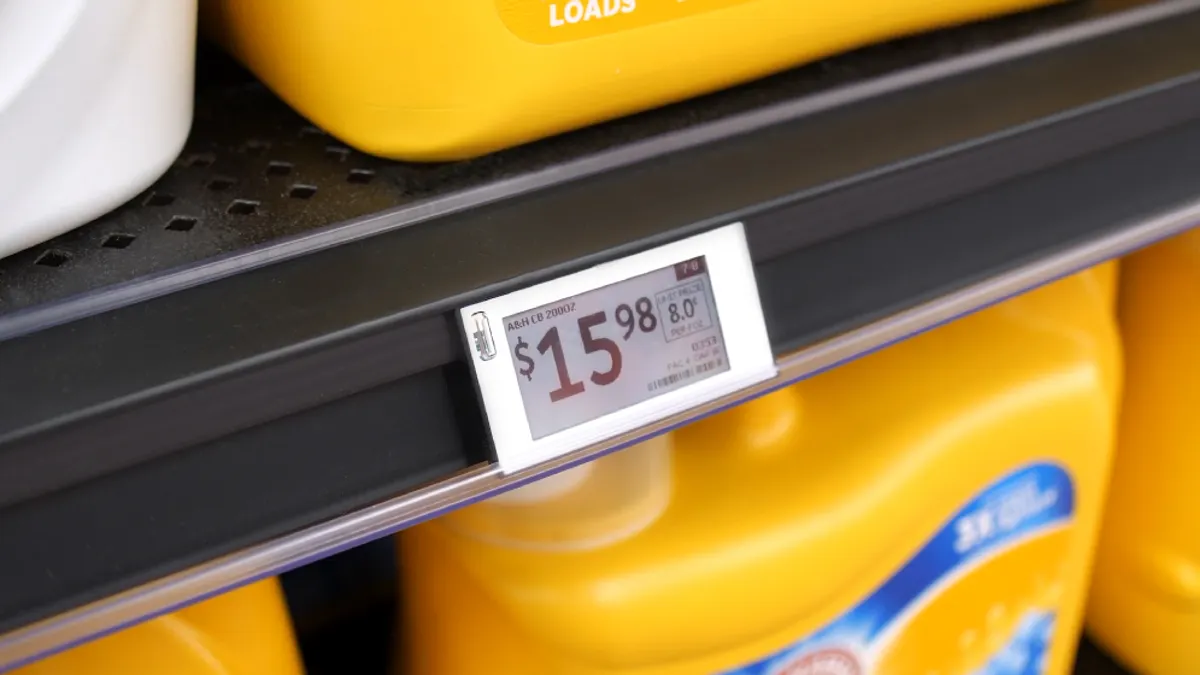
- The legislation also puts in place a one-year moratorium on the new use of electronic shelf labels. The legislation does not impact how retailers set prices for loyalty program members or for discounts “offered to broadly defined groups,” such as teachers or veterans.
- The ban comes as other states, such as Maryland, crack down on pricing practices that consumer advocates claim are predatory.
Dive Insight:
Before receiving Sherrill’s signature, the legislation prompted strong mixed reactions.
The National Grocers Association urged Sherrill to make “targeted” changes to the bill, such as clarifying provisions affecting discounts and promotions, improving transparency around delivery fees and pricing disclosures, and removing the legislation’s moratorium on electronic shelf labels. Chamber of Progress, a tech industry coalition, claimed the “flawed” bill would impact discounts.
Meanwhile, the United Food and Commercial Workers International Union, which has been pushing for states to ban ESLs and pricing practices it claims are discriminatory, praised the legislation as strengthened protection for consumers and workers.
The announcement from Sherrill’s office indicates that the governor signed the legislation as a way to encourage practices that would help make groceries more affordable.
“If businesses want to compete, they should do so by offering better prices, not by finding new ways to squeeze shoppers. This law puts New Jersey shoppers first by protecting their privacy and ensuring fairness in pricing,” Sherrill said in a statement.
Sherrill’s office noted that while companies have long adjusted prices based on market conditions, “surveillance pricing” allows retailers to set prices based on an individual’s characteristics, “often without their knowledge.”
The one-year pause on ESLs only impacts retailers who haven’t added the technology yet. Those that have or are replacing or repairing existing ESLs will not be affected. The pause allows the New Jersey Innovation Authority, a newly created office within the state’s treasury department, to study the technology’s impacts.
The legislation will take effect “on the first day of the seventh month next following the date of enactment,” according to its text.