Dive Brief:
- Food-at-home prices rose in April at a 2.9% annual clip — their fastest pace of increase in almost three years — according to Consumer Price Index data released Tuesday by the U.S. Bureau of Labor Statistics.
- Grocery inflation moved up 0.7% last month compared with March, when the metric eased slightly on a month-to-month basis.
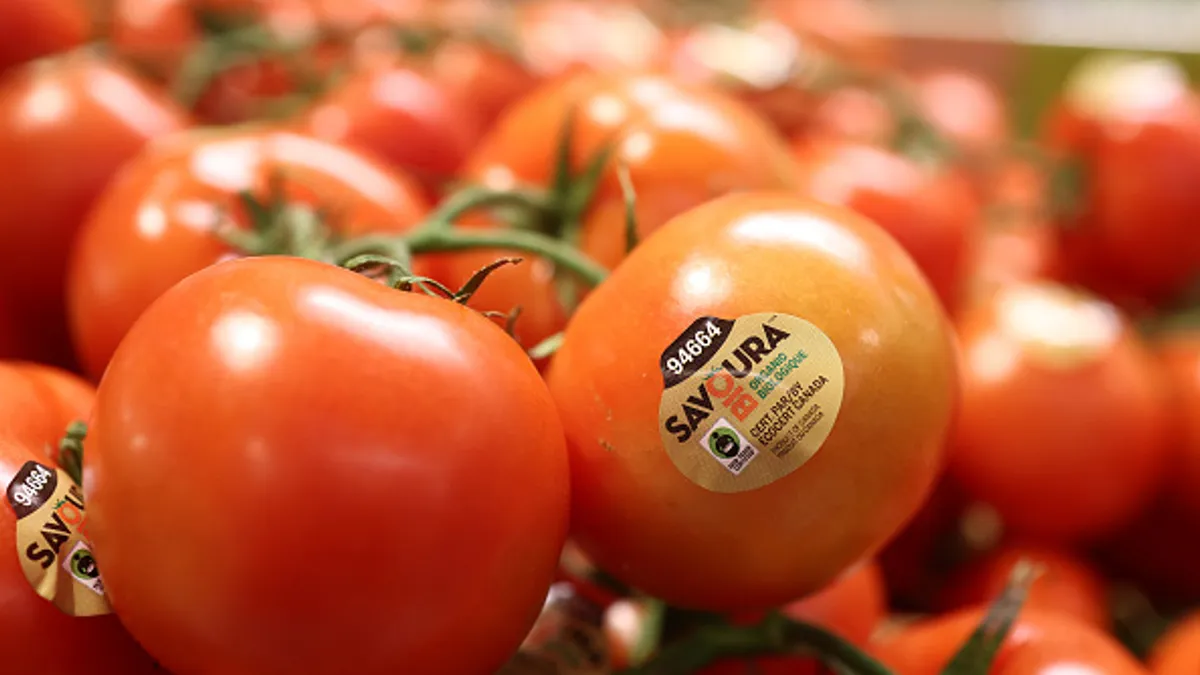
- Tomato prices increased nearly 40% in April compared with the same period in 2025 — the highest rate of inflation among the food-at-home categories the BLS tracks.
Dive Insight:
Grocery inflation remained in somewhat of a holding pattern during the final two months of 2025 and the first quarter of this year, bouncing between a yearly pace of 1.9% and 2.4%, but that pattern abruptly ended in April.
The annual pace of food-at-home inflation moved up by a full percentage point last month compared with March — the largest month-to-month increase for the metric since May 2022, when prices were skyrocketing and inflation was in double digits. Grocery inflation came in at 1.9% in March.
The 2.9% rate of food-at-home inflation recorded in April is the highest level since August 2023, when grocery inflation stood at 3%.
Overall inflation hit 3.8% in April, the highest rate since May 2023. The BLS did not release inflation figures for most categories for October 2025 because of the federal government shutdown.
Meat prices continued to play a central role in pushing prices up in April, with beef price inflation remaining in double digits. Prices for uncooked beef roasts were up almost 18% last month compared with their level a year ago, while prices for uncooked beef steaks surged just over 16% and uncooked ground beef prices were up 14.5%.
Shoppers also paid significantly more for produce in April, as prices for fruits and vegetables moved up approximately 6%. Fresh vegetable prices were up at an especially fast clip, rising 11.5% as tomato prices skyrocketed.
Coffee was another source of pain for grocery shoppers, as the beverage cost almost 20% more last month than it did a year ago.
On the other hand, prices for poultry were up less than 1%, with prices for fresh whole chickens declining nearly 2%. Egg prices, which were a symbol of high grocery prices last year, fell more than 39%.