The Friday Checkout is a weekly column providing more insight on the news, rounding up the announcements you may have missed and sharing what’s to come.
Not all grocery initiatives are built to last, and many are now skeletons in retailers’ closets. In the spirit of Halloween, here’s a look at the stores, strategies and other industry initiatives that got buried in “The Grocery Graveyard” this year.
Haunted stores
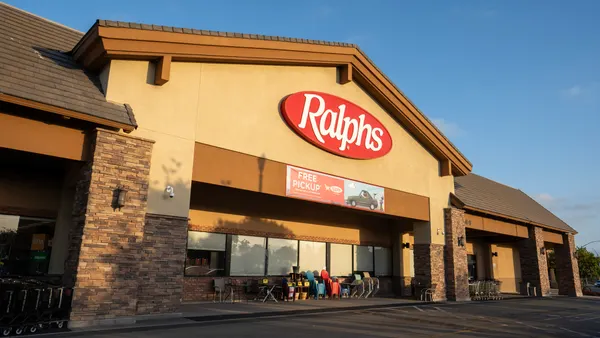
A scary number of grocery companies have announced store closures in recent months, including Kroger, which has put at least 39 locations on the chopping block as of August. That disclosure came just two months after the company revealed plans to close around 60 underperforming stores by the end of 2026.
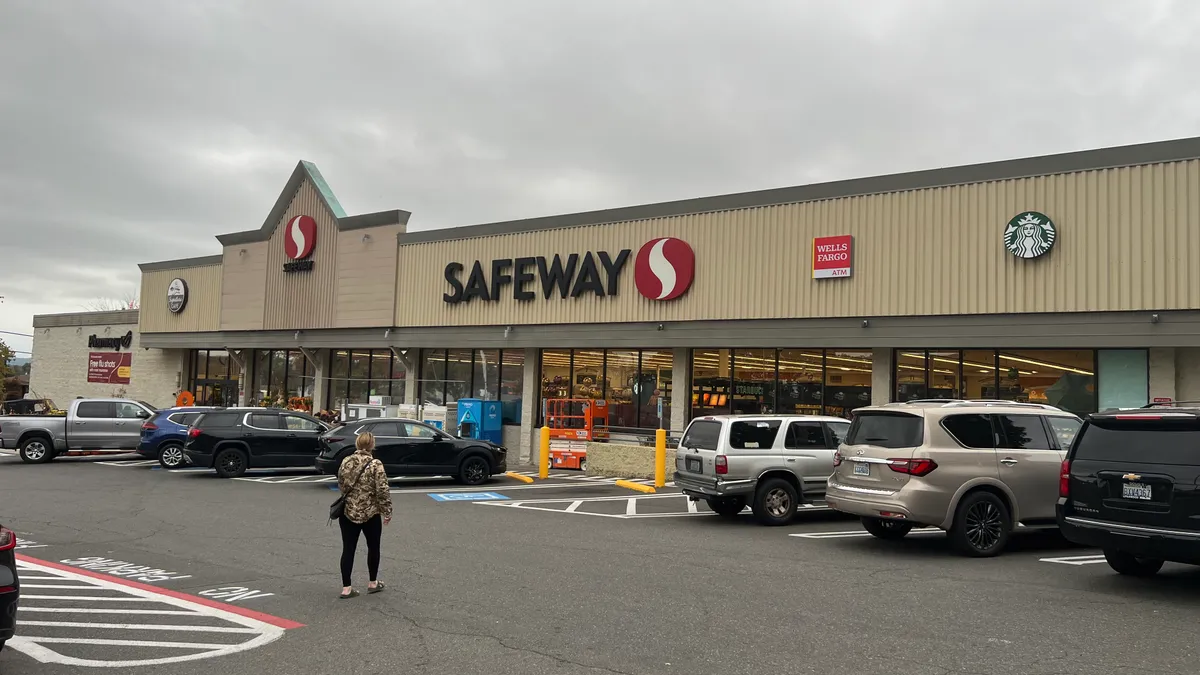
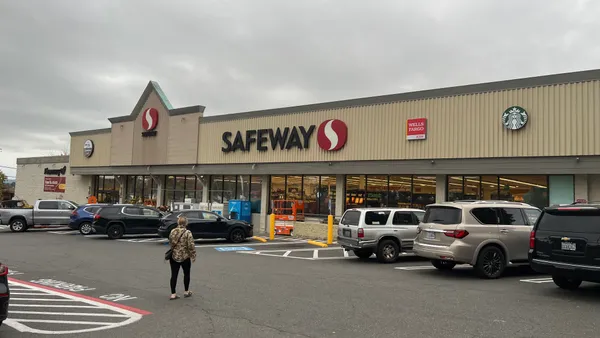
United Natural Foods, Inc.’s Shoppers stores have also been disappearing, with multiple Maryland locations closing over the past two months. Albertsons has also been closing stores, including a dozen Safeway locations that will shutter by early next month.
The Grim Reaper came for e-commerce facilities
The COVID-19 pandemic spurred immense e-commerce growth, and many grocers quickly moved fulfillment to dedicated facilities, from manual-pick warerooms to automated micro-fulfillment centers. With grocers now emphasizing efficiency as online shopping growth has cooled, the focus has returned to store-based fulfillment.
Ahold Delhaize’s Stop & Shop banner confirmed in August that it would close seven e-commerce fulfillment facilities across four states.
In February, it seemed like Kroger brought its partnership with Ocado back from the dead when the grocer announced plans to open a pair of automated fulfillment centers — marking the first update from the companies after a long stretch of silence. Come September, however, Kroger told investors it is conducting a “full site-by-site analysis” of the robotic fulfillment network as it looks to improve profitability and reduce costs.
Boo-bye to the penny?
The one-cent coin may be small, but its impact is great. The country is currently undergoing a penny shortage due to the U.S. Mint halting production earlier this year. This is causing a scare for retailers, as it’s difficult for them to make exact change for cash-paying customers.
With the copper currency unit on the brink of becoming a ghost, Giant Eagle got creative. The regional grocer announced this week that it is holding a one-day chainwide event where customers can exchange pennies for a Giant Eagle gift card equal to twice the value of the pennies they bring in.

In case you missed it
Seattle bill would block restrictive covenants on grocery store sites
Grocers that close a store in the West Coast city can no longer prevent a competing chain from taking over their space due to legislation that lawmakers unanimously approved this week.
The one-year measure, intended to stave off food deserts, is a direct response to the recent closure of several supermarkets in Seattle, including Whole Foods Market and Fred Meyer locations, according to a press release. Seattle has recorded at least two covenants preventing a property’s use as the site of a grocery store for up to 50 years, the office of Mayor Bruce Harrell said.
The bill, which is headed to Harrell for his signature, is intended to give the city council time to work on a long-term response to Seattle’s loss of grocery stores, KOMO reported. The council also declared a public health emergency because of the number of recent grocery store closures in the city.
Trader Joe’s growth spurt continues
The fast-growing specialty grocery chain opened a new store in Holladay, Utah, on Friday and debuted a location in Iselin, New Jersey, on Wednesday, continuing a string of new store openings throughout October. The 11 Trader Joe’s stores that began serving shoppers this month also include locations in Oklahoma City; Gresham, Oregon; Bee Cave, Texas; and Columbia, Missouri.
Hannaford upgrades online presence
The New England grocery chain has rolled out a series of changes to its e-commerce system, including an improved search engine and the ability for customers to pre-select substitutions as they shop. The grocer has also added shoppable recipes, started allowing people to use biometrics to sign in and expanded the number of payment types it accepts. The changes reflect the grocer’s transition to parent company Ahold Delhaize’s in-house digital and e-commerce platform.
Impulse find
Santa comin’ in hot to Target
As Target looks to rekindle ties with shoppers during the waning weeks of a tough year, the mass retailer has launched a reprise of a popular advertising campaign it ran in 2024 that features Santa Claus as a jolly store employee known as “Kris K.”
Target plans to use the marketing campaign to drive excitement about its offerings by allowing people to get to know the fictional team member, who Target said is “a football fanatic, avid traveler and amateur DJ who embodies the joyful, witty and effortlessly cool spirit of the holidays.”
The campaign, which includes TV commercials and social media posts, features 10 spots that will run across multiple platforms. Target released a broadcast spot on Sunday that portrays Kris K. as a man on a mission to identify top holiday gifts.
On Sunday, the retailer began posting on social media, including a video of a shopper encountering the character who has become known as “Hot Santa.” The shopper is the same one who called Kris K. “weirdly hot” in a spot Target ran last year, when the company said the seasonal advertising campaign drew more than 70 million views on TikTok alone.