Over the past couple of years, seafood has not been grocers’ best-performing department. However, 2025 saw a slight shift in the tide as seafood unit and dollar sales across fresh, frozen, shelf-stable and foodservice grew marginally, according to FMI — The Food Industry Association’s latest Power of Seafood report, which includes data from Circana.
With 40% of all seafood purchases are made by 10% of shoppers, FMI urges grocers not to lose sight of these consumers — especially if they are frequent seafood consumers. Frequent seafood consumers, meaning shoppers who eat seafood at least two times per week, have higher incomes, are more educated and have larger families that usually include children, according to FMI. The report added that these consumers shop frequently, buy online and spend more on groceries, especially when purchasing seafood.
Here are three key statistics from the report that can help grocers make the most of their seafood offerings.
38%
Percentage of seafood shoppers who say their primary supermarket is not their primary seafood store.
The share of seafood shoppers who say their traditional grocery store is their primary seafood store has been trending downward in recent years, according to FMI. Recent data show that 72% of consumers shop for their seafood at more than one location.
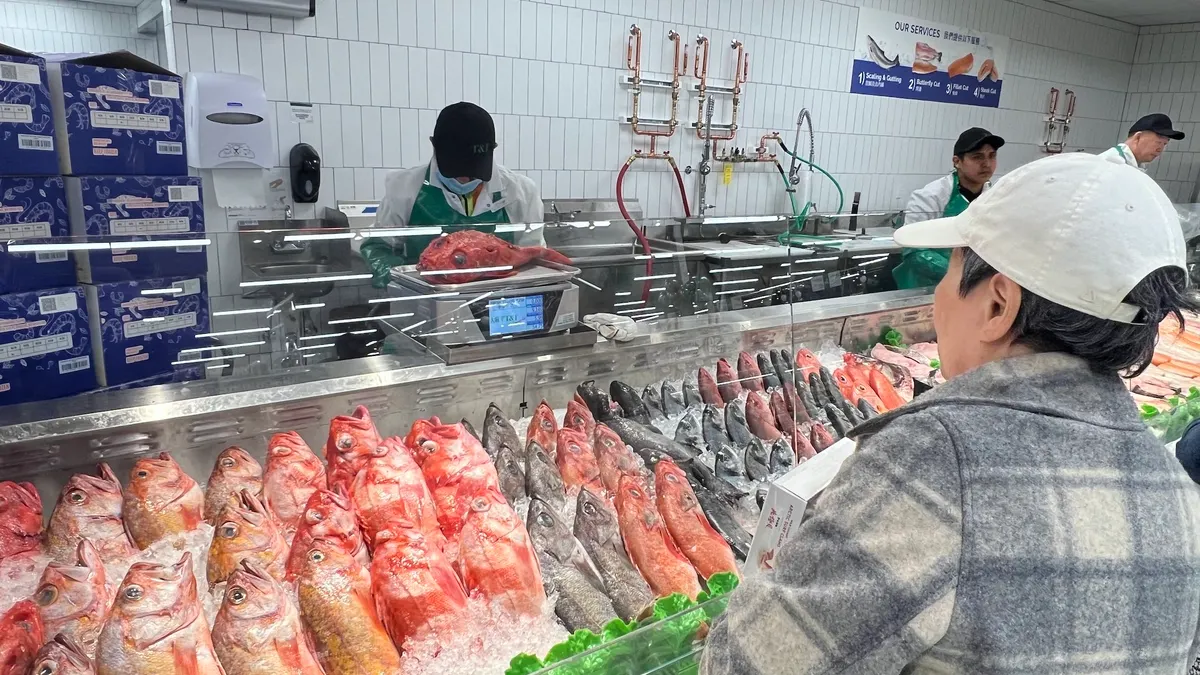
Traditional grocers come out on top against mass retailers and club stores as shoppers’ go-to seafood destination. However, “a diverse mix” of other retailers is cited as the main seafood store by 24% of seafood shoppers, FMI reported. Frequent seafood shoppers particularly favor specialty places such as seafood markets, farmers markets, natural and organic stores and international grocery stores, according to the report.
FMI said grocers can cement their role in shoppers’ routines by positioning themselves as a “seafood destination” through their offerings. Highlighting freshness — one of the top factors influencing where consumers buy their seafood — would also work in their favor, per the report.
48%
Percentage of seafood consumers who have purchased fresh or frozen seafood online.
While online seafood sales are only a small fraction of total seafood sales, it’s important to note that frequent seafood consumers are more likely to shop online for groceries, according to the report. And, as with in-store, consumers who buy seafood online do so from numerous places — so grocers should find ways to reel these customers in via their digital platforms.
Traditional grocers should view their online channels as a means to reach seafood consumers “on their path to their actual seafood or other grocery purchases,” FMI said in the report. Though in-store is still where a majority of seafood purchases take place, grocers can use their digital marketplaces to showcase not only that they are a seafood destination, but that they are sensitive to shoppers’ concerns about food affordability. Clear communication around sales and special deals can help manage shoppers’ price perceptions, FMI added.
62%
Percentage of shoppers who plan their seafood purchases in advance.
Seafood products are not impulse buy items. So much so that only 10% of surveyed consumers cited these products as an impulse purchase — the lowest proportion over the past six years, according to the report.
While discounts can encourage last-minute seafood purchases, grocers should also lean into their customers’ desire to plan their seafood purchases by providing both in-store and online meal planning tools, FMI said.
FMI also reported shoppers’ growing interest in learning new cooking methods, so messaging about seafood should include easy prep advice and underscore convenience. This approach can go further if grocers tie in deli and foodservice seafood offerings into meal options.