Dive Brief:
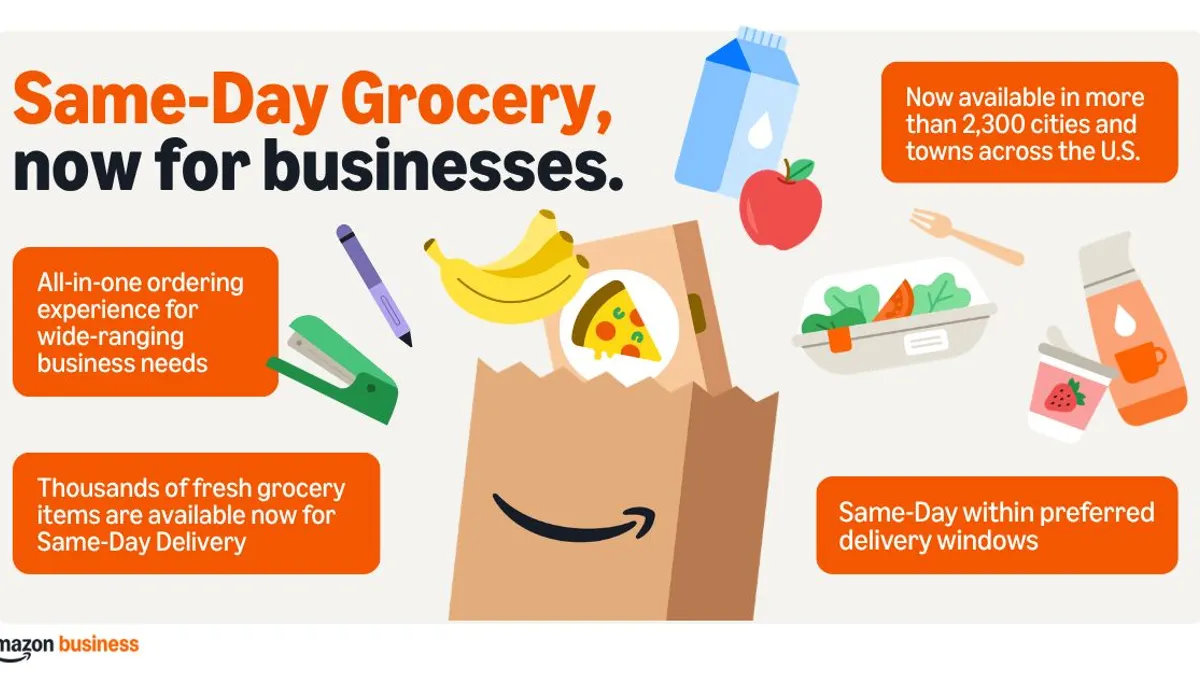
- Amazon’s business delivery service is adding same-day perishable grocery delivery to its operations, allowing businesses to order food and office essentials at the same time, according to a Tuesday announcement.
- The offering is available in 2,300-plus cities and towns — the same footprint as Amazon’s same-day perishable grocery delivery for consumers.
- The move continues Amazon’s efforts to solidify its place in the grocery sector — and underscores how the company is focusing on its core e-commerce strength to do so.
Dive Insight:
Since shuttering Amazon Fresh and Amazon Go, Amazon has shifted much of its grocery business growth to e-commerce — the company’s bread and butter.
Amazon launched its same-day perishable food delivery service in August 2025, bringing it to more than 2,300 locations by the end of last year. The company said in its Tuesday announcement that the positive feedback it has received on that service’s rollout prompted expanding the offering to Amazon Business.
“By adding fresh groceries to the already expansive selection Amazon Business offers, organizations can now combine items like copy paper and printer ink with milk, fruit, and other breakroom staples — check out with a single cart, and have everything delivered to their workplace within hours,” Shelley Salomon, vice president of Amazon Business, said in a statement.
Businesses can select delivery windows and set preferences that ensure groceries arrive within their hours of operation, per the press release. Amazon does not require companies to buy in bulk or commit to subscriptions, Matt Owings, senior product marketing manager for Business Prime, wrote in a company blog post on Tuesday.
Business Prime members are eligible for free same-day delivery on orders over $25 in most areas, Amazon said in Tuesday’s announcement. Orders that don’t meet the minimum will incur a $2.99 delivery fee. For non-Business Prime members, same-day delivery costs $12.99.
Amazon competitors Costco and Walmart offer B2B delivery. In 2023, Instacart launched a B2B delivery service aimed at small businesses.
During Amazon’s latest earnings call, CEO Andy Jassy said the company is now the second-largest U.S. grocer, logging more than $150 billion in gross sales last year. That figure reflects its grocery delivery and Whole Foods Market businesses but also the many nonperishable grocery items it sells on its marketplace.
Amazon continues to establish itself as a resource for other companies. The company also announced this week that Amazon Supply Chain Services will now provide a variety of logistics services to any company, including those not selling on its e-commerce platform, sister publication Supply Chain Dive reported.