When Daniel Vitiello and Brandon Warman launched their Cooklist recipe-building app in 2018, the concept of using a computerized brain to converse with customers and automatically put groceries into an online cart was little more than a futuristic idea.
But while that kind of relationship between computers and humans was still years away, Vitiello and Warman were convinced from the start that artificial intelligence would eventually reach a point where it could handle almost every part of the shopping experience — and they set their sights on building such a tool.
“We set the mission of the company to ‘eat intelligently,’ which means [we were] going to try to combine the intelligence of a personal shopper, personal chef and nutritionist to help anticipate your needs and meet your goals, and really just eliminate all the friction with grocery shopping,” Vitiello said.
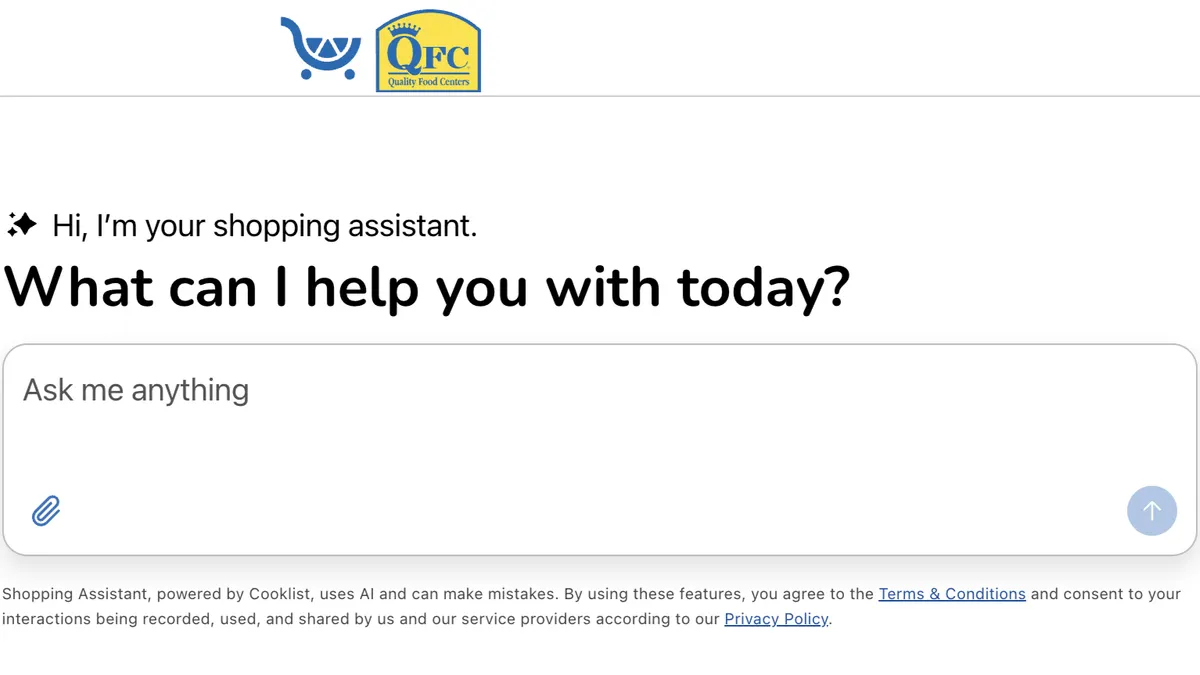
Last week, Cooklist officially announced that it had reached its goal and is now offering technology that lets grocers serve up an agentic shopping experience simply by integrating the startup’s code into their e-commerce platform. The company’s first customers include Wegmans and Kroger, which are now both offering shoppers who visit their websites an online assistant that lets them describe their needs and then receive a shopping cart loaded with suggested products.
Kroger banners that are now using Cooklist’s technology include Fred Meyer, Ralphs, Baker’s, Dillons, QFC and Smith’s, according to Cooklist.
Cooklist is not alone in making inroads with agentic AI technology in the grocery sector. Last December, Albertsons launched its own agentic AI shopping assistant. Third-party e-commerce providers like Instacart, DoorDash and Uber also offer agentic AI capabilities to grocers.
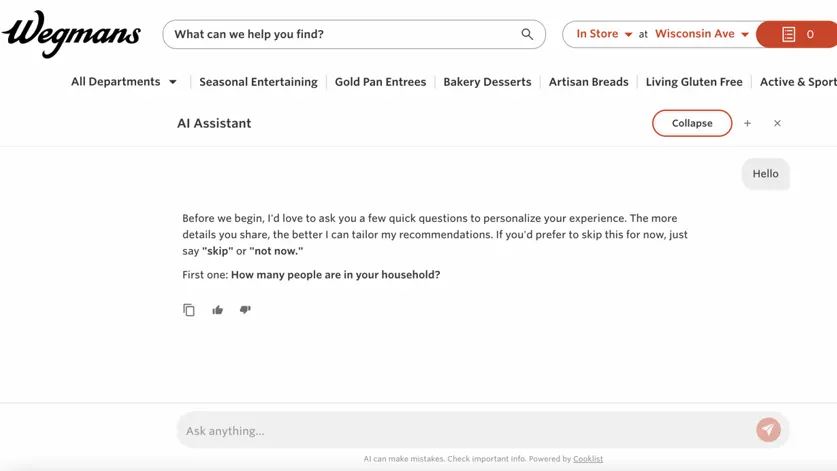
A Kroger spokesperson declined to comment about the company’s relationship with Cooklist, and Wegmans did not respond to a request for comment. However, AI assistants available to shoppers who log in to either retailer’s websites note that the tools are “powered by Cooklist.” Wegmans’ assistant alerts customers that the tool is in beta mode and asks them to affirm that they understand that it is experimental before using it.
Cooklist’s technology is now available to shoppers at seven grocers spanning over 700 U.S. stores and the company expects to expand to about 700 more locations in the coming weeks, the company said. The expansion includes 10 additional regional and national grocery banners, which the company did not name.
Vitiello said Cooklist is able to integrate its agentic AI technology into an e-commerce platform in about six weeks. He added that the company’s pitch includes allowing retailers to add agentic AI to their customer-facing systems without needing to develop the capabilities in-house or cede control of customer data to a third-party provider like Instacart, which many retailers rely on to provide AI-based shopping tools.
“Retailers own all their data [with Cooklist]. They have complete control of how everything works,” Vitiello said. “We really help tailor it to work the way that they want and integrate with their existing systems, so we’re finding that there’s an appetite for this type of a model right now.”
Cooklist’s technology has emerged not only as a tool to help people with online shopping but also as a way to drive people to brick-and-mortar stores, according to the company. About half of the people who use assistants based on Cooklist’s technology go into a store to complete their order, Vitiello said, adding that in some cases nearly a third of the queries grocers’ assistants are handling are support-related. The technology can also help guide people to products as they walk store aisles, he said.
“Something else that retailers are considering is … beyond just being a shopping assistant, how can it more generally help with the store operations and the load going to the customer support teams?” said Vitiello.
Warman noted that customers have shown a willingness to provide more details when they converse with its AI-based tool than when just typing details into a search engine. The average chat message from people who use Cooklist’s platform is about 50 characters long, while search queries are typically 10 characters in length.
“We’re getting about five times more context with each message from a user [and] that really gives us more of the intent behind their inquiries and [helps] to understand the ‘why’ behind what gets added to their basket,” Warman said.
Recent investments in AI by Amazon and Walmart have helped drive retailer interest in Cooklist, according to Vitiello.
“For years it felt like we were pushing the boulder up the hill of trying to sell and acquire customers, and [during] the past 12 months it’s just been the complete opposite, where we’ve been overwhelmed by demand,” he said.
Cooklist is also able to use intel from conversations customers have with its agentic AI system to glean insights for product and merchandising teams, Vitiello said.
“We actually have reports that we can generate from the interactions with the assistant that then go out to the produce team and the meat and deli team and the dry goods team … that’s where we’re kind of connecting this digital voice of the customer back to all the departments within a retailer,” he said.