More than a Store is a regular column that delves into the experiential side of grocery retailing.
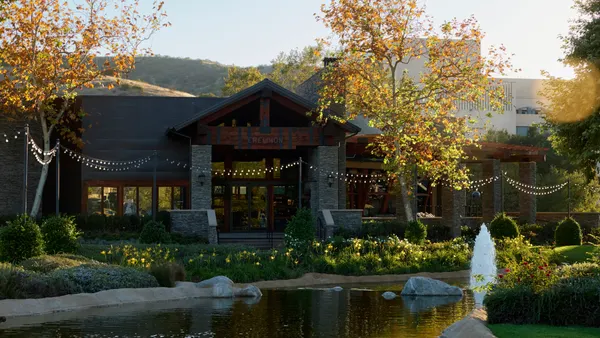
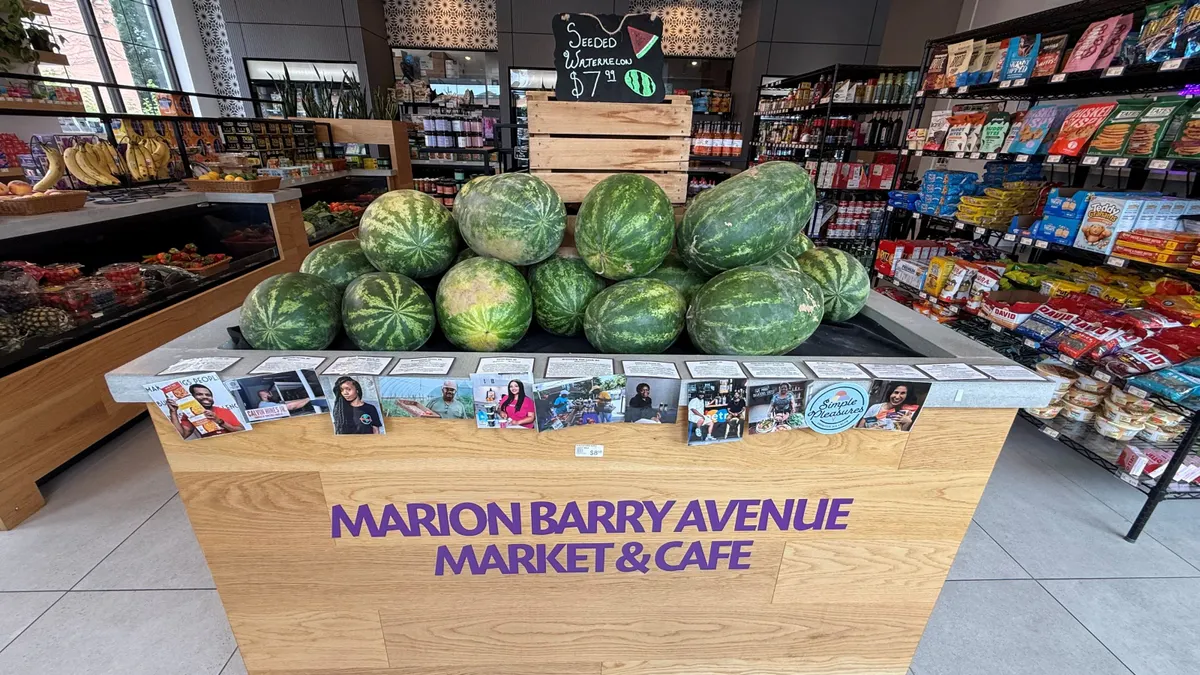
On a trip last week to Marion Barry Avenue Market and Cafe, a newly opened grocery store with fast-casual dining in Washington, D.C., I was immediately captivated by the dozen or so photos of local suppliers and food activists taped to the main display greeting customers as they walk in.
That focus on highlighting people connected to the food sold at the market continued throughout the store, with signage on the refrigerated doors and shelves spotlighting suppliers. One such tag for Corner Water, a premium bottled water brand, discussed how its packaging design nods to the city’s Metro map and included a photo of the brand’s marketing team. A tag for one of the photos along the main display at the front identified Ehime Eigbe-Akindele, who founded the local frozen yogurt brand Sweet Kiwi.
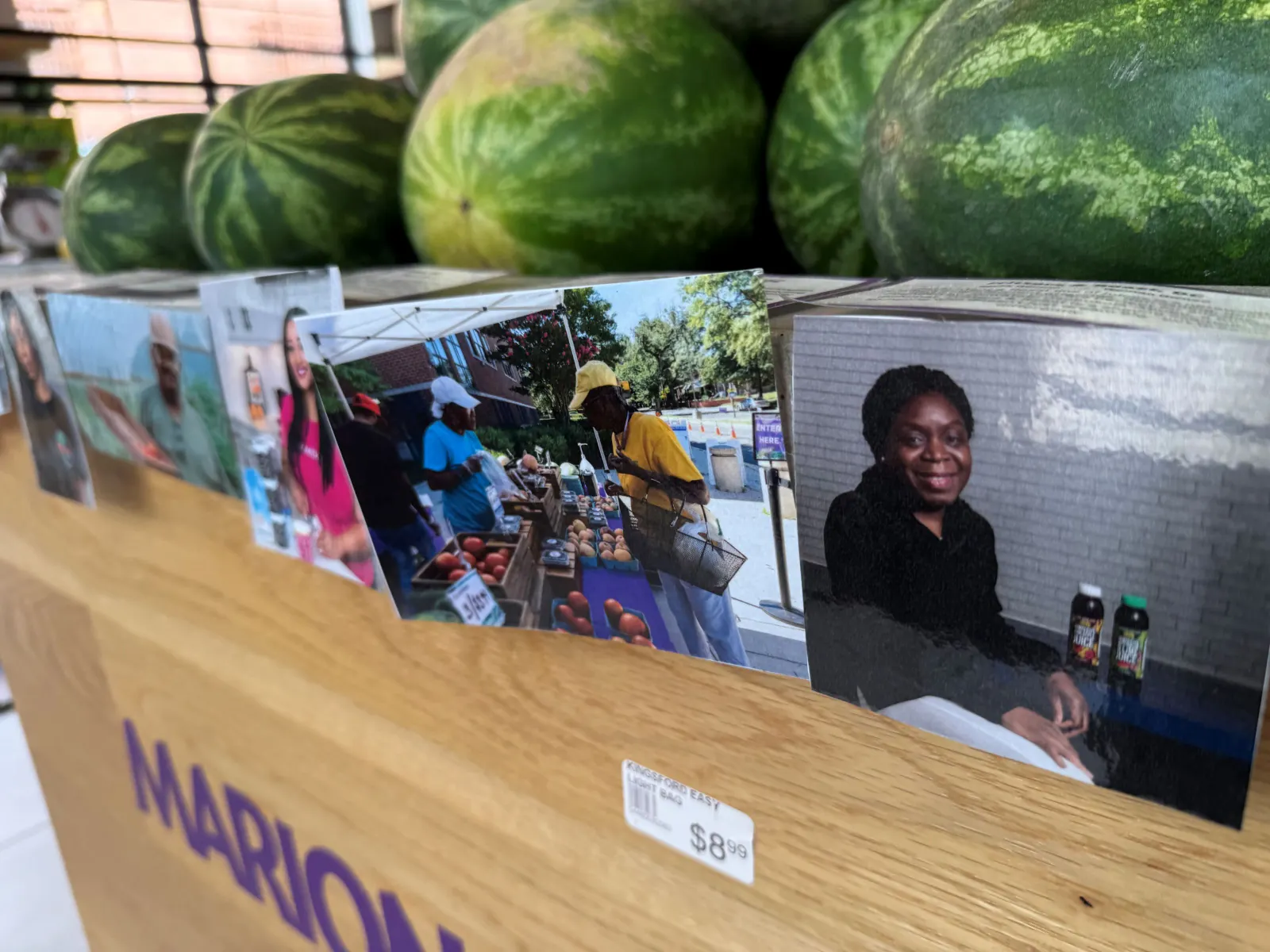
I’m used to seeing shelf tags that say “Local,” but something about the photos and the details about the specific people behind the brands on the shelves made the shopping experience that much more intimate.
Over the nearly six years I’ve written about the grocery industry, I’ve had several different people remind me that “food is personal.” While many grocers are zeroing in on this quite literally by using artificial intelligence to serve up product recommendations that match consumers’ stated health and lifestyle preferences, I think there’s a broader, shared human experience that some grocers, like Marion Barry Avenue Market and Cafe, are tapping into.
Take Schnuck Markets. The Midwestern grocer announced this spring that it had rediscovered the handwritten recipe for its founder Anna Donovan “Mom” Schnuck’s potato salad, which was so popular that it inspired her to open a corner confectionary in St. Louis that became the foundation of the grocery chain. After Anna Donovan’s granddaughter found the long-lost recipe, Schnucks decided to honor its roots and use the recipe to make Anna Schnuck’s Original Potato Salad at all of its 113 stores.
@schnuckmarkets We found the original recipe. 😌 Anna Schnuck's handwritten potato salad recipe has been redescovered and it's now available in the Schnucks Deli, exactly as she made it. Red potatoes, double-smoked bacon, caramelized onions and hand-sliced hard-boiled eggs. A recipe that started it all, now on your table. This one is special. ❤️ Find it in the Deli at your neighborhood Schnucks. #Schnucks #FamilyRecipe #GroceryTok #PotatoSalad #SchnuckMarkets ♬ original sound - Kardashian clips 🎬
“Bringing Anna’s Original Potato Salad back to our stores is our way of sharing our family’s history and a seat at our table with every customer who walks through our doors,” Schnucks Chairman and CEO Todd Schnuck said in the grocer’s announcement.
In Canada, grocery chain Freson Bros. uses nostalgia and family values as anchors for its in-store experiential zones, with each fashioned around a story that links back to its history, like Banj’s Smokehouse, which is named after one of the family members behind the grocer.
The staying power of nostalgia highlights how food consumption is a deeply human experience shared across time and cultures. While the days of knowing the butcher, the baker and the farmer behind the food consumers eat are long gone, there is a comfort I felt in seeing the faces and reading the names behind some of the products at Marion Barry Avenue Market and Cafe.
Especially amid concern over tracing the food tied to the latest cyclospora outbreak — and fears over future foodborne outbreaks — there can be consolation in knowing the origins of the food we’re eating.
This human connection isn’t solely tied to suppliers or the nostalgia of homemade recipes. I think about Trader Joe’s reputation for friendly cashiers — a cashier recently told me that the wildberry cheesecake ice cream I was buying was so good that I should add another carton to my basket — and how touching it can be when grocery shopping feels like a communal experience. It’s not validation of my ice cream flavor choice that I want, but rather the feeling that the food I put on my plate is part of a broader communal table, a shared human experience.
As traditional grocers, especially, struggle to regain their footing in a challenging economic environment for shoppers, more trust and human connection with their consumers could be a powerful emotional draw. As the industry measures success in sales and units, let’s not forget to also factor in the importance of the people making it possible to eat: the store workers, the farmers, the manufacturers.