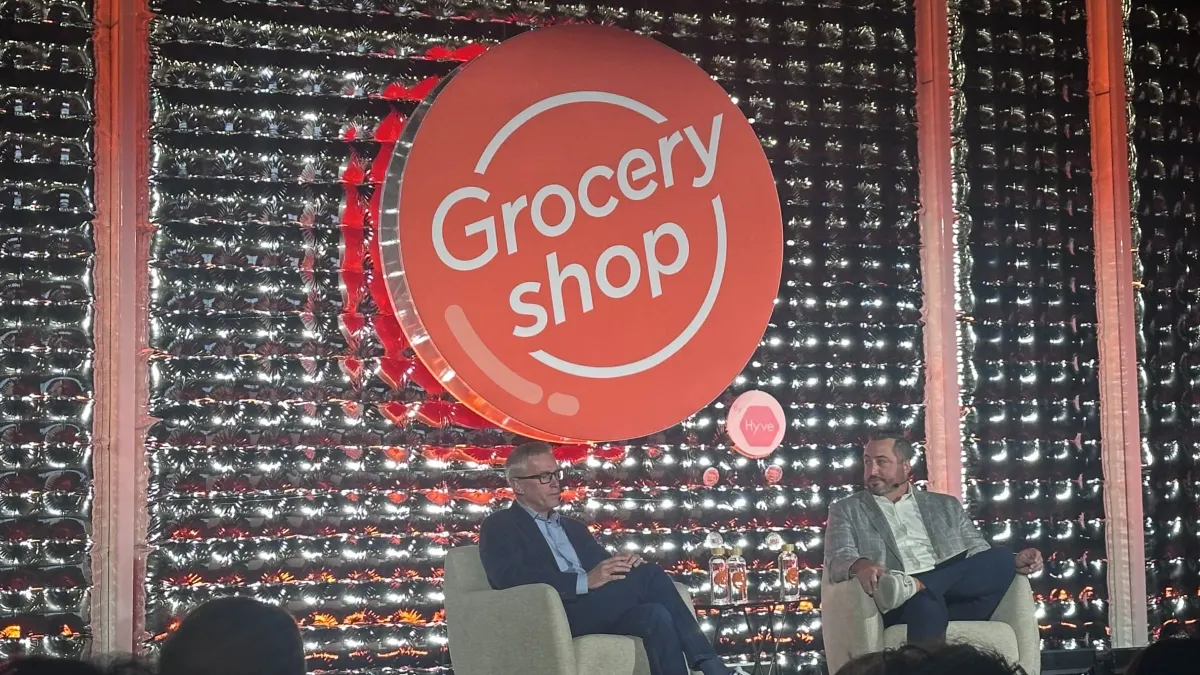
LAS VEGAS — Talk of artificial intelligence dominated the Groceryshop conference in Las Vegas last week. From creating autonomous shopping solutions to helping forecast supply chain demands, the technology seems to touch every aspect of grocers’ operations.
So it’s no surprise that AI capabilities have entered the retail media side of grocers’ businesses.
Ahold Delhaize USA’s retail media arm, which is overseen by Senior Vice President and Executive Lead Bobby Watts, has embraced AI as it continues advancing its operations. But as AI rapidly evolves, Watts is aware of the need to strike a balance so that the technology doesn’t take away from the human touch of its retail banners.
Here’s a look at how AD Retail Media is implementing AI — both on the back-end and to help modernize the digital shopping experience.
This interview has been edited for length and clarity.
GROCERY DIVE: How is AD Retail Media balancing the introduction of AI into operations?
BOBBY WATTS: This year, we’ve deployed three agents within our team to test some things, to take some small business use cases and see if we can derive any value, and move faster on things and get more precise with how we build campaigns.
One of the agents we built, called Agent Klik, its primary purpose is to go out and mine how consumers are searching for products, and then bring back recommendations to the ad operations team and say, “Here are keywords or key phrases that consumers are searching for or are trending.”
It’s all about leveraging those types of AI capabilities in a test-and-learn kind of fashion. We’re encouraging our team to play with it and do things with it, whether it’s the simple things like helping you proof your emails or build PowerPoints faster and use it to find ways to move quicker and find efficiencies in the mundane tasks that you do in your day job.
What AI features has ADUSA introduced to its shoppers?
We launched a meal planner shopping assistant, and we’re working on more of a broader shopping assistant as well. And I think we’ll learn a lot from consumers.
I saw one major retailer publish this week that they have actually seen the shopping assistant create a larger basket where you thought it might actually have a reverse impact. And I think that could play out for many others as well, because it just gives shoppers more time to find new items or discover things.
Are there any aspects of AI you think should develop more slowly or that the industry as a whole should pull back on?
I think when it comes to creative, we need to probably slow-play that a bit. I think there’s a ton of upside there in how you can do thousands of versions of creative, deliver personalized creatives — that’s a phenomenal place for us to get to. But I think just turning on AI creative and saying, “Go build all my [creatives]” is probably not going to work out too well because it’s just such an important piece of your brand. We have five great local brands that we get to work with every day, and they’re going to be very meticulous about the creative that shows up for their brand and market.
What major milestones has AD Retail Media reached recently? Do any involve new AI capabilities?
This year we’ve had two major milestones, one being that we launched Edge on January 5. It’s a young platform for us in the U.S., but we’ve been able to continue to mature it. We’ve actually got a team working on some agentic capabilities within the Edge platform for agentic media planning and using some form of orchestration across channels and how to optimize campaigns across channels.
The other big thing that we launched this year as part of retail media was our in-store network. Beyond our wonderful partnership with Inmar on the analog side, we are also deploying digital screens. We took a different approach than many of the others — we did it ourselves.
Deploying the screens, the strategy behind the screens, the capital to support that endeavor are all coming from our internal work and teams. And we did that intentionally just so we could be very surgical about where we put screens to make sure they have the highest level of consumer impact, and that can drive the best return for our advertising partners as well. We’ll learn from it, and if it goes well and the demand is there and customers are responding, then we’ll expand into other locations within the store.