The Friday Checkout is a weekly column providing more insight on the news, rounding up the announcements you may have missed and sharing what’s to come.
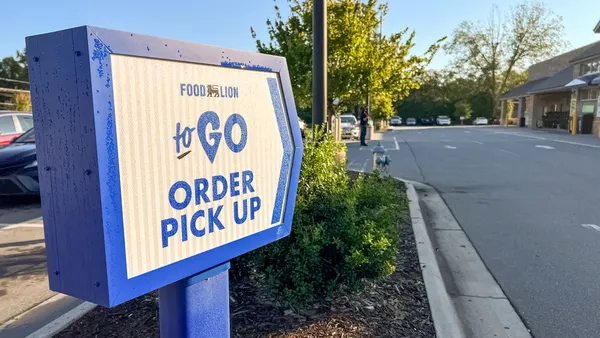
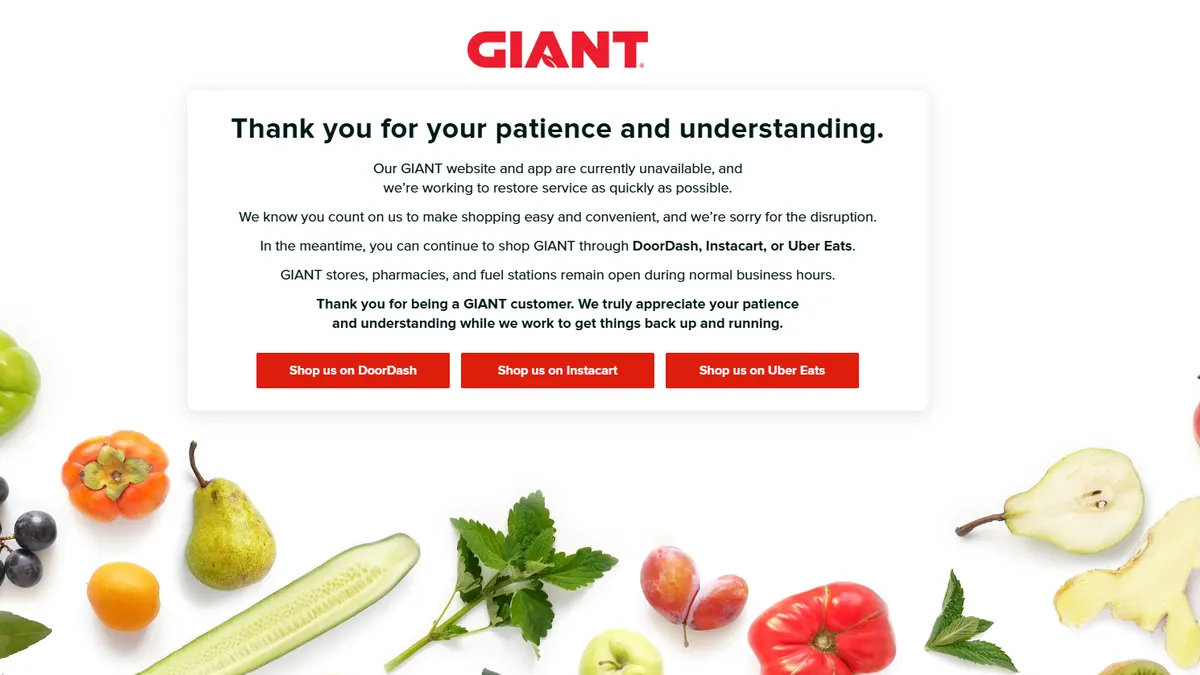
In an age when grocers depend heavily on omnichannel shopping to drive their sales, the cybersecurity incident that has kept the websites of Ahold Delhaize’s U.S. banners down all week is a stark reminder of how critically important digital connections are between grocers and their customers.
For starters, the crisis is disrupting how shoppers can place online orders from the company’s five U.S. supermarket chains by only allowing them to order through DoorDash, Instacart and Uber Eats. That alone is a significant problem for Ahold Delhaize, which, like other grocers, has invested heavily in establishing its own e-commerce operations to drive growth. The company’s digital sales in the U.S. were up more than 14% during its most recent quarter, while comparable-store sales grew less than 1%.
In addition, the digital outage has hobbled the grocer’s loyalty programs. Because shoppers cannot access their accounts via the company’s websites or online apps, they are cut off from using those essential channels to redeem the rewards that sit at the heart of the value proposition the banners, which include Giant Food, Hannaford and Food Lion, offer their shoppers.
This dangerous dynamic has effectively severed key digital links the chains rely on to help customers save money. With their ability to redeem rewards restricted, Ahold Delhaize’s shoppers have lost some of their most important links to the company’s stores.
Even worse for Ahold Delhaize, the multi-day outage — which is also affecting a few chains the Dutch grocer runs in Europe — is giving customers a strong incentive to take their business to rival grocers. While some customers might be loyal enough to return to their established shopping habits when Ahold Delhaize’s systems come back up, others might simply decide not to come back at all.
In case you missed it
Food safety confidence in the U.S. drops to a new low
Americans’ trust that food sold at most grocery stores is safe to eat has fallen to its lowest level ever recorded by Gallup. Only 65% of surveyed respondents felt “very or somewhat confident” in the safety of food grocers sell, down from 73% in 2025 and 72% in 2024.
Gallup noted it conducted this year’s survey during the major nationwide cyclospora outbreak that started in June.
Whole Foods Market’s trends mirror the grocer’s granola roots
The specialty grocer’s 2027 food trend predictions did not include the broader protein craze, fiber-maxxing or the global flavors the industry has grown to expect. Instead, Whole Foods expects to see developments like a “bean boom” and increased interest in terroir, which refers to the soil, climate and geography that “shape a product’s taste and character,” the grocer said.
Beautrition will also take center stage as Whole Foods anticipates consumers “turning to ingredients rich in collagen, antioxidants, healthy fats and hydration to support skin health.” It even expects its customers will gravitate toward “drink your sunscreen” products.
99 Ranch Market publishes first-ever cookbook
“In many Asian families, asking someone if they’ve eaten is shorthand for saying ‘I love you,’” the Pan-Asian grocery chain said in its announcement about its debut cookbook, “Did You Eat Yet?” The book includes 88 recipes spanning Chinese, Taiwanese, Korean, Japanese, Southeast Asian and other cuisines, with personal stories from 99 Ranch team members included throughout.
The book is currently available as an e-book and will become available as a hardcover edition later this fall.
Impulse find
In the world of retail, it’s never too early for Christmas. To the dismay of many shoppers who are trying to enjoy fall and gear up for Halloween, stores already have winter holiday decorations on full display.
Understanding this potential annoyance to customers, Aldi took to social media to poke fun at itself for rushing customers “still in pumpkin mode.”
Earlier this week, Aldi posted a photo carousel on Instagram, with the first image blurred out and marked as “Sensitive Content,” warning shoppers that what’s on the next photo slide may not be something they are “emotionally prepared to see in October.” The remaining photos showcase Aldi’s line of ceramic gingerbread decor, from gingerbread houses to gingerbread nutcrackers to gingerbread Christmas trees.
“Swipe if you’re ready, then tell us: too soon or already making room in the cart?” Aldi wrote in the caption.