The Friday Checkout is a weekly column providing more insight on the news, rounding up the announcements you may have missed and sharing what’s to come.
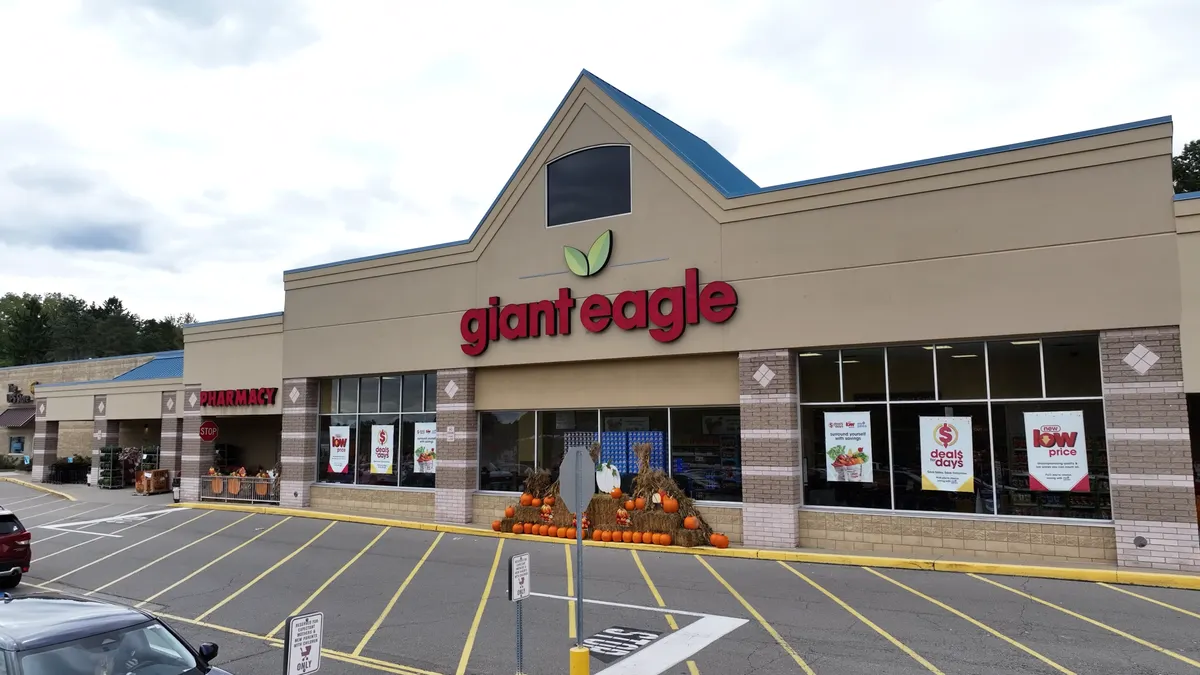
The logic behind Kroger’s plan to acquire Giant Eagle is easy to understand. Assuming it wins regulatory approval, the deal will allow the nation’s largest supermarket company to expand its footprint while also boosting a regional chain that has lost ground at the hands of rivals like Walmart.
But while it might seem straightforward on the surface, the proposed $1.65 billion merger raises a critical question: Will Kroger be able to infuse its financial and managerial might into Giant Eagle without diminishing the local appeal that defines the nearly century-old chain? Achieving that delicate balance could help determine whether Giant Eagle can retain the personality it has honed as a family-owned company or take on the generic feel of a corporate giant.
Kroger’s purchase of Roundy’s in 2015 offers a cautionary tale of what could happen if Kroger tinkers with Giant Eagle too much. Kroger pointed to Mariano’s, an urban-focused banner that Roundy’s established in 2010 and operated separately, as a key reason why it was excited about that deal.
In 2016, however, Bob Mariano, Roundy’s CEO when it merged with Kroger and the creator of Mariano’s, retired. Two years later, Kroger combined Mariano’s and Roundy’s into a single division, and several senior executives who helped build the highly regarded Mariano’s chain departed, leaving the banner without much of the braintrust that made it a Chicago institution.
Of course, it’s too early to tell how Kroger’s stewardship of Giant Eagle will play out. After all, Kroger has a different CEO now than it did when it scooped up Roundy’s, and dynamics in the grocery industry have shifted dramatically during the past decade. What hasn’t changed are the visceral relationships people develop over many years with their local grocery store. Can Giant Eagle hold onto those ties as it gets ready to join Kroger?
In case you missed it
Despite community rallying, Heinen’s couldn’t save downtown Cleveland store
Heinen’s plans to shutter its more than decade-old store in downtown Cleveland at the end of July — and the grocer’s co-president told local news outlet Signal Cleveland that the closure is not a surprise to the community.
The grocer received roughly $350,000 in local and county grants and assistance, yet still couldn’t stem the financial bleeding that resulted in over $18 million in losses, Co-President Jeff Heinen told the news outlet.
Natural Grocers will open its second South Dakota store
The specialty grocer announced earlier this week that it plans to hold a grand opening for its new store in Rapid City, South Dakota, on July 22. The location marks its second in the state, which it entered in 2022.
Hy-Vee launches wellness program for GLP-1 users
The grocer is offering a six-week, self-guided online program to help people “maximize the benefits of their GLP-1 treatment through better nutrition choices and targeted side effect management,” according to a press release. The program, which will begin in mid-July, includes three virtual or in-person meetings with a Hy-Vee registered dietitian, 10 video modules, and personalized goal setting and support. Hy-Vee offered the $49 program for free to the first 1,000 people who signed up.
The grocer said it launched the program after Medicare debuted its GLP-1 Bridge program, which is in effect from July 1, 2026, through Dec. 31, 2027, and allows eligible participants to access GLP-1 medications for $50 per month.
Impulse find
Would you buy a box of ice cubes?
Aldi and Erewhon think so. The upscale grocer’s $29.99 pack of eight ice cube balls went viral in 2024. Now it’s Aldi’s turn in the spotlight, with the grocer’s package of four frozen ice cubes, priced at $4.99, drawing headlines this week on sites including AOL and Parade.
While social media users are having a field day lampooning the optics and logistics of selling ice — something people can get for free from their own freezers — the product offering is a prime example of how retailers are looking to tap into consumers’ willingness to pay for convenience, especially when it means they don’t have to wait for water to freeze.