Dive Brief:
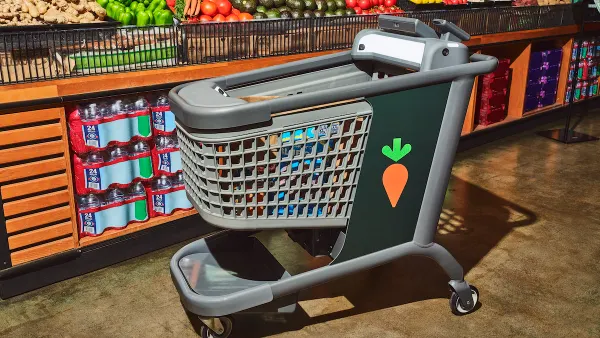
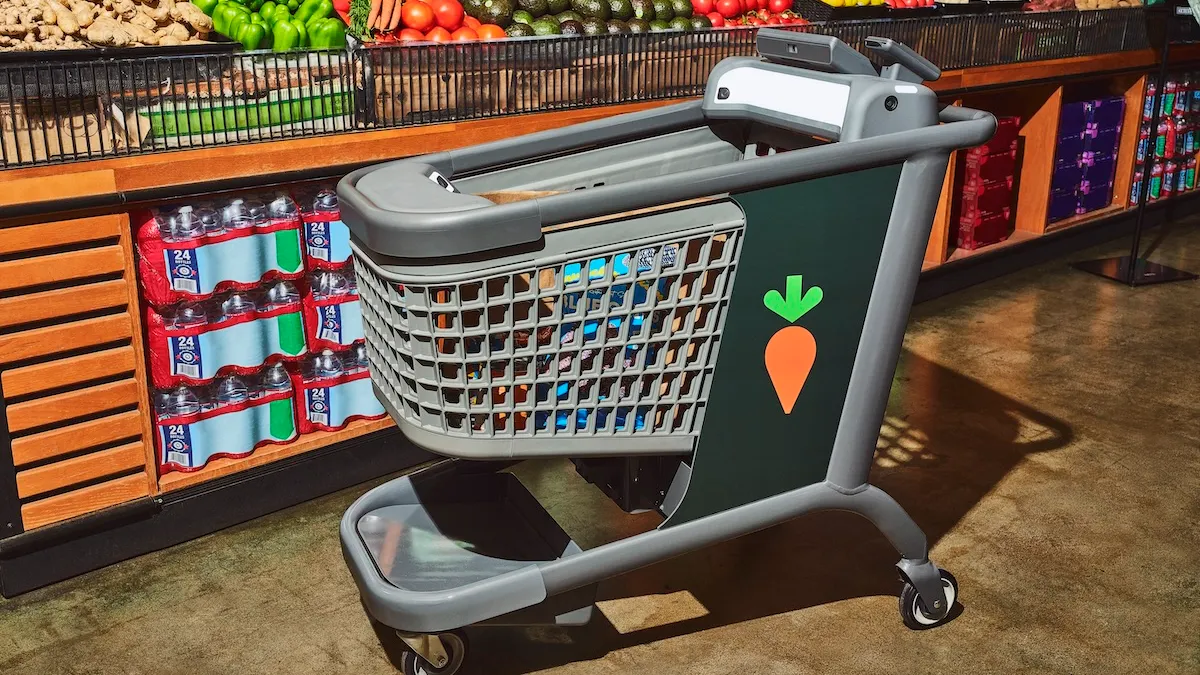
- Instacart announced Monday that it is winding down its Caper Cart smart cart business.
- Retailer adoption of smart carts did not scale quickly enough to justify the continued investment, the grocery technology company said.
- Instacart said in a regulatory filing that it expects the closure of its Caper Cart business to result in pre-tax charges of approximately $55 million to $80 million, with an estimated $12 million to $17 million related to employee termination costs. The company expects to complete the wind-down by the end of the second quarter of 2027.
Dive Insight:
As it rolls smart carts to the grocery technology graveyard, Instacart said the next phase of its in-store strategy will focus on intelligence and software.
In the announcement, Instacart said its software, data and artificial intelligence capabilities give it an advantage in providing retailers and brands with information on in-store performance.
“Retailers and brands today are balancing a number of competing priorities, and we’re seeing them prioritize investments in solutions that can modernize stores at scale. While Caper is a great product, the business reality is that retailer adoption has not scaled quickly enough to justify our continued investment,” Instacart said in the announcement.
While not surprising given that the low-margin grocery industry keeps tightening its financial belts amid macroeconomic pressures, the announcement reverses half a decade of work by Instacart on smart cart adoption.
Five years ago, Instacart bought Caper AI for $350 million in cash and stock. In the years since, Instacart had touted how smart carts could appeal to customers by gamifying the shopping experience, helping them find items faster and adding transparency to their spending through the on-screen tally of what’s in a cart. For brands, Instacart said the carts provided new in-store real estate to serve up targeted ads.
Last year, Instacart ramped up efforts to expand the usage of smart carts, from adding several customer-facing tools on the cart’s screens to linking with point-of-sale equipment suppliers to help get its smart carts into independent grocery and convenience stores.
Until Monday’s announcement, Instacart expressed optimism in shopping behavior changes and the ad revenue potential of its Caper business despite limited in-store adoption and concerns from experts about the technology’s high costs.
In early August, Instacart CEO Chris Rogers told investors that Caper continues to scale with both new and existing partners, including Weis Markets and Lakesfront in the U.S. and in the U.K.
Instacart indicated Monday that the smart cart wind-down will help it hone its strategy for providing in-store technology, noting it recently unveiled new in-store software solutions that give grocers and CPG brands “a live view of stores.”
This summer, Instacart acquired Arpalus, creators of an AI-powered system that lets workers record product levels in stores using a smartphone app. Instacart said when it announced the deal that the tech would help its workers more accurately fulfill orders.