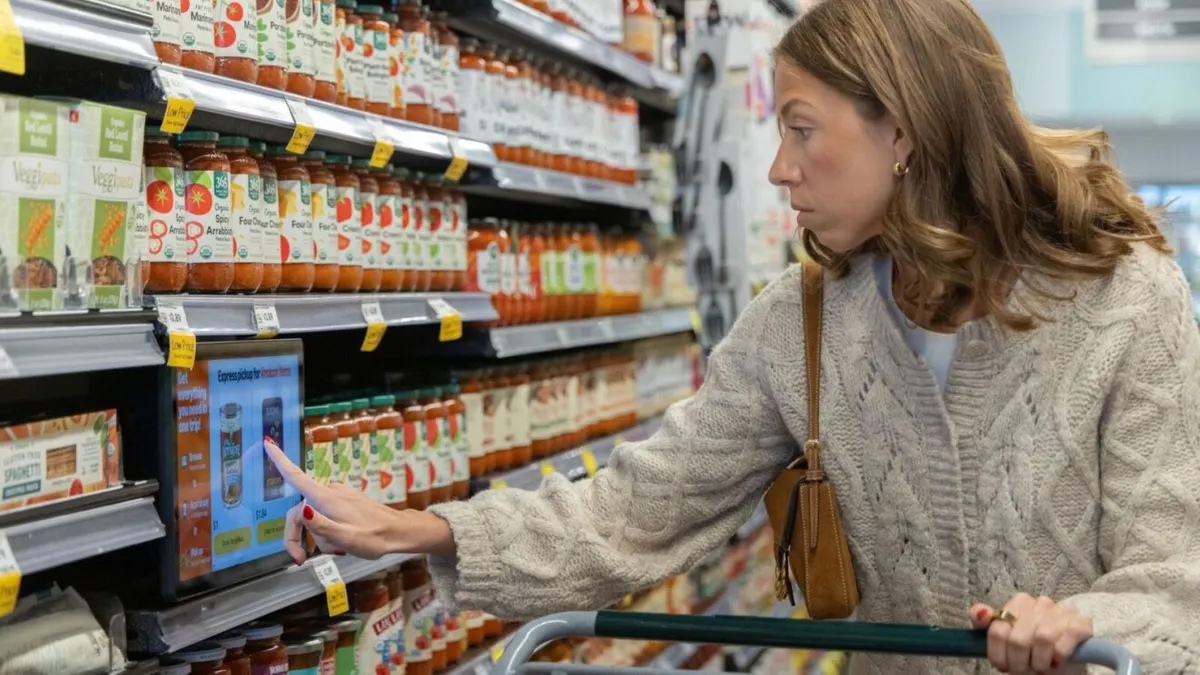

Household spending remains pressured by elevated grocery prices. According to a recent FMI “Grocery Shoppers Snapshot,” groceries remain the most challenging discretionary spending category for consumers to afford. Yet more than three-quarters of shoppers continue to say they have some control over their grocery finances. For grocers, that means spending isn't always allocated evenly.
“Grocers consistently tell us that shopping behavior is highly cyclical, particularly among value-conscious households,” says Peter Volynsky, Chief Commercial Officer of Zip, a digital financial services company. “We see peaks aligned with biweekly and monthly paydays, as well as government benefit disbursement windows.”
Here’s how merchants can turn predictable fluctuations in foot traffic and basket size into a more intentional grocery strategy.
The calendar drives the cart
Early- and mid-month confidence
As the month begins, shoppers feel financial breathing room, explains Volynsky. “Early in the cycle, baskets are fuller, more planned, and more exploratory. Shoppers stock up, default to preferred or premium brands, and are more willing to add discretionary items.”
This cycle is so common that it even has a name: the “First of the Month Effect” (FOME). Because shoppers feel more flush, they may opt to meal plan, leading to a fuller, stock-up cart and a selection of items that cost a bit more.
Late-month hesitance
As the month progresses and budgets tighten, spending becomes more necessity-driven, with shoppers prioritizing staples and actively managing total out-of-pocket spend. A study from the National Institutes of Health found that adjusted mean food spending of SNAP participants decreased 37% from the first two weeks to the last two weeks of the SNAP benefit month, illustrating how behavior can shift sharply as funds dwindle.
Shoppers’ lists reflect this constraint-driven mindset, says Volynsky. “The need for groceries stays the same, but spending becomes more calculated.” That means shoppers are apt to scale back basket size, swap brands, and skip non-essentials. Online, they are quicker to abandon a purchase if the total feels too high.
Private label items are another go-to, as shoppers look for ways to stretch remaining dollars, with the Private Label Manufacturers Association finding that U.S. sales of store brands were up 3.3% in 2025.
The month-long grocery playbook
A few intentional tweaks to your operational strategy allow you to plan for the reality of how people shop for groceries throughout the month, helping boost margins and loyalty.
1. Plan your inventory accordingly.
Rather than treating grocery demand as static, fine-tune your assortment to align with expected patterns.
Consider inventory strategies such as:
- Adjusting depth in discretionary and premium items earlier in the month, when shoppers are more open to trade-ups and larger baskets.
- Ensuring strong availability of private label and core staples later in the month, when value sensitivity peaks.
- Balancing pack sizes with larger formats for early-month stock-up trips and smaller, flexible sizes for late-month fill-in shops.
- Using historical sales data by the week of the month to anticipate shifts in basket composition rather than focusing solely on overall volume.
2. Align promotions with shoppers’ moods and wallets.
During hearty cycles (early month):
- Lean into “stock-up” and pantry-building messaging that encourages complete trips by helping them fulfill their entire list.
- Promote bundles, family packs, and higher-margin premium categories that build baskets and simplify planning.
- Highlight premium, seasonal, and exploratory categories where shoppers are more willing to trial new brands and items.
During lean cycles (late month):
- Focus on affordability by spotlighting private label, price locks, and budget-stretching options instead of relying on deep discounts to preserve margins
- Use targeted promotions to maintain trip frequency without shrinking margin
- Display flexible payment option signage heavily in store to remind customers they can split their grocery purchases.
3. Grow average order value by offering more payment options.
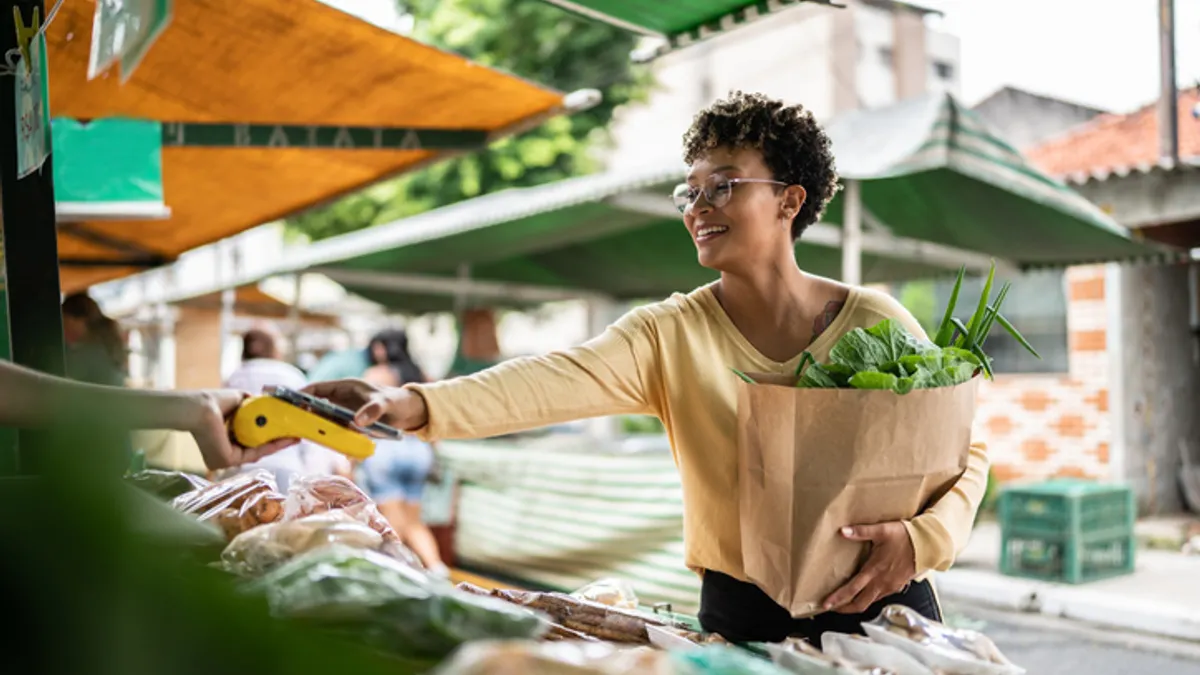
Flexible payment options, such as Buy Now, Pay Later (BNPL), help shoppers throughout their shopping cycles. A December 2025 survey found that one-quarter of BNPL users (and one-third of Gen Z users) say they’ve used this method to purchase groceries, up 14% from 2024.
“BNPL plays a unique role because it addresses confidence, not just accessibility,” notes Volynsky. For example, Zip can help shoppers complete larger planned stock-up trips throughout the month. “Spreading payments over time reduces price sensitivity and supports higher basket sizes without sacrificing conversion,” he says.
For early-cycle shoppers, BNPL in grocery supports larger planned trips by letting consumers extend their dollars without compromising the quality or completeness of the basket. Zip helps bridge short-term budget gaps so customers can continue purchasing essentials instead of delaying or reducing trips.
“In either case, BNPL doesn’t encourage overspending, but instead aligns payment timing with income timing, which is exactly how consumers already think about grocery budgets,” Volynsky says.
Make every trip count
The most effective grocery strategies account for variance when shoppers walk in or log on.
“Grocers are competing not just on price, but on how well they fit into consumers’ financial lives,” says Volynsky. “Merchants that acknowledge real-world spending patterns and offer flexibility at the moment of decision earn higher loyalty, greater share of wallet, and stronger conversion during high-friction moments.”
By supporting customers throughout the full financial cycle—across weeks, months, and even seasons—grocers can create experiences that feel relevant and reassuring at every touchpoint, including checkout. Offering Zip’s Buy Now Pay Later capabilities positions a grocer as a retailer of choice: According to a Zip survey*, nearly three-quarters of respondents said BNPL is most useful when trying to manage their budget or spread expenses over time, and 72% of non-users said they would shop at a grocer that accepts Zip. For more insight on industry trends and solutions, contact Zip’s grocery payments experts today.
*Zip, Grocery Customer Deep Dive (U.S. market research report, August 2025)