.png)
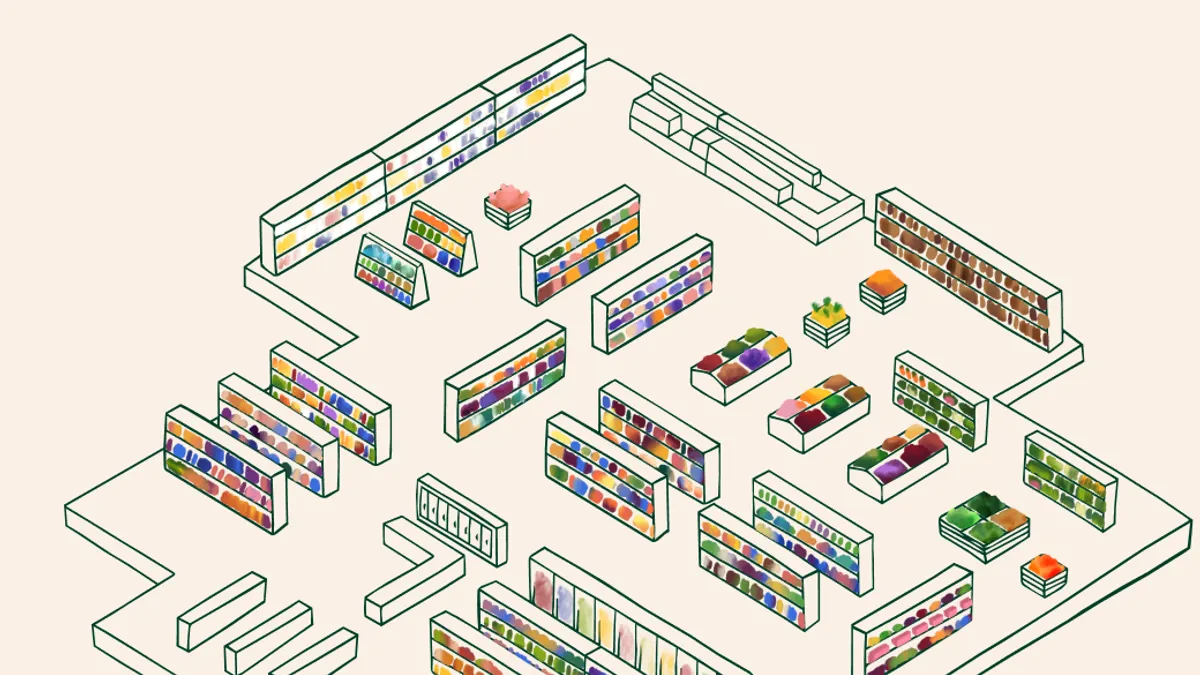
New in-store software solutions from Instacart will enable grocers and CPG brands to access a real-time digital view of grocery shelves. The new solutions will map the entire store down to individual products on shelves, allowing grocers and CPG brands to virtually explore aisles, understand what is happening on shelves, and take action in real time. By turning the physical store into a live, actionable map, Instacart will help the entire grocery ecosystem keep products in stock and make it easier for customers to find what they need.
Instacart's network of approximately 600,000 shoppers visits stores across North America more than 15 times per store per day on average, generating over 10 million unique data points daily. Instacart is leveraging the data Instacart shoppers collect from shelf scans to create a real-time view of what is happening on store shelves. Combined with insights from more than 1.6 billion lifetime orders and shelf imagery capturable by both Instacart shoppers and Caper Carts – powered by Arpalus computer vision technology – Instacart gives retailers and CPG brands unprecedented, real-time visibility into what is available, where there are spikes or drop-offs in demand affecting inventory, and how in-store merchandising impacts sales.
What sets Instacart's in-store software solutions apart from other shelf-monitoring tools is the depth of grocery-specific data behind it. Most solutions solely track items received and sold; Instacart shows grocers and CPG brands exactly what is on the shelf, where customers are shopping, which displays are driving sales, and where gaps are costing revenue.
For store managers, that intelligence will come to life in a virtual view of the store through Inventory Intelligence, where they can walk any aisle, view shelf performance, and explore stocking, merchandising, and planogram changes before making them in-store. Instacart’s in-store software solutions will offer:
- Real-time shelf visibility: See what is on the shelf, continuously updated as Instacart shoppers scan throughout the day – enabling in-store teams to replenish high-margin, high-velocity items faster, merchandisers to optimize shelf layouts and displays, and supply chain teams to improve demand forecasting and replenishment.
- Merchandising optimization: Identify high-velocity products that may need more shelf space and where a simple change, like adding another facing, could help recover lost sales.
- Demand forecasting: Anticipate which products are likely to run out before they do, helping teams prioritize restocking ahead of holidays and other periods of peak demand.
For CPG brands, Instacart is bringing new visibility into what happens with their products in stores with the Store Excellence Portal. Brands will receive a daily, store-level view of what is on the shelf, helping them identify where gaps are costing sales, where customers are switching to competitors, and which stores and SKUs need attention. Instacart’s new solution helps brands understand:
- Lost sales estimation: See how much revenue is being lost down to the store and UPC – refreshed daily – giving teams an estimated dollar figure to act on.
- Substitution and competitive benchmarking: Track whether consumers who could not find your product switched to a different pack size or competitor, and see how your availability stacks up against the category - turning an empty shelf into an actionable sales signal.
- Seasonal and forward-looking monitoring: Stay ahead of peak periods by tracking depletion patterns in the weeks before demand spikes and comparing against years of historical availability data. Built-in forecasting will flag which stores and SKUs are likely to go out of stock before it happens.
These new in-store software solutions are rolling out with select grocers and CPG brands, with more launching in the coming months.