Dive Brief:
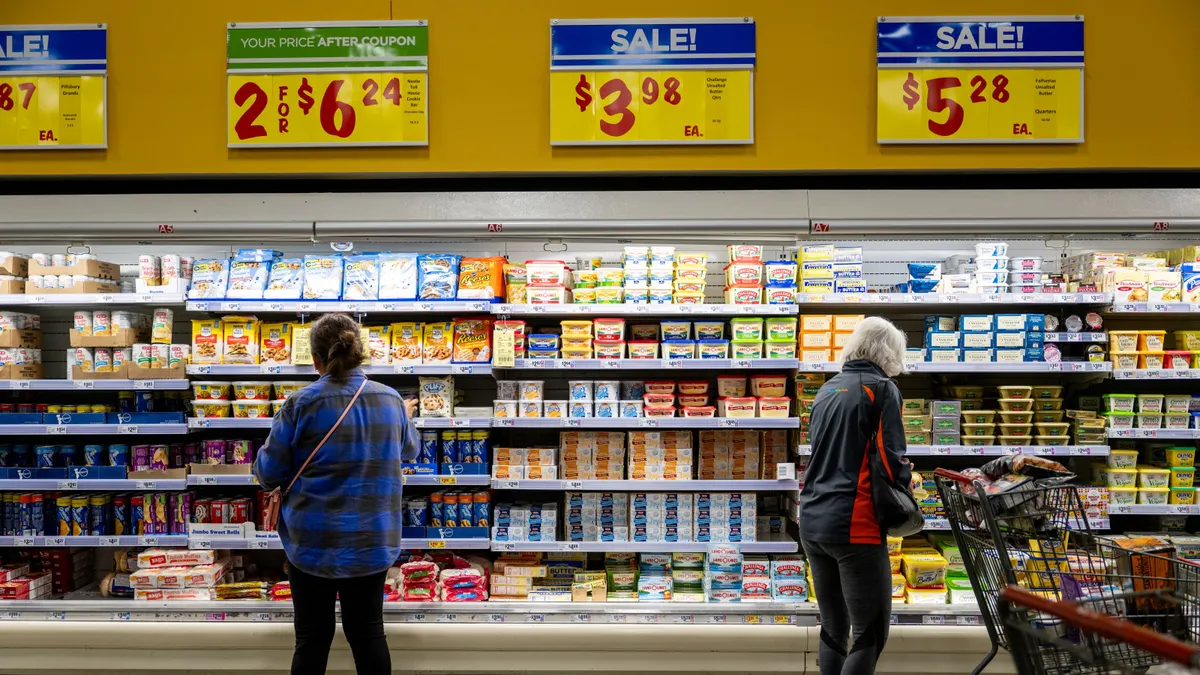
- Food-at-home prices increased 0.4% in October compared with the previous month, the largest month-to-month increase in grocery inflation since April, according to Consumer Price Index data published Tuesday by the U.S. Bureau of Labor Statistics. The BLS did not report annual inflation figures for October because it did not collect data during that month in 2025 due to last year’s federal government shutdown.
- Prices for fresh vegetables surged more than 2% last month, while beef and veal prices moved up by almost 1%. Coffee prices declined, cooling by about 3.5%.
- Grocery prices rose in October as diesel costs remained sharply elevated. The average price for a gallon of the fuel was $6.13 as of Monday, up 60% from a year ago, when diesel cost $3.84 per gallon, according to the U.S. Energy Information Administration.
Dive Insight:
Produce was a prime contributor to grocery inflation in October, with prices for fresh vegetables rising at a particularly rapid month-to-month clip. Prices for potatoes rose nearly 1%, tomato prices grew about 2% and lettuce prices leapt almost 8%. Fresh fruit prices, on the other hand, were down, as apple prices shed 1.6% and banana prices declined by a fraction of a percent.
Processed fruits and vegetables edged down by less than half a percent, with prices for canned vegetables down just over 1% even as canned fruit prices rose slightly and frozen vegetable prices moved up by about half a percent.
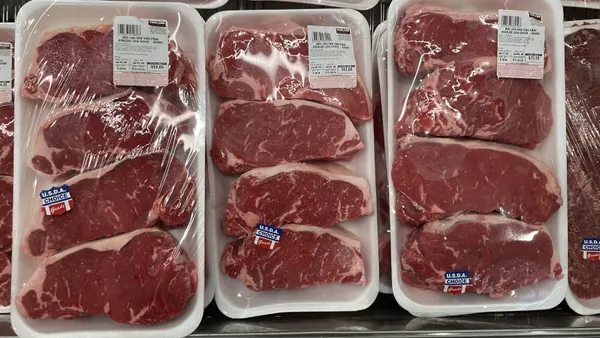
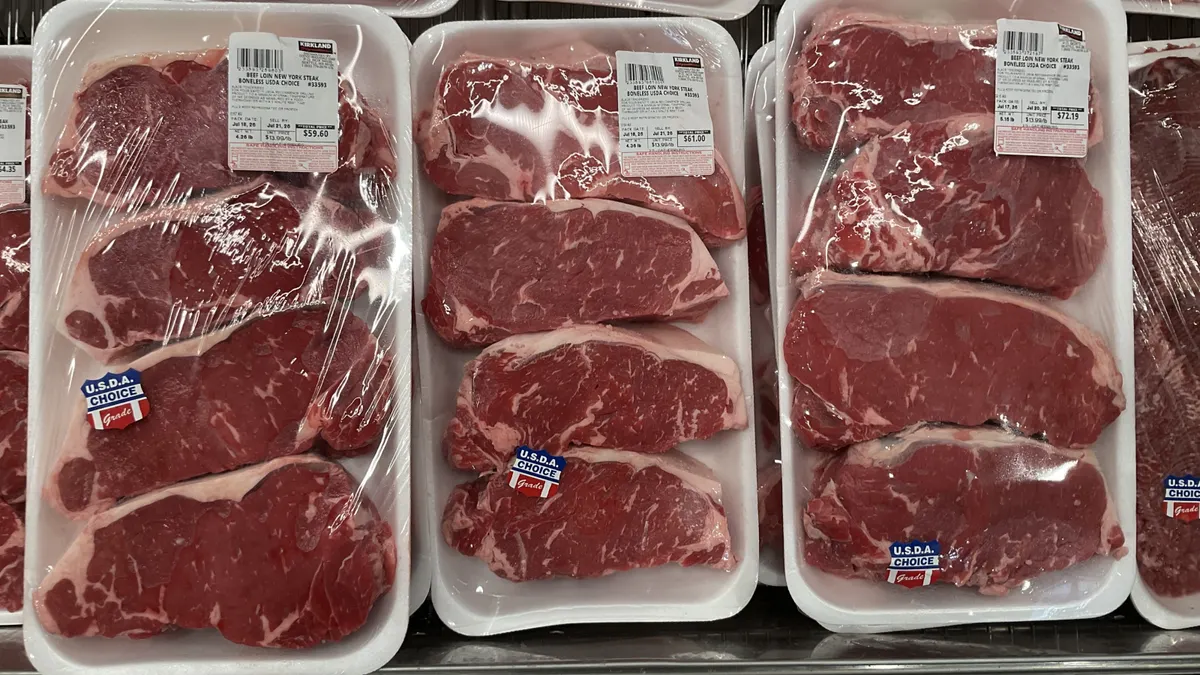
Meat prices, which have been trending upward, continued to march forward in October. Prices for sausage and related products and uncooked ground beef rose by approximately 1%, and uncooked beef steak prices moved ahead by almost 2%. Poultry prices added nearly 1%, but ham prices were down by a similar percentage.
Overall grocery inflation has bounced around in 2026. Food-at-home prices moved up month to month in January and February before racing ahead nearly 1% in April as the Iran war disrupted crude oil supplies. Grocery inflation slowed in May and June before declining slightly in July and again in September.
FMI — The Food Industry Association said Tuesday that grocers have been working to keep prices in check and maintain dependable supplies even as fuel costs have increased. The trade group predicted in September that grocery prices would accelerate later in 2026 as retailers and suppliers began to pass on the rising costs they have faced to consumers.
“When fuel and diesel costs rise, those higher costs are ultimately reflected in what it takes to produce and deliver food, and it can take months for them to show up in grocery prices, which we are now witnessing,” Andy Harig, FMI’s vice president of tax, trade, sustainability and policy development, said in a statement.