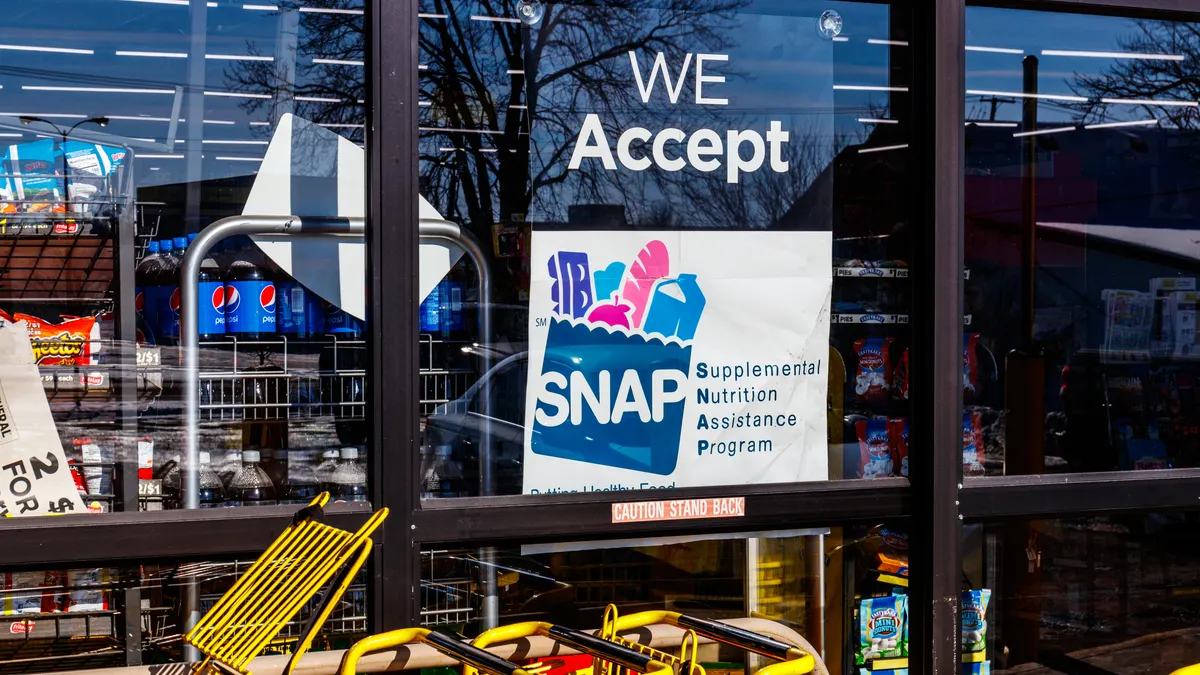
Despite the restrictions on food item eligibility and other changes that have buffeted SNAP in 2025, participants in the federal nutrition-assistance program remain a powerful force in the grocery industry, statistics from Circana show.
Households that receive SNAP benefits spend 23% more on CPG food and beverages than their non-SNAP counterparts, the market research firm said in a report released in November that incorporates data reflecting the 52-week period that ended Sept. 28. In addition, SNAP households make 29% more shopping trips than other households, directing a substantial share of their spending to beverages, refrigerated products and frozen foods, according to the research.
“These shoppers, whether they’re spending their own money or they’re spending SNAP money, [are] going into stores more often than non-SNAP” consumers, Sally Lyons Wyatt, global executive vice president and chief advisor of Circana, said in an interview. “Part of that is because they’re living paycheck to paycheck. They’re going when they have the money, so they make more trips.”
Categories like baby food, juices, frozen desserts and carbonated soft drinks are more dependent on people who receive SNAP benefits. Meanwhile, these consumers have less of a role in driving sales in the wine, coffee, drink mix and pasta aisles.
Lyons Wyatt noted SNAP beneficiaries play an especially important role in fueling grocery sales because they visit stores more frequently and supplement their benefits with other funds. SNAP shoppers also sometimes buy premium products as a way to make mealtime more enjoyable and help make up for the fact that eating out can be costly, she pointed out.
“They’re not going to the movies as often, they’re not buying as many clothes,” Lyons Wyatt said. “And so when it comes to groceries, they might spend another dollar or two on something a little bit more premium to get that out-of-home experience in the home.”
According to Circana, SNAP participants accounted for $336 billion in total CPG food and beverage spending during the period covered by the research, which lines up with the federal government’s fiscal year. The federal government spent $100 billion on SNAP and had about 42 million monthly participants in fiscal year 2024, according to the USDA.
Circana also found that conventional food retailers command nearly half of SNAP spending, which puts them ahead of all other types of retailers and represents an increase from the previous year. In addition, Circana found that three-quarters of food and beverage spending by SNAP shoppers flows to name brands, although the share of their spending directed to private brands is on the rise.