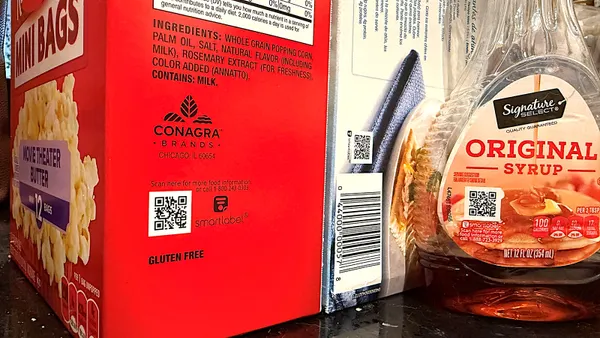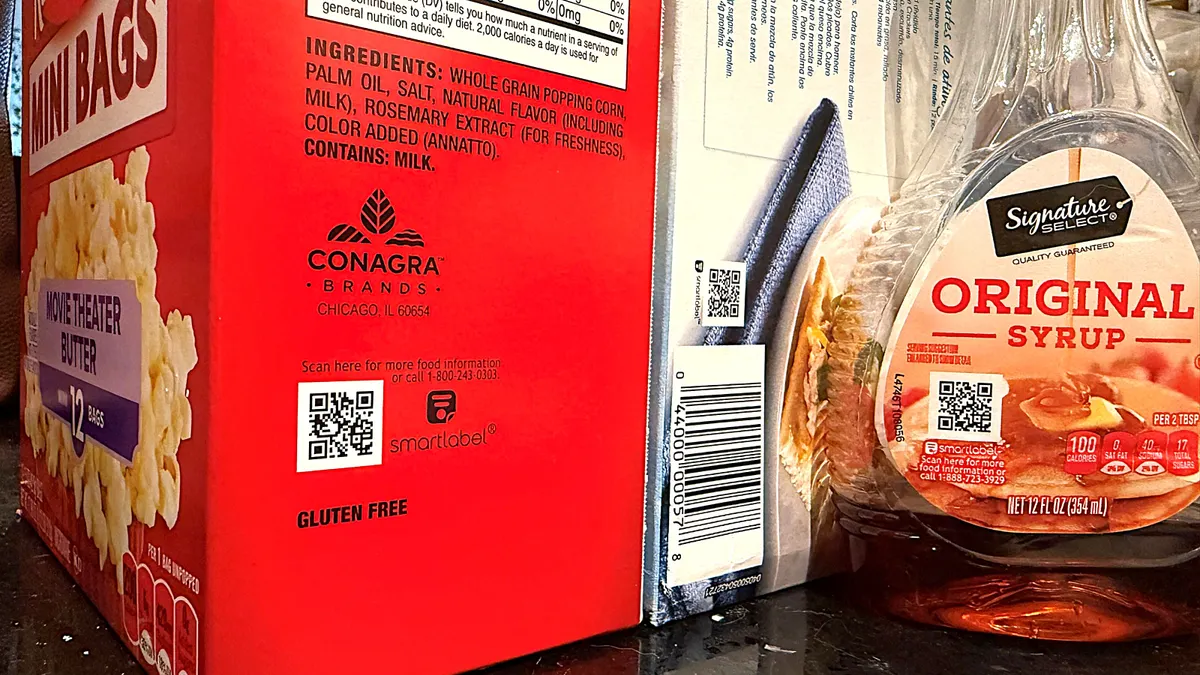
Grocers might know SmartLabel as a product-labeling initiative that gives consumers an item’s ingredients, nutrition information and more without taking up precious space on packaging. The initiative now has its eyes set on expanding use cases ahead of a major point-of-sale project.
Launched in 2015, SmartLabel allows customers to scan a QR code to access product data on more than 106,000 participating products from over 1,000 brands, said Rishi Banerjee, senior director of the SmartLabel initiative at the Consumer Brands Association.
“Consumers want to know more about the products that they’re buying and using every day, and fortunately, industry has leaned in on that,” Banerjee said.
SmartLabel also shows allergens, recall information, brand history and sustainability efforts plus ingredient definitions — all details provided by brands, Banerjee said.
“We get about 22 million interactions with consumers annually, and then the average amount of time a consumer spends on a SmartLabel page once they’ve scanned is upwards of 90 seconds, which is longer than most TikToks,” Banerjee said.
Expanding use cases
SmartLabel sees a prime opportunity to make its QR codes integral for consumers through a project led by GS1, the organization that develops and maintains supply chain standards, that will transition retailers from using just UPC barcodes for point-of-sale to also accepting 2D barcodes, such as QR codes, by the end of next year. Dubbed Sunrise 2027, the project aims for widespread adoption of web-enabled barcodes, which can be read by smartphones and point-of-sale scanners, so consumers can get product information while retailers can handle sales, flag recalled items and automatically discount items nearing their expiration date.
Banerjee continued: “They’ll have to make updates to the QR code itself, with the GS1 digital link being enabled. But otherwise, the entire consumer side of that QR code would still be powered by SmartLabel and consumers get that consistent user experience across all of those 1,000 brands that participate.”
GS1 noted that 2D barcodes can provide more product transparency, traceability and authentication than the traditional zebra-striped ones.
While the goal is still a little under two years away, Banerjee, who has previously worked for Amazon, the American Frozen Food Institute and the USDA, said retailers will likely need time to prepare.
“Brands that are already using SmartLabel and have already committed some of their label real estate to SmartLabel are already many steps ahead,” Banerjee said.
Sunrise 2027 isn’t the only initiative where Banerjee sees room for wider adoption of QR codes on products. SmartLabel is also eyeing expanded use cases for retailers and brands as several states push for state-level labeling and ingredient disclosures, such as warnings when an item contains food additives.
“This is also a huge opportunity for digital disclosure, where if there is additional information that’s needed, that can be shared via QR code,” Banerjee said.
SmartLabel is also “excited” about extended producer responsibility legislation across the country, which would make brands and producers responsible for their products’ end of life, Banerjee said, noting that several brands are piloting with SmartLabel to provide ZIP code-level recycling information to consumers.
“It’s virtually impossible for a consumer to know and have the confidence about what is recyclable, not just for where they live, but as they’re moving around,” Banerjee said. “This kind of capability to get really granular recycling information to consumers can be really helpful, to help grow that confidence and ultimately grow consumer participation in recycling.”
SmartLabel is not only looking to meet the needs of retailers, CPGs and consumers amid regulatory changes and the barcode initiative, but also to streamline data management.
“The goal here is transparency, and a key piece of that is the standardization of all of this data,” Banerjee said. “There’s so much product data. If 1,000 brands did all of this in 1,000 different ways, it wouldn’t make for a great consumer experience.”