Number Sense is a regular column that uses data to help understand the grocery landscape.
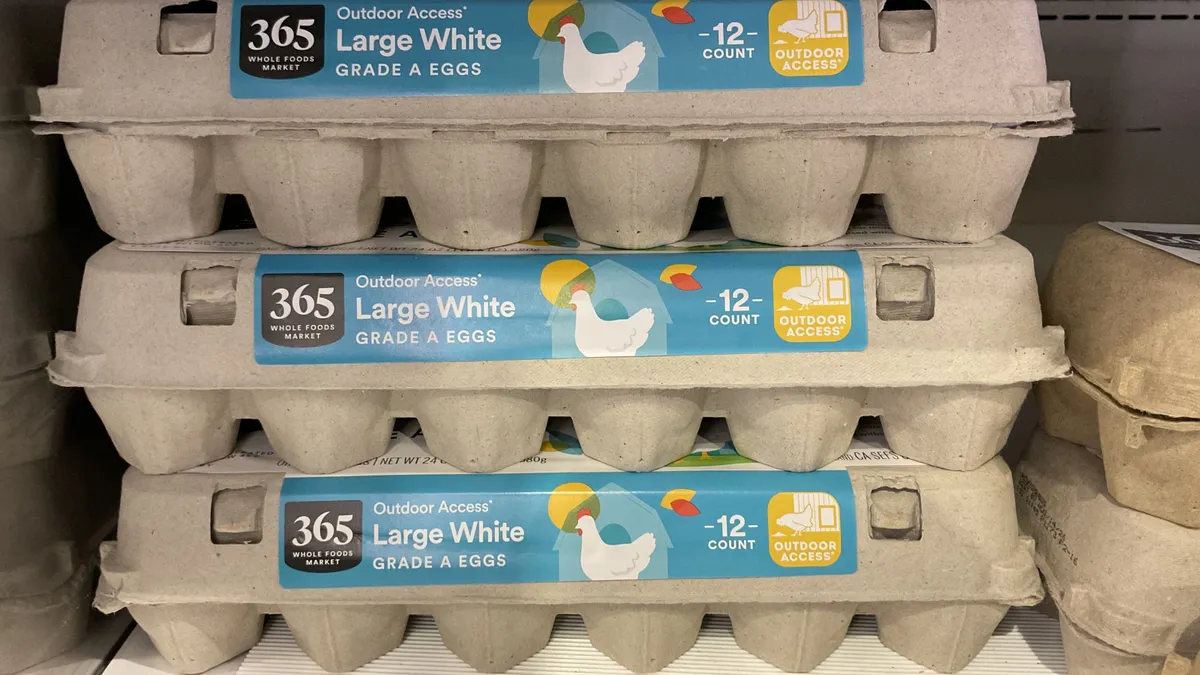
Egg prices are on a roll. Since hitting a record high of $6.23 per dozen in March 2025 during the peak of the avian flu epidemic, the average retail cost of a dozen eggs has moved down every month, coming in at $2.14 in June — the lowest level since late 2023 — according to federal data.
That trend is a relief for food retailers that only a little more than a year ago were scrambling to explain to shoppers why prices for eggs were soaring and the staple commodity was often hard to find in their stores. But it is also creating new headaches for the grocery industry.
Supermarket executives have recently explained to investors that the decline in egg prices in recent months has dented their comparable-store sales, heightening the challenges they face as volumes fall, the Inflation Reduction Act squeezes pharmacy sales and their businesses lose market share.
During Albertsons’ first-quarter earnings call in late July, President and CFO Sharon McCollam noted that egg deflation shaved about half a percentage point from its comps for the quarter, which were off by almost 1% year over year. By comparison, the chain recorded comps during the same period last year that were up almost 3%.
Kroger took an even bigger hit, as falling egg prices brought its same-store sales excluding fuel down by almost two-thirds of a percentage point in its most recent quarter, CFO David Kennerley said during the company’s earnings call in June. The company managed to post a comp increase of 1% during the period, but that’s a far cry from the 3.2% same-store sales growth Kroger posted in the first quarter of 2025.
Grocery king Walmart is also dealing with headwinds from the sharp decline in egg prices over the last year and a half. Egg deflation lopped a whole percentage point off the inflation it saw, CFO John David Rainey told investors during an earnings call in May.
Lower egg prices also weakened Walmart’s private label penetration in the company’s latest quarter, according to Rainey.
The rise and fall of egg prices has done more than just weaken top-line sales for grocers. People’s experiences just a year ago dealing with jaw-dropping costs for the grocery staple can have lingering or even permanent effects.
As shoppers searched for cheaper eggs, many probably had the opportunity to visit stores they might not otherwise have become familiar with — potentially changing their shopping habits for good.
I asked Matt Hamory, co-leader of the global grocery practice at management consulting firm AlixPartners, to put the relationship between egg prices and a grocer’s overall performance into context. He explained that eggs are so foundational to people’s diets that many shoppers probably used the inflated prices they saw for the commodity to draw broader conclusions about individual retailers’ value propositions.
“There was a switching effect” as customers shopped around in search of grocery stores where they could save money on eggs, Hamory told me. “Now it’s unwinding, and you don’t necessarily get a switch back.”
Hamory also pointed out that declining egg prices are not only impacting the revenue grocers take in but also their gross margins, which are a key measure of performance.
Shoppers pay close attention to egg prices — and they often turn to multiple retailers when they want better prices or inventory, Chris Costagli, vice president of thought leadership and food and beverage insights lead for NielsenIQ, said in written comments.
“A shopper who changes stores to purchase eggs often purchases milk, bread, produce, meat, and other staples during the same trip,” Costagli wrote. “That means egg price competitiveness can ultimately determine which retailer wins or loses hundreds of dollars in annual household spend.”
Balancing competitive pricing with rising costs can put pressure on retailers’ margins, Costagli noted. The challenges retailers are facing as prices come down make that basic element of food retailing even clearer.
“[Egg] price volatility can influence traffic, basket size, shopper loyalty, price perception, and profitability across the entire store, making eggs one of the most strategically important categories in grocery,” he wrote.