Dive Brief:
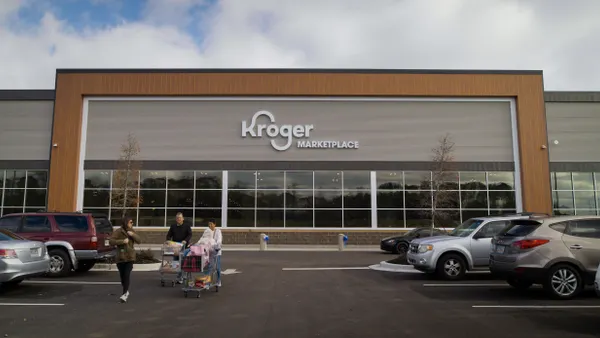
- Kroger announced during its most recent earnings call that it plans to shutter around 50 underperforming Little Clinic locations.
- Last month, the grocery company confirmed it would close all 18 of its Little Clinics in Georgia, effective April 4.
- Ron Sargent, who served as Kroger’s interim CEO for just shy of a year, said this move is part of “simplifying the business,” noting that Kroger also sold Vitacost, its online health and wellness subsidiary.
Dive Insight:
Kroger’s decision to close around a quarter of its in-store clinics comes at a time when grocers are working to establish themselves as health and wellness destinations.
The grocer has been evaluating the parts of its business outside of its core grocery segment as it looks to rein in costs, leading to the closure of the Little Clinic locations along with the sale of its Vitacost business.
“These decisions reflect our commitment to running a more efficient company and focusing on priorities that add the most value,” Sargent told investors.
Kroger did not respond to a request for comment about which specific locations it is closing. Local news outlet Indy Star reported earlier this month that two Little Clinic locations closed in late February at Kroger stores in Speedway and Carmel, Indiana. A third will shutter in Fishers on April 4, Indy Star added.
Ohio’s Local 12 news outlet reported that two Little Clinics are closing in Milford, Ohio, and another in Wilmington, Ohio, on March 28. Another state-based media site, WHIOTV7, said Kroger is closing an in-store clinic at its Piqua, Ohio, store on April 4.
Kroger currently runs around 220 Little Clinics across Arizona, Colorado, Georgia, Indiana, Kansas, Kentucky, Ohio and Tennessee within its Kroger, Fry’s Jay C, Dillons and King Sooper’s banners.
Pharmacy sales played a key role in leading Kroger’s sales growth during its most recent quarter, thanks mainly to growth in core scripts and GLP-1s, David Kennerley, the grocer’s CFO and executive vice president, said during last week’s earnings call. However, he noted that despite pharmacy’s strong Q4 performance, the segment contributed nearly 50 basis points less than in the prior quarter.
Moving forward, Kroger expects pharmacy sales growth to moderate to low to mid-single digits, reflecting the ongoing impact of the Inflation Reduction Act on reimbursement rates as well as continued GLP-1 adoption, Kennerley said.
Catherine Douglas Moran contributed reporting.