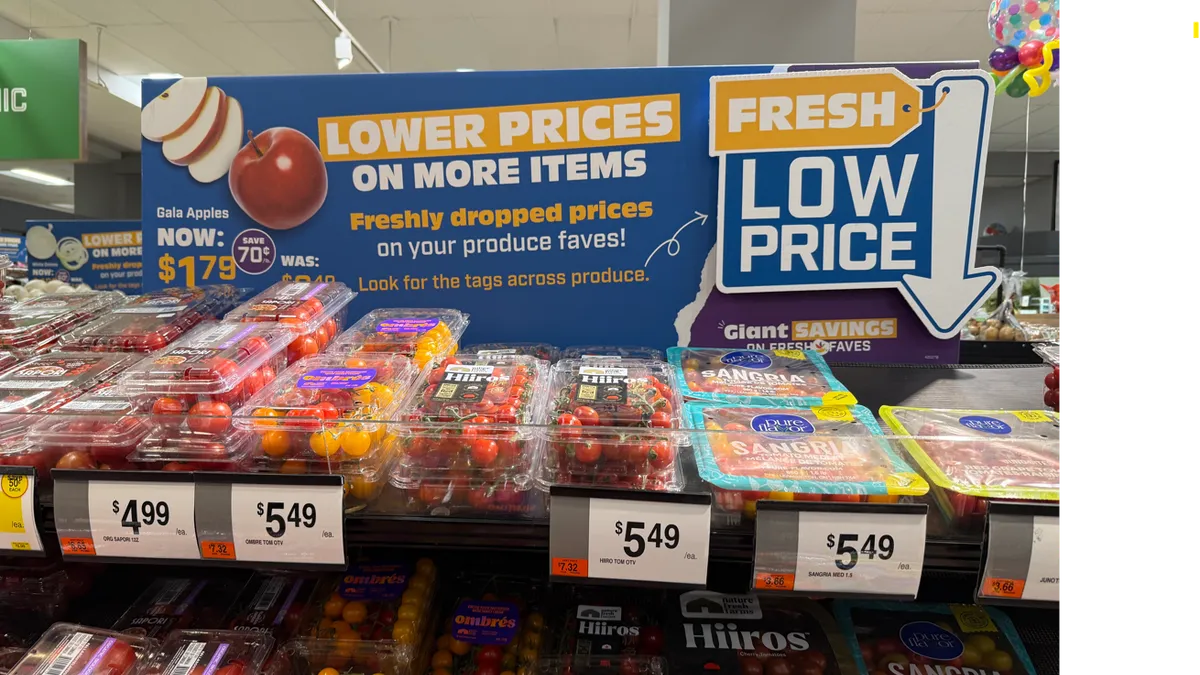
This is the first story in a series about how grocers are moving beyond traditional low-price strategies to win over shoppers.
Traditional grocers have long relied on sale signs and high-low pricing strategies to drive home the message that they’re giving shoppers a good deal.
But with so many price-conscious shoppers now visiting their nearby Aldi, Walmart or Costco — not to mention comparing prices across retailers online — a lot of those low-price promises from conventional grocers ring hollow, say industry consultants.
“Customers fundamentally don’t really believe traditional grocers when they say that they have really low prices, and they get tired of their constant messaging around prices,” said Matt Hamory, who co-leads the global grocery practice at consulting firm AlixPartners.
In a recent survey conducted by AlixPartners, just 13% of consumers who regularly shop at traditional grocery stores said they believe their primary store offers low prices compared to other outlets. Nearly two-thirds said they value deals but feel it’s “too much work” to capitalize on the ones that grocers offer.
Traditional grocers seem to be getting the message. They’re taking a more targeted approach to promotions, implementing new pricing tactics that offer more consistency and reinforcing wallet-friendly offerings like private label goods. They’re also trying to reinforce the value of what makes them unique — namely, their service departments, fresh offerings and wide assortments.
Conventional grocers can’t compete head-to-head on price with the likes of mass merchants and discounters, Hamory said, but they can narrow the “value gap” with them.
“You don’t have to be at the same price as the discounters, or even necessarily super close. Because people value your convenience, they value your assortment,” he said.
Simpler messaging, more focused price cuts
Stewart Samuel, director of retail futures at IGD, said he’s noticed retailers in the U.S. and around the world have toned down their low price messaging in stores and focused on making their discounts “clearer and easier to understand.”
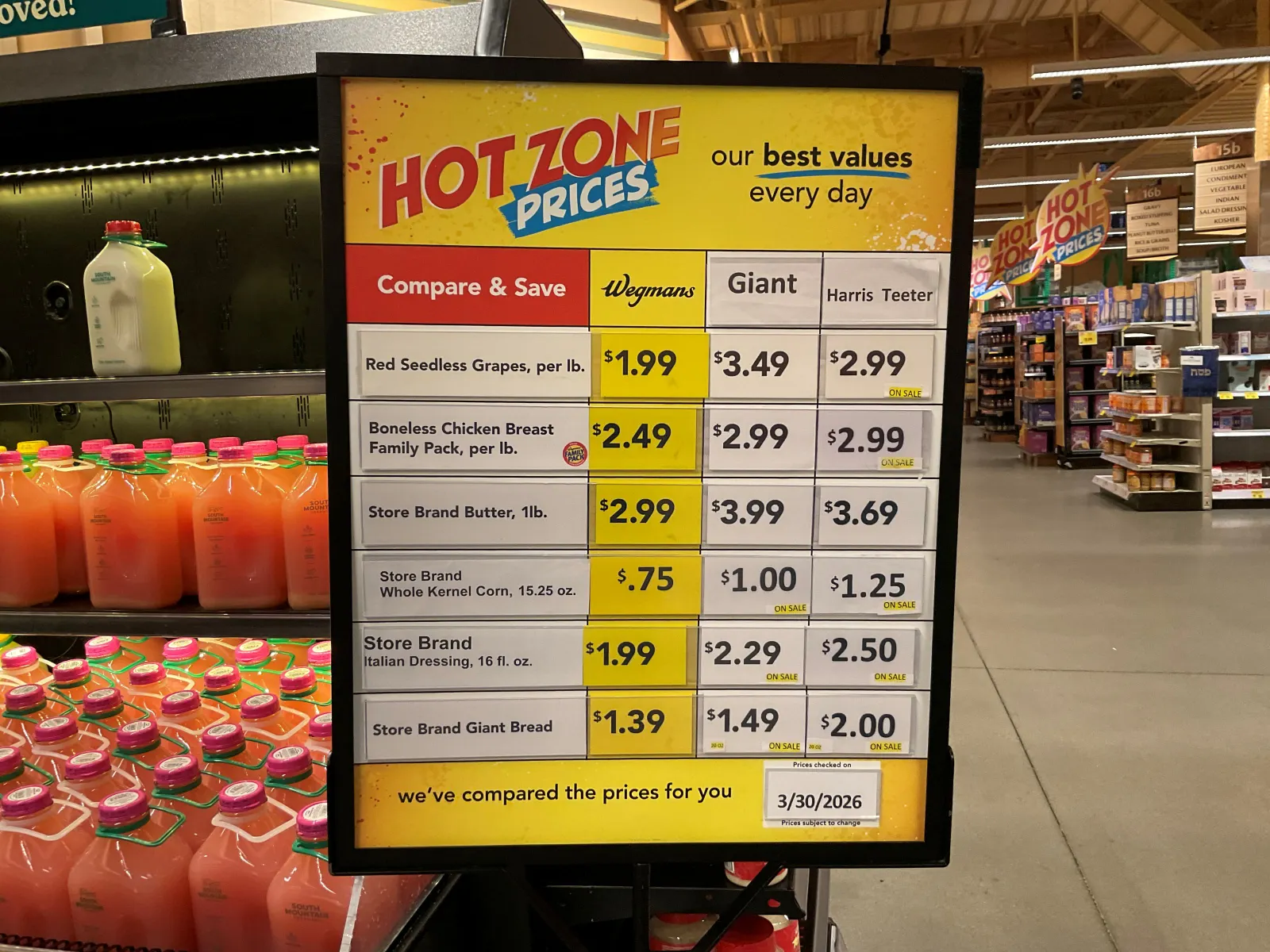
Wegmans places signs in its stores showing how its prices on store brand products like potatoes and peanut butter stack up with those found at nearby competitors — a focused, effective strategy that promotes retailers’ growing private brands business, said Hamory.
Bobby Gibbs, partner with management consulting firm Oliver Wyman, said he’s seeing more grocers offer deals targeting omnichannel shoppers. Stater Bros., for one, offers “digital deals” that dangle additional savings for people who shop using the company’s app and website.
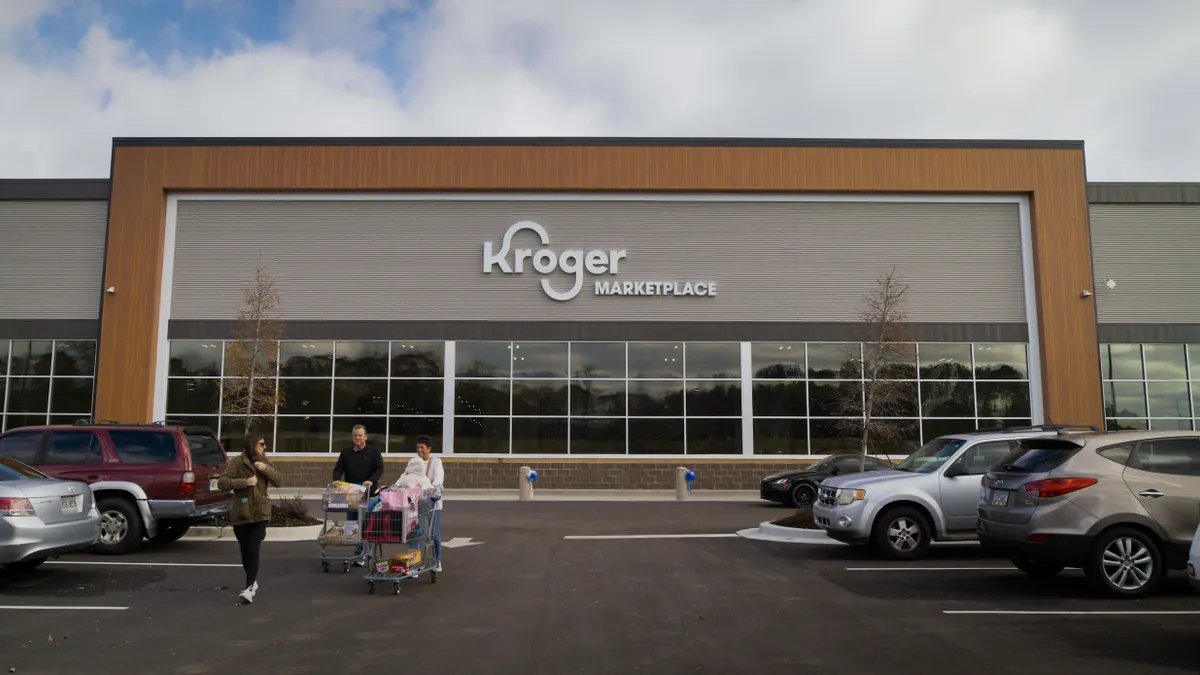
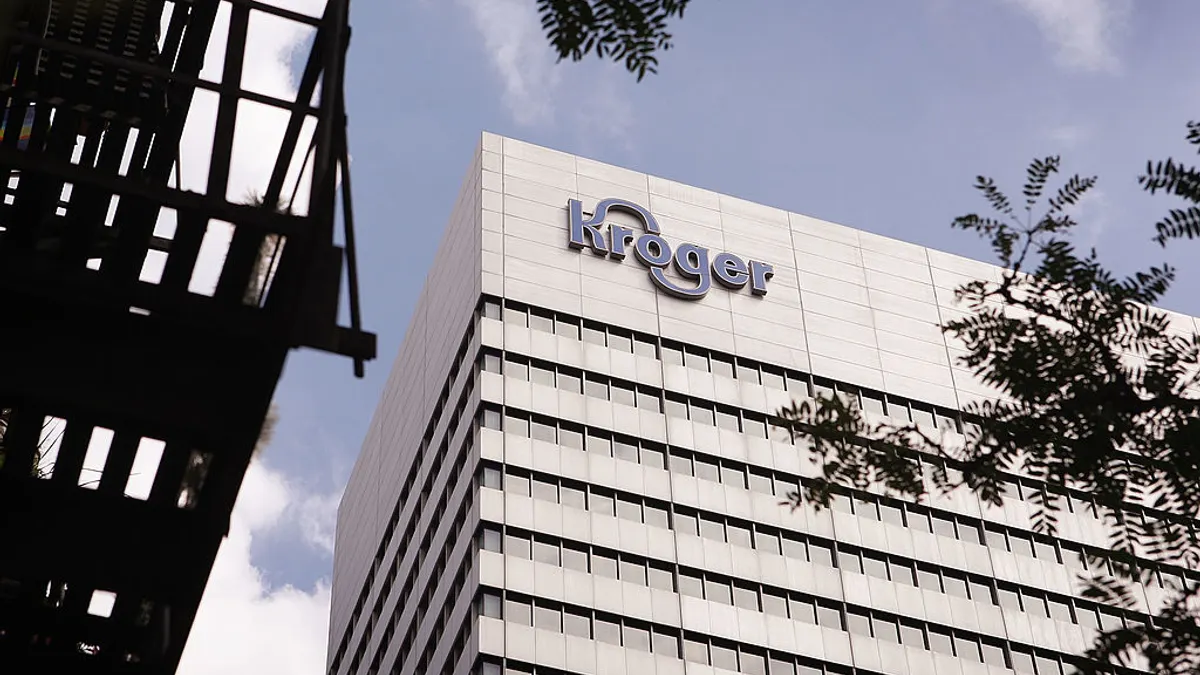
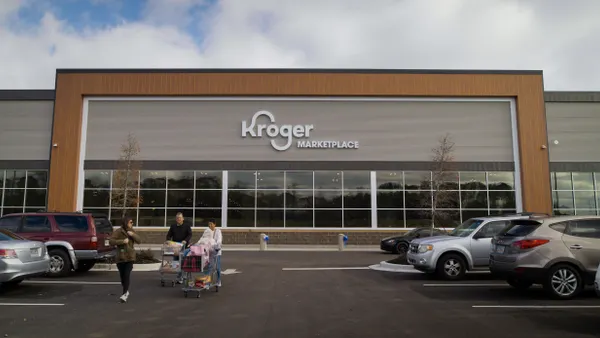
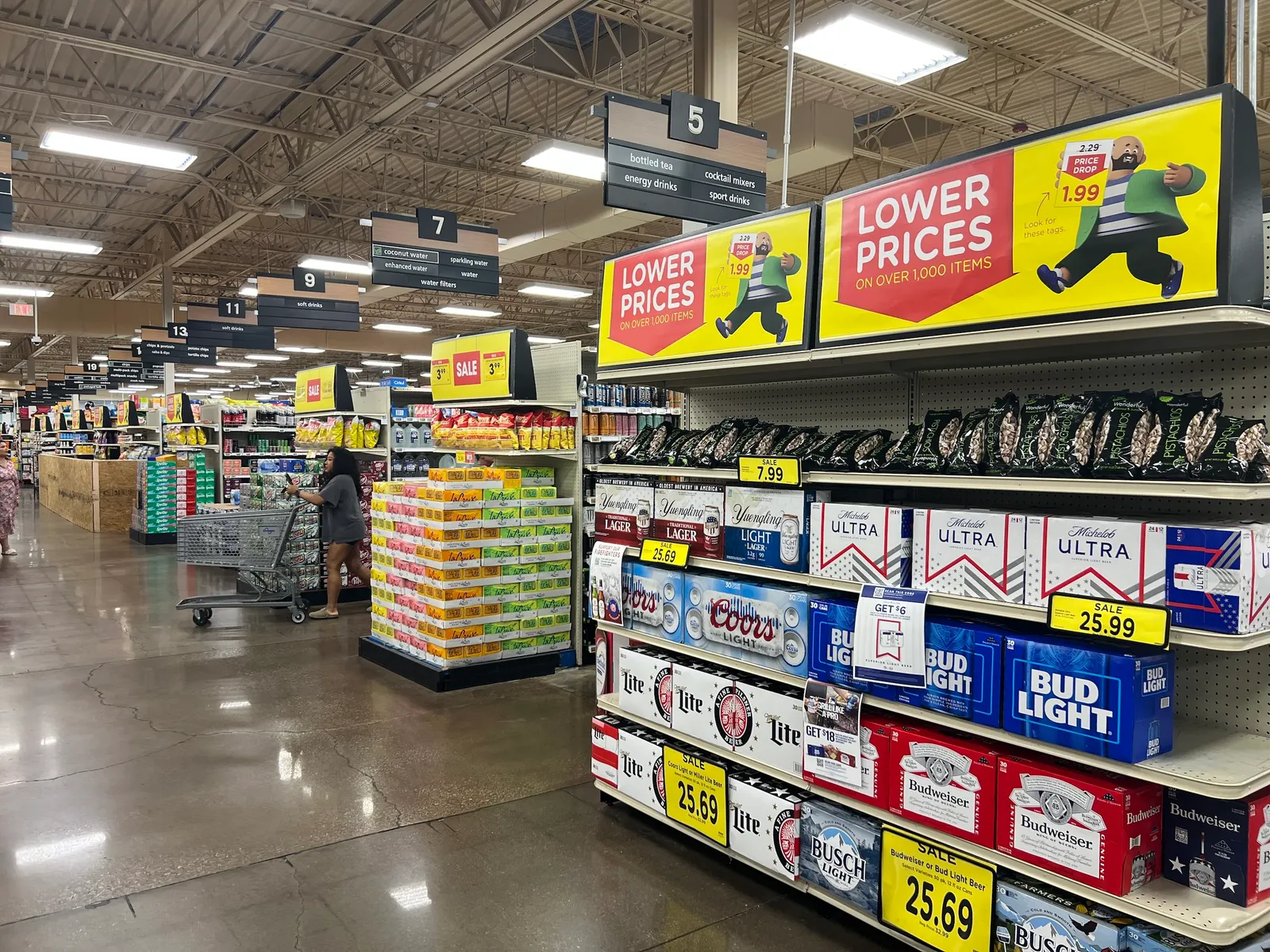
Retailers like Kroger, meanwhile, are using “everyday low price” messaging even though they aren’t EDLP retailers, said Gibbs. Last fall, Kroger touted price cuts “on items that matter most” to shoppers, like beef, eggs and produce.
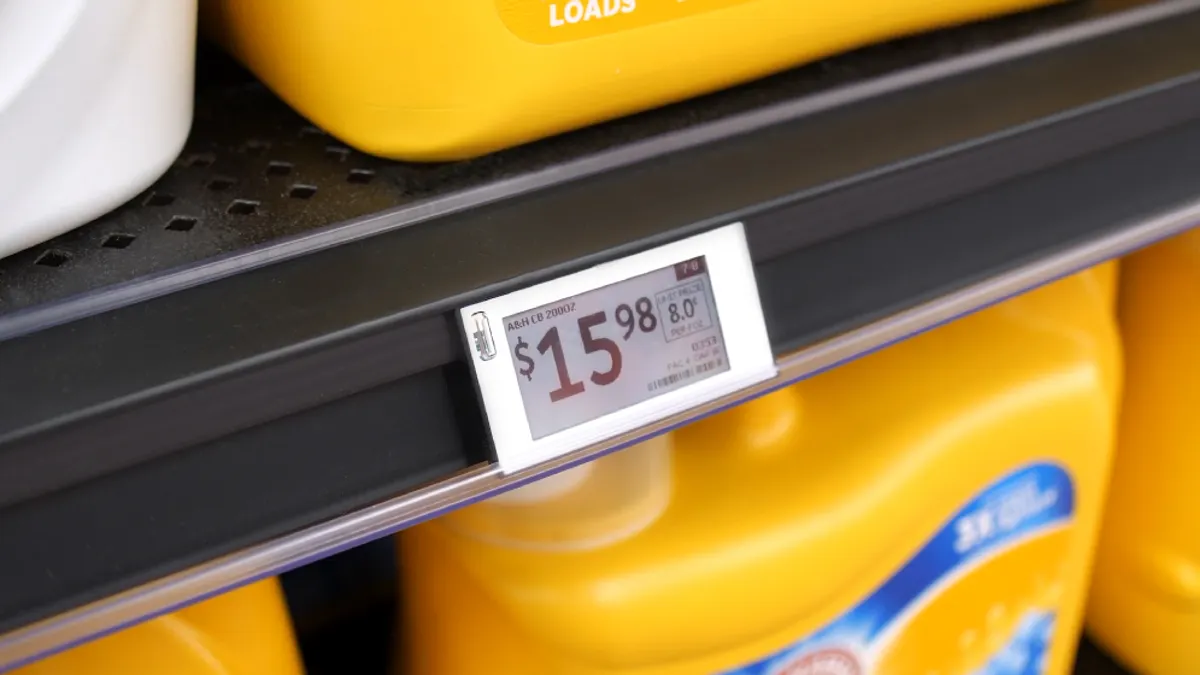
Advanced technology has helped retailers better identify which items to target for price promotions — and which ones don’t move the needle as much, Samuel said. He anticipates AI will help grocers do an even better job of pinpointing price cuts for maximum impact.
But Samuel noted that shoppers want more consistency in price cuts and promotions instead of the weekly and even daily changes retailers make to their deals. He’s seeing more retailers implement “price lock” strategies that cement discounts for a month or even longer. In January, ShopRite launched an enhanced “LockedIn Price” program that offered discounts on “thousands of popular grocery staples” for four to six weeks.
“It’s kind of getting closer to the EDLP model, but it’s not quite everyday low price,” said Samuel.
Traditional grocers are also revising their loyalty programs to offer steeper discounts and faster rewards redemption. Giant Eagle recently revamped its loyalty program to offer one-to-one personalized rewards for shoppers, while Raley’s earlier this year added to its loyalty program a “Member Prices” benefit that automatically applies discounts at checkout.
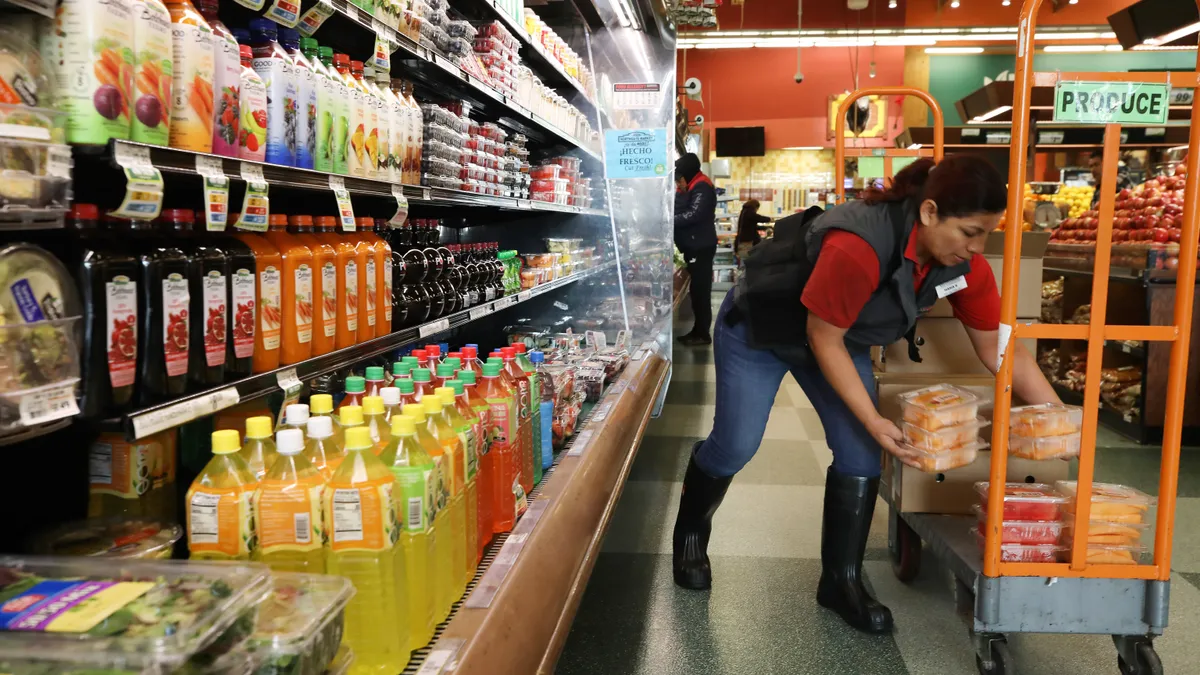
Amid all the revised discounts and promotions, conventional grocers are also taking the opportunity to reinforce the services they offer that differentiate them from discount competitors. Raley’s offers loyalty rewards tied to its dietitians and fueling services. In the Northeast, Roche Bros. is promoting the steps it takes to ensure freshness. It offers customers a “double your money back” refund on produce, meat and seafood that isn’t fresh. Workers in the stores’ produce departments check the freshness of each item twice a day, noting on a large department sign the time they checked and the staffer responsible.
Tackling that price gap
Although they’re addressing shortcomings in their value perception, traditional grocers still need to address the actual price gap that exists between them and their lower-priced competitors, said Hamory.
“Don't forget about continuing to work on underlying price [in order to avoid] crossing that threshold where you basically are paying people to go shop with somebody else,” he said.
Kroger’s new CEO, Greg Foran, has said that bringing down prices will be a focus for the retailer in the coming months. Foran knows a thing or two about squeezing prices out of operations, having spent several years as president of Walmart U.S.
At the same time, Foran isn’t under any illusion that Kroger will be able to match prices with his former employer. Rather, he wants Kroger to become more price-competitive and win over shoppers with freshness and services.
“[Shoppers] can go to a really low price discounter, not get quite as much assortment, maybe not get as good a fresh [experience], or they can go to a Kroger or a Kroger banner, they’re going to get a better experience,” Foran said during Kroger’s earnings call last month. “For them, that will represent a better value because we are affordable.”
Grocers across the country are tightening their belts in order to stay competitive and bring down prices. Kroger and Albertsons have each closed dozens of stores, while Ahold Delhaize has brought more of its distribution business in-house over the past several years. Private label sales keep setting annual records as grocers stock more of the low-price, proprietary items.
Samuel noted, however, that cost pressures like inflation and spiking oil costs are making it difficult for retailers to lower prices. “The pressures on retailers are now more embedded in their businesses than being so cyclical,” he said.
But even small changes can add up. Hamory noted that pricing strategies depend on individual markets. He believes traditional grocers don’t need to have the lowest prices around — but they also shouldn’t have the highest.
“You don’t have to outrun the bear. You have to outrun the slowest camper, and then the bear gets that guy,” he said.