Leslie G. Sarasin is the president and CEO of FMI — The Food Industry Association, a trade association advocating for a safer, healthier and more efficient consumer food supply chain.
For years, grocery retailers have wrestled with the dilemma of having to choose between operational efficiency and customer experience, placing leadership in the throes of an endless attempt to balance the merits of one against the costs of the other.

The latest findings from The Food Retailing Industry Speaks 2026 report suggest that increased use of technology is making it possible to deliver both, shifting what previously was an either-or consideration into a both-and victory. Recently released by FMI — The Food Industry Association, the report represents input from more than 42,000 grocery stores and tracks the evolution of food industry operations, analyzing an industry that is laser-focused on innovation and technological growth despite facing difficult economic headwinds.
The scale of that commitment is striking. In 2025, food retailers dedicated more than $20 billion to technology budgets, or nearly 2% of total sales. These contributions are roughly double the prior year's share, and 71% of responding grocers expect those expenses to climb again in 2026.
FMI’s report finds that investing in a robust shopper experience is a win-win for both customers and the industry, as more than half of responding retailers and suppliers report that their technology investments are already paying off both in their businesses and in their offerings to customers.
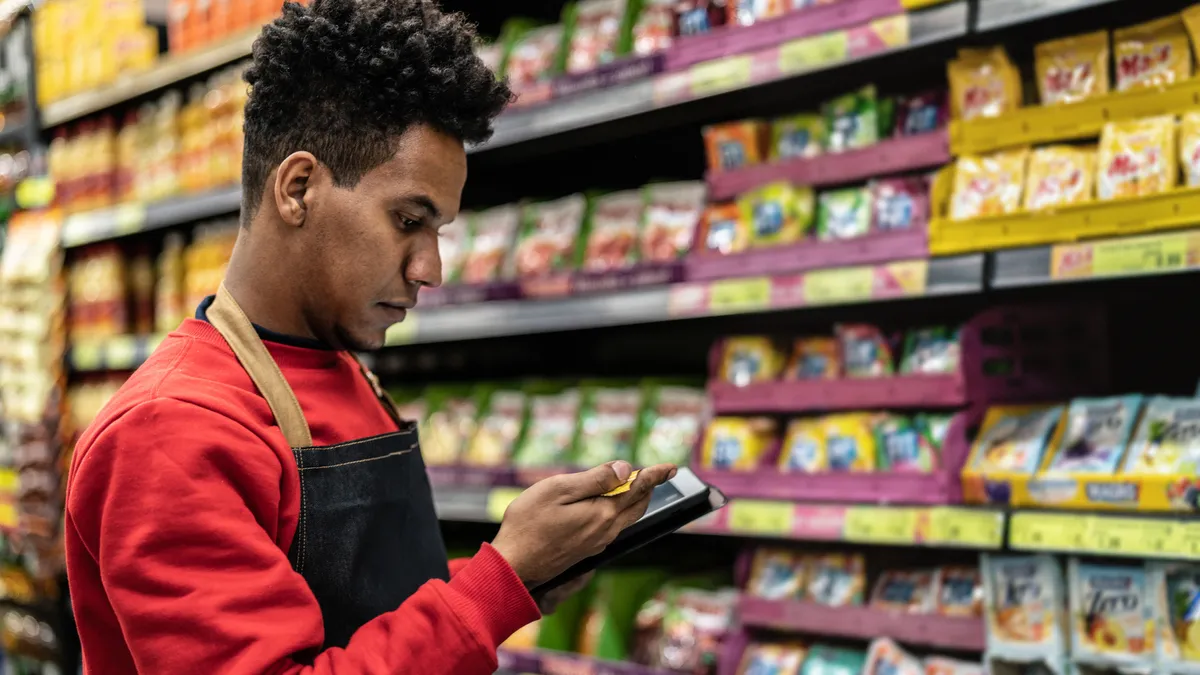
To the shopper, these conveniences may go unnoticed even while they add meaningful value and ease to their experience. For the industry, behind-the-scenes technological advancements enhance a store’s operational efficiency while supporting customer needs.
Artificial intelligence sits at the center of this transformation. Adoption of AI to enhance offerings and improve efficiency among food retailers surged from 47% to 68% in just one year, while every responding supplier now uses AI in some form. Generative AI is also used by more than half of grocers and all food manufacturers. Every day, these innovations enable budget-friendly promotions for shoppers, smarter product assortments for stores, and generative AI applications that support customer service and loyalty programs.
Grocers plan to continue investing in these technologies and the workforce that make their implementation effective, with more than half of those surveyed expecting to increase staffing for AI-related roles such as data analytics and digital technologists. The ongoing efforts will keep delivering frictionless experiences to shoppers, with nearly one in five food retailers also anticipating that conversational commerce, such as AI assistants and chatbots, will begin reshaping how consumers fill their carts.
For food and product suppliers, the technology story is equally robust. Automated warehouses, AI-driven demand planning, and sophisticated promotional performance tools are now standard practice.
Just a few years into large-scale adoption, AI has had transformational effects on the industry and the customers who rely on it. For example, by more efficiently automating inventory systems, AI has reduced food waste at grocery stores that otherwise cause considerable material losses, and suppliers are implementing similar strategies. By optimizing loss prevention efforts that would typically eat at the industry’s bottom line, food retailers and suppliers can focus more time and resources on what shoppers value most.
Grocery shoppers are increasingly focusing on personal health and well-being goals, providing another area where the industry is leveraging technology to serve customer concerns. According to FMI’s U.S. Grocery Shopper Trends 2026 report, more than three-quarters of shoppers say they put real effort into choosing nutritious options, and two-thirds believe their diets could be healthier, a figure that rose 5 percentage points in a single year. The industry is responding by offering a wide variety of options with positive health attributes and ensuring in-store and e-commerce technologies allow these choices to be made with ease.
Technology is the bridge between those ambitions and the aisle. Digital platforms allow customers to filter products by dietary needs, SNAP eligibility, and personal wellness goals. This omnichannel experience supports customers whether they are shopping online or in-store, meeting customers where they are, with 94% of grocery shoppers now making purchases through both formats.
With these investments, it should come as no surprise that nearly half of food retailers believe technology will improve the in-store shopping experience for customers.
Through continued AI integration and technology investments, the food industry is an ever-evolving sector striving to create the best shopping experience — one that meets customers where they are with what they need. Leveraging cutting-edge technology is proving to be an effective tool to help achieve this long-held goal. Even as grocers operate on a net profit margin that averaged just 2.1% last year, food retailers and suppliers have never lost sight of their mission: to serve the customer.
The food industry is unique in that it touches nearly every American household multiple times each week. The industry’s impact throughout our country is profound, and AI and technology optimizations enable retailers to provide the best possible experience for shoppers. The food industry continues to advance this mission while maintaining the core understanding of its purpose: supporting communities and feeding families with safe, affordable food.