Dive Brief:
- Grocery Outlet’s net sales increased 3.6% year over year during its first quarter, to $1.17 billion, the discounter announced Wednesday. Comparable-store sales declined just over 1%.
- The Q1 results were consistent with the company’s guidance, as the discounter improved its mix of opportunistic products, invested in promotions and sharpened its value messaging, CFO Chris Miller told investors during an earnings call Wednesday.
- The discounter still has more work ahead, particularly around improving its in-store experience, Jason Potter, the company’s president and CEO, said during the call. “While we’re encouraged by the progress we’re beginning to see, we’re not satisfied with our current level of performance and are focused on the work we have in front of us,” he told investors.
Dive Insight:
After weathering a dismal Q4, during which the company “believed we hit bottom” due to lagging sales and traffic, Grocery Outlet’s financial performance is getting back on its feet, Potter told investors.
“We’re firm believers that the business is going to get back to healthy levels of comp sales performance over time,” Potter said.
A 3% decrease in average transaction size fueled the Q1 comp sales decrease and offset a 2% uptick in the number of transactions. Traffic saw continual improvement throughout the quarter, with weekly traffic growing between 2% and 5% year over year during March, Potter said.
In response to an analyst’s question about the disconnect between traffic and tickets, Potter said that it “takes time” for value messaging and consistent store experiences to translate to more loyalty and bigger baskets.
During Q1, Grocery Outlet made “meaningful progress by improving our sourcing, increasing product visibility and helping operators further differentiate their stores,” Potter said.
The grocer has also invested in event-driven promotions for high-traffic occasions like the Super Bowl and Easter in a bid to boost traffic and elevate comp performance and is sharpening its value messaging, he noted.
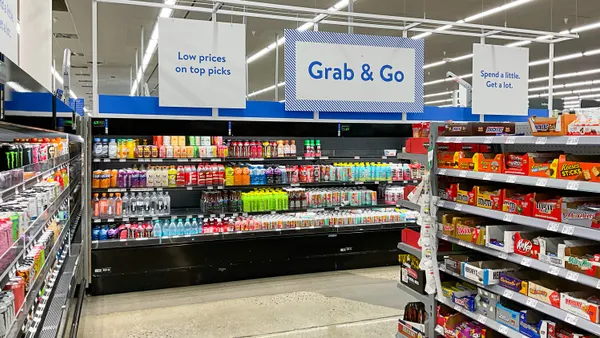
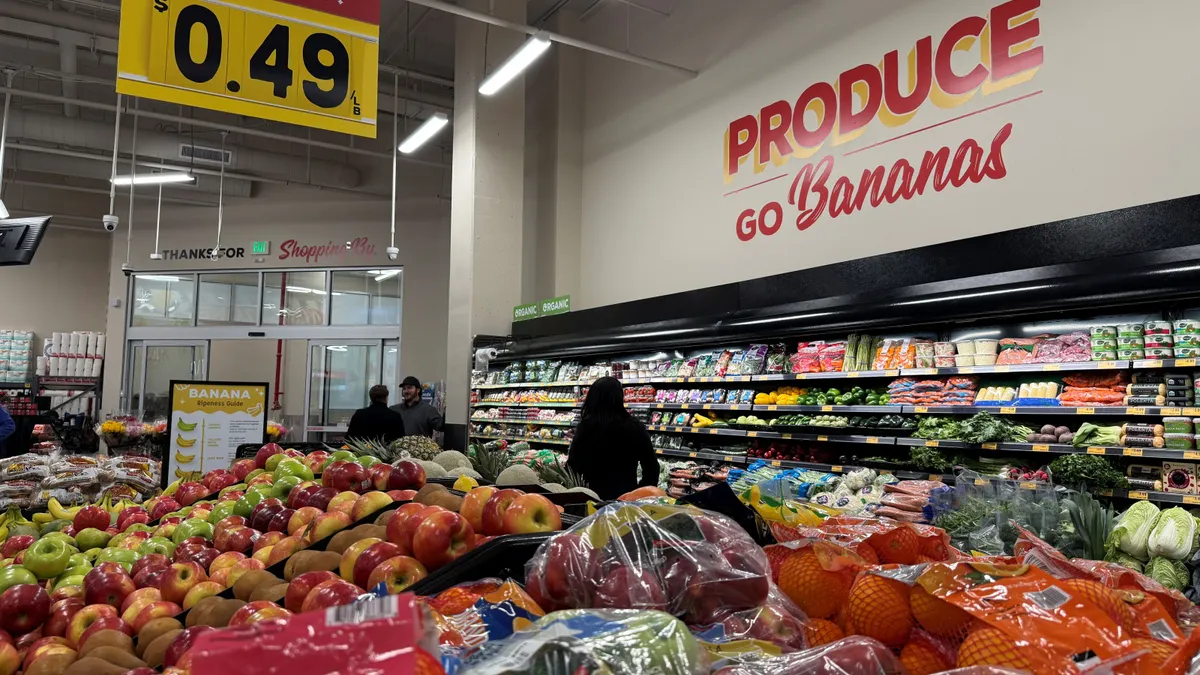
As part of the “huge opportunity” Grocery Outlet sees to improve its in-store experience, the discounter is improving in-stocks and incorporating signage that plays up the retailer’s focus on value, Potter said.
“Value matters more than ever. We must make that value visible, consistent, exciting and easy to shop. … Together, these three initiatives, with a singular focus of improving value, are beginning to drive a meaningful, positive customer response,” Potter said.
The discounter’s store remodel program is improving the in-store experience for customers, Potter said. The chain completed 34 remodels in Q1. The company plans to complete approximately 100 store remodels by the end of 2026 — about 50 fewer locations than initially anticipated, Potter said.
The discounter wrapped up the closure of 36 stores — which it announced in March — and these closures “have improved fleet quality and will strengthen the earnings profile of the business over time,” Potter said. Going forward, Grocery Outlet plans to take a “tightened” approach to new store growth by being more selective on real estate and buying rigorous underwriting, Potter added.
“Grocery Outlet has meaningful strengths, a differentiated model, a highly relevant value proposition, strong independent operators and a format that resonates when we execute well,” Potter said. “Our focus is on translating those strengths into a more consistent performance.”