At the start of the year, Grocery Dive released its annual trends forecast, outlining predictions for what could unfold in 2025. Industry experts anticipated that evolving health and wellness trends, private label putting pressure on CPGs, growing adoption of consumer-facing artificial intelligence and the rollout of tariffs would impact much of the industry.
Many of those predictions rang true. Specialty grocers heavily profited from consumers’ ongoing focus on nutrition, several grocery players tapped ChatGPT capabilities and grocers from all walks of the industry — whether traditional, specialty or discounter — upped their store brands game.
With the year coming to a close, the Grocery Dive team has circled back and graded the 2025 predictions based on how these trends actually played out. Check back in January for our 2026 trends forecast.
Prediction: Traditional grocers have to sharpen their differentiation
Grade: B
Analysts have been saying for years that supermarket operators need to find ways to stand up to specialty grocers and mass merchants like Walmart. But while traditional food retailers certainly took steps to differentiate themselves this year, they still have a long way to go as they look to secure their futures.
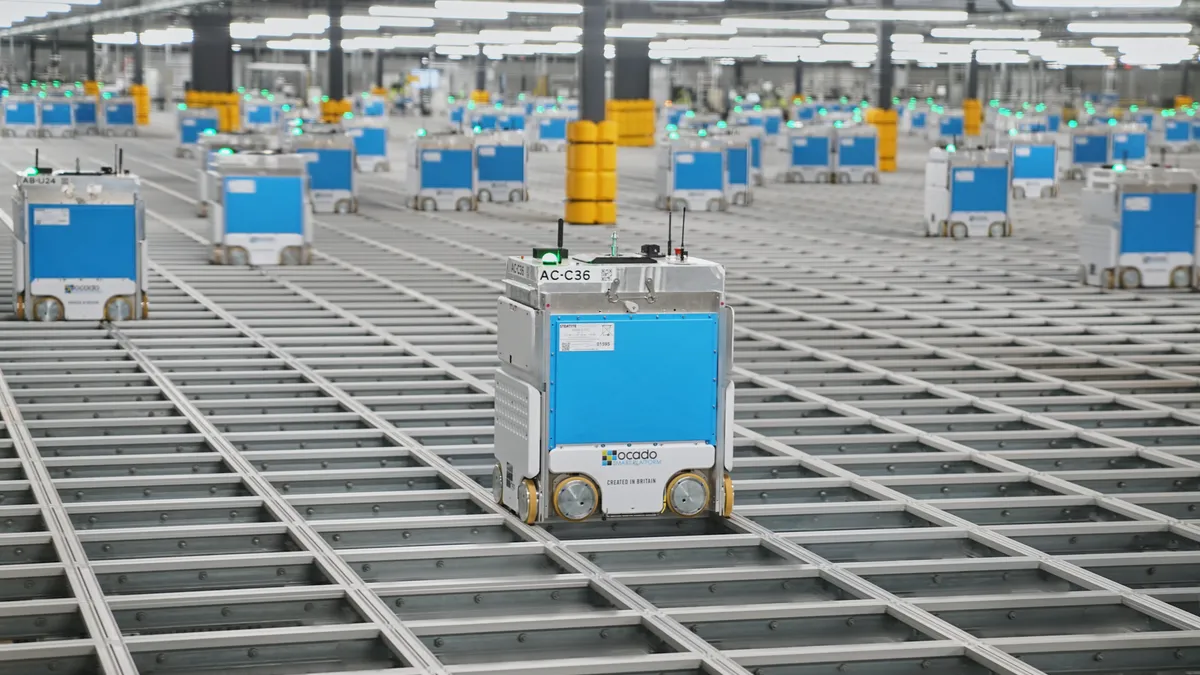
In an illustration of that, conventional grocery chains like Albertsons and Kroger spent much of 2025 recalibrating their strategies, as both companies closed stores, cut costs and reshaped their digital initiatives. Kroger went through a particularly tumultuous period late in the year, when it sharply scaled back its automated fulfillment network. Ahold Delhaize also used the year for course corrections, shifting toward in-store e-commerce fulfillment and continuing to revitalize Stop & Shop.
Meanwhile, specialty grocery chains like Sprouts Farmers Market and discounters such as Aldi continued to grow rapidly this year, underscoring their resonance with shoppers. In addition, Walmart pressed its advantage, piling up sales from shoppers against a backdrop of affordability challenges. Conversely, Grocery Outlet struggled to connect with shoppers and bring in sales despite its heavy focus on discounts.
Prediction: Consumers will continue to focus on value
Grade: A
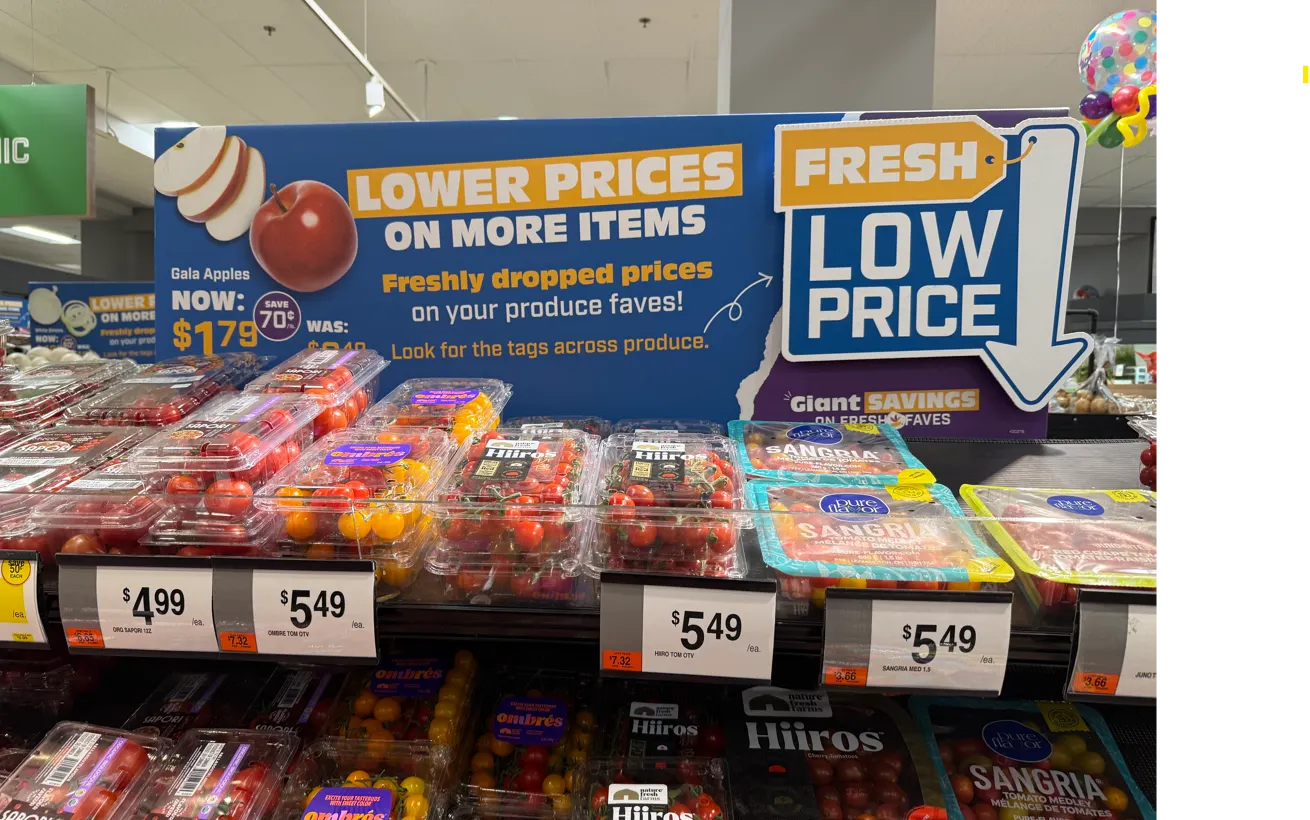
It seemed abundantly clear a year ago that affordability would remain a top concern for consumers and retailers alike in 2025, and that forecast turned out to be spot-on. Shoppers made clear that they were worried about rising prices and unnerved by the federal government’s aggressive tariff program — and grocers aggressively deployed price reductions as a way to attract customers.
Stop & Shop, for example, dropped prices on thousands of products in almost every department at its stores in Massachusetts, while Aldi cut prices during the summer on almost a quarter of its selection. As Thanksgiving approached, grocers lined up to hawk bargain-priced holiday meal specials, with some, including Lidl and Aldi, touting Turkey Day-themed promotions that they said were less expensive than what they offered last year.
Food prices continued to climb throughout the year, as grocery inflation hit a two-year high of 2.7% in August before subsiding somewhat in November.
Prediction: 2025 will be the year grocers become savvy with data management
Grade: Oops, the dog ate our homework!
At the end of 2024, experts said they believed grocers would streamline their data management, especially as advancements in AI helped them evaluate and interpret their data.
Did grocers do this? Well, this one’s tough to call. We didn’t cover any new or changed data management — but that doesn’t mean that grocers didn’t do anything in this area. If anything, grocers tend to publicly promote their consumer-facing initiatives more than their back-end operational moves.
Prediction: What will happen with tariffs?
Grade: A
Experts predicted that the tariffs on imported goods that President Donald Trump vowed before his inauguration to quickly impose would unleash instability across the grocery industry — and that’s exactly what happened. While the precise impact of tariffs on prices is difficult to gauge, the unpredictable levies sparked a heavy dose of uncertainty that made planning difficult for retailers and driven fears among shoppers already gripped by concerns about the cost of living.
Nearly 70% of people who responded to a poll conducted by consulting firm KPMG earlier in the year said they expected grocery prices to increase because of tariffs. In addition, FMI — The Food Industry Association reported in August that more than half of surveyed shoppers said tariffs were their top concern related to food costs, although a majority of those consumers also said they felt they could keep their spending on groceries in check.
In November, the Trump administration responded to concerns, announcing that it would exempt hundreds of agricultural products from the tariffs the government announced earlier in 2025.
Prediction: Health and wellness needs are evolving
Grade: A
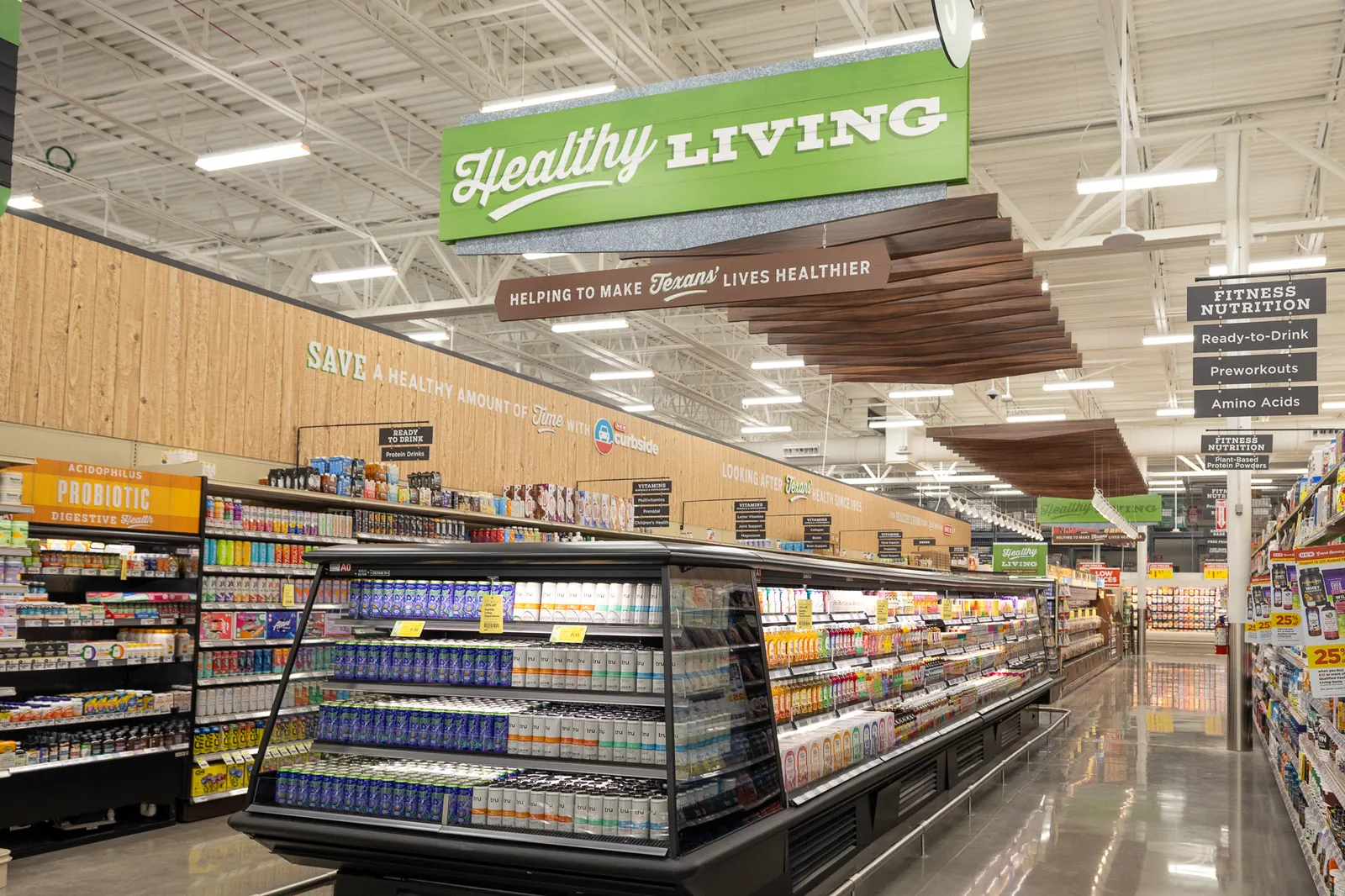
Experts predicted that CPGs and grocers would focus on products with health and wellness attributes like “added protein” or “low sugar” — and that’s what we saw.
From the pressure exerted by the Make America Healthy Again movement to a growing number of states restricting “junk” food from SNAP eligibility, foods dubbed “healthy” nabbed the spotlight this year. Specialty grocers, especially, saw a sales lift as consumers continued to seek them out for their nutritional expertise.
2025 kicked off with Target saying it would add more than 2,000 new wellness-related items across all categories, including in its food and beverage assortment. The momentum to elevate healthy food and wellness services continued throughout the year. In the fall, Kroger made its health and wellness services a prominent part of its app refresh.
Prediction: Private label will put serious pressure on CPGs
Grade: A
Grocers did not disappoint this year with the private label offerings they introduced.
This past fall, Aldi announced it was rebranding its entire private label portfolio, putting its name on every product and launching its first-ever namesake brand.
Meanwhile, specialty retailer Natural Grocers has been tallying stronger net sales in recent years, largely thanks to its fast-growing private label assortment. The grocer consistently put out a wide variety of new private label items in 2025, as well as further linked the offerings to its loyalty program.
This work further proves that private label is no longer seen as a trade-down option. Consumers with household incomes above $100,000 are becoming more likely to buy private label groceries, according to recent survey results from management consulting firm Alvarez & Marsal. Additionally, a September report from FMI found that 86% of surveyed retailer and manufacturer executives plan to moderately or significantly increase private brand investments over the next two years.
Prediction: Electronic shelf labels will hit mainstream adoption
Grade: B-
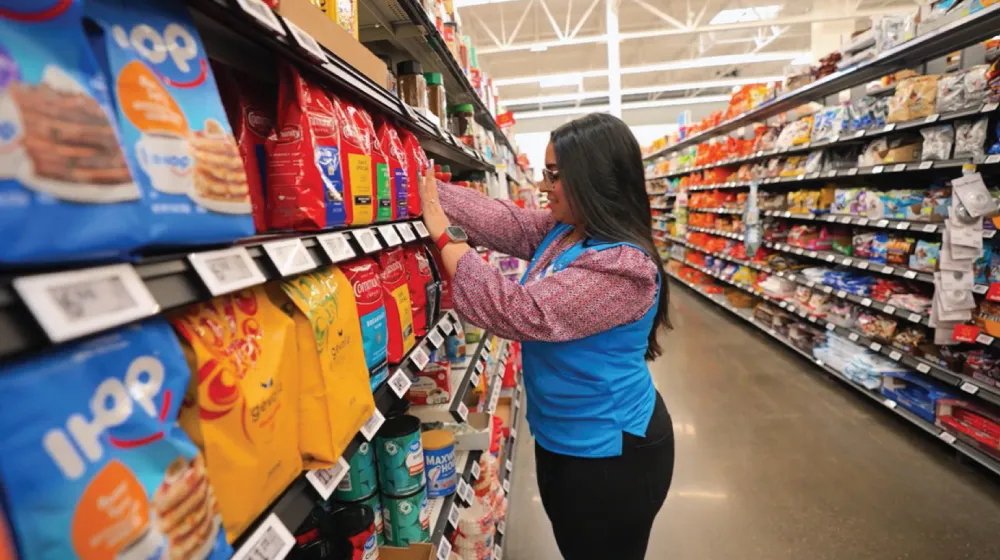
While ESLS saw rapid adoption by companies like Walmart and Hy-Vee in 2024, they also came under scrutiny by politicians and consumer advocacy groups that year. Experts predicted that 2025 would be a year of mainstream adoption.
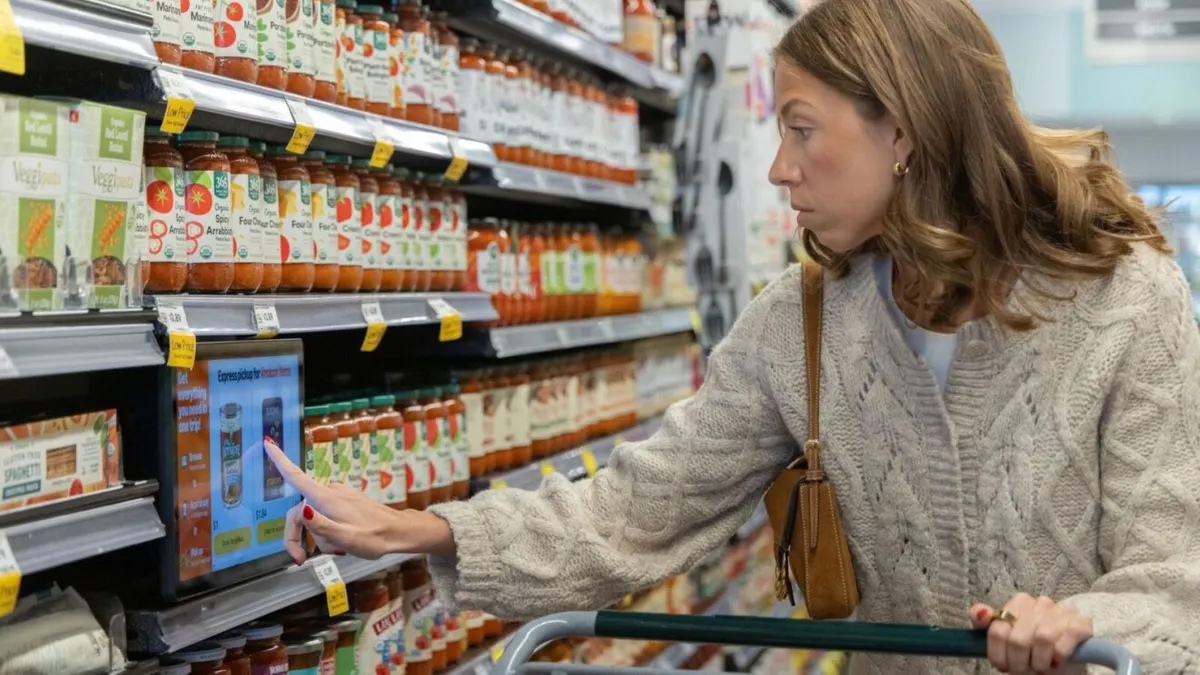
The technology continued to roll out, yet stayed largely out of the spotlight in 2025, unlike the prior year. The Independent Grocers Association pushed the adoption of ESLs through a deal with Aperion. Instacart said it brought its electronic shelf label software Carrot Tag to more retailers, including Stewart’s Marketplace, which has two stores in Utah, and Dierbergs Markets, a chain headquartered near St. Louis, Missouri.
A new study from researchers at the University of California Rady School of Management found no evidence of ESLs leading to real-time pricing spikes. Still, 2025 was a relatively quiet year on the ESL front.
Prediction: Consumer-facing AI will grow
Grade: A
The demand for AI capabilities continued in 2025 with several notable developments.
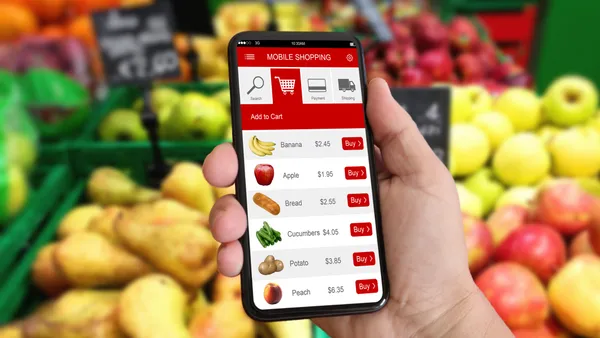
ChatGPT, in particular, made itself known to the grocery industry. This October, OpenAI and a few big-name companies, including Uber, Instacart, Target and DoorDash, announced plans to integrate with ChatGPT, allowing users of the interface to conversationally explore digital food aisles. Just a week later, Walmart disclosed that its customers will soon be able to make purchases within ChatGPT by using the new Instacart Checkout feature.
Some grocers kept their AI developments in-house. Albertsons, for example, released an AI-powered conversational shopping assistant that aims to help shoppers search for and discover products.
There is still work to be done, however, in order for grocers to seamlessly introduce AI capabilities to shoppers. Research from consulting firm PwC found that the idea of having an AI-driven virtual assistant is growing on consumers, but nearly two-thirds of respondents said at least one safeguard would help them feel comfortable with AI-powered shopping.