International grocery stores are becoming more commonplace in consumers’ weekly grocery trips. And while most of these big-name retailers — H Mart, 99 Ranch, Cardenas Markets and Northgate González Market — offer products that go beyond what traditional grocers have stocked, they cater to a specific few countries or a single larger region.
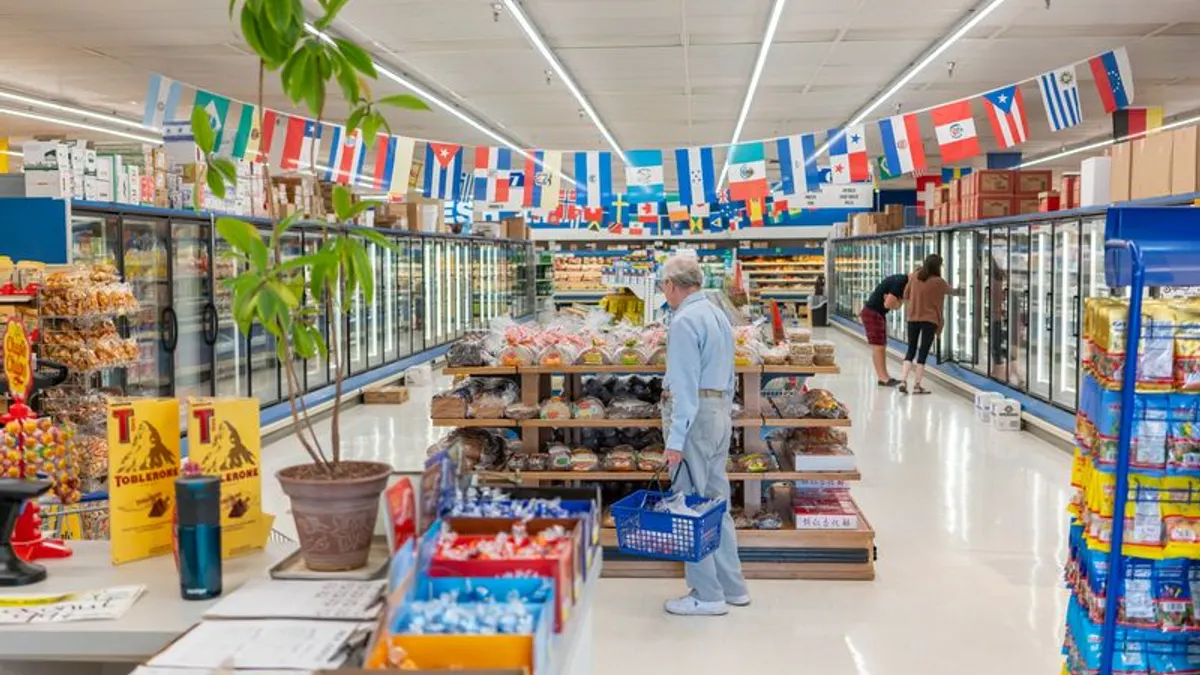
But in St. Louis, Global Foods Market offers an assortment of grocery, frozen, produce and beauty merchandise from at least 30-plus countries, COO Shayn Prapaisilp said in an interview. Prapaisilp, along with his siblings, represents the second generation of Prapaisilps to run the grocery store their family founded in 1999.
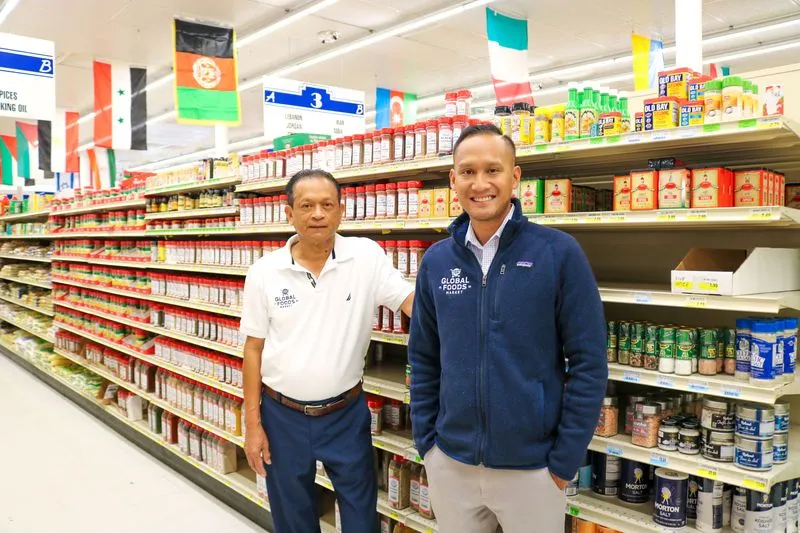
“There aren’t too many concepts that I’ve encountered nationally that have as much merchandise and reflect as many countries as we do,” Prapaisilp said.
The family-owned company consists of two locations: the original Global Foods Market store and United Provisions, which Prapaisilp describes as a “Trader Joe’s-esque concept” that caters primarily to younger college students in St. Louis’ Delmar Loop area.
“[T]he vibe and feel, and even the merchandise selection is slightly different — it’s still an international market, but obviously we’re catering to a younger demographic,” Prapaisilp said about United Provisions. “And that actually gives us a really cool opportunity to experiment [with] what’s up-and-coming in terms of what Gen Z are interested in.”
The most populated ethnic group in St. Louis is white non-Hispanic (44.4%), followed by Black or African American (42.1%) and by Asian (3.5%), according to Data USA’s most recent figures. While St. Louis is not considered one of the most diverse cities in the United States, Global Foods Market is a prime example of multicultural grocery stores continuing to establish themselves as community staples outside of known melting pots like New York City and Washington, D.C.
Prapaisilp spoke to Grocery Dive about how Global Foods Market curates such a diverse product assortment and his experience running a Midwest-based international grocery store.
GROCERY DIVE: How do you get a read on what your customers are looking for? In other words, how do you cater to the palates of 30 different countries’ demographics?
SHAYN PRAPAISILP: When we first opened, we were really reflective of the communities that lived in St. Louis. So, for the first half of our existence, some of our larger sections were Filipino, Indian and Bosnian. With the way the world works now, we’re getting folks from all over. A recent example is that St. Louis was the big destination for a lot of resettlement from the Afghan refugees over the past five years. Once we learned that, we obviously wanted to cater to this community.
Some communities are very large — in the tens of thousands — and there are some communities with a couple dozen or a couple hundred. They come to us and say, “Hey, we would love for you to carry this or that. Can you go out and find it?” What we do is very much word of mouth. These communities all go to the same church or belong to the same kind of social groups, and so when one person hears that we’re carrying a certain Turkish item or a certain Venezuelan item, the whole community will know.
We’ve also been getting plenty of new customers who are just our foodies and they’re buying kimchi and Indian lentils and French jams and all that because they just want to explore.
Your business model and assortment are obviously unique. How do you gain customer loyalty as well as insight?
We have a loyalty program at our United Provisions store.
We’ve been doing monthly sales, and we have a newsletter that’s not just sales where we try to do a little bit of storytelling in there. People are looking for value and we’re trying to provide that, so if we can find those certain items that we can get a good price on, we’ll run those.
We’re on digital and social channels, and for some we’ve been working with really cool partners. Some of those reels and stories that they do are just organic because they just love our store, and we’ll see things blow up.
What does supply chain management entail with such a vast product assortment? How do you approach finding suppliers, especially more niche ones?
As my dad always likes to say, our merchandise is not as straightforward as a lot of our peer grocery stores. Where some grocery stores may work with a dozen or so distributors, we have at any given time easily 50 or 60, and these are distributors from companies as big as Goya to three people making yogurt out of their garage.
Our competitive advantage is definitely the things we’re able to procure to put on our shelves. If you’re only working with four or five national brands, that’s really straightforward — the trucks, your merchandise comes at a regular interval. For us, we have containers coming over the ocean at any given time, and that may be the only container for the month or for the year. We have to be really strategic about if we grab the whole thing because we don’t know when it’s coming again.
If there’s a new customer and they’re from a part of the world where we don’t currently have merchandise, we listen to them to tell us what they want and what brands they like.
Kind of our little secret is that sometimes our best sources of information are the truck drivers who drive merchandise in and out because they’re delivering to multiple states and different chains, and they’re like “Hey Shayne, your competitors bought a bunch of this stuff; it might be the new big thing.”
How are you seeing traditional grocers trying to enter the multicultural grocery space? What do they need to improve on?
My joke is that when you see a chain like Sweetgreen start putting kimchi in things, it’s hit the mainstream.
With a lot of our competitors, folks who have not been doing this as long, they think, “Oh well, if I just kind of copy and paste, we should be able to find the same success.” But I think the people who are buying our products, it’s not just the fact that you have these ingredients, it’s a specific brand, a specific quality. We’ve been familiar with these brands and these vendors and distributors for 10 to 15 years, and it’s not enough just to carry the products. You have to be aware of who the leader of the category is, and what brand has cache within certain communities. It’s as much anthropology as it is business.