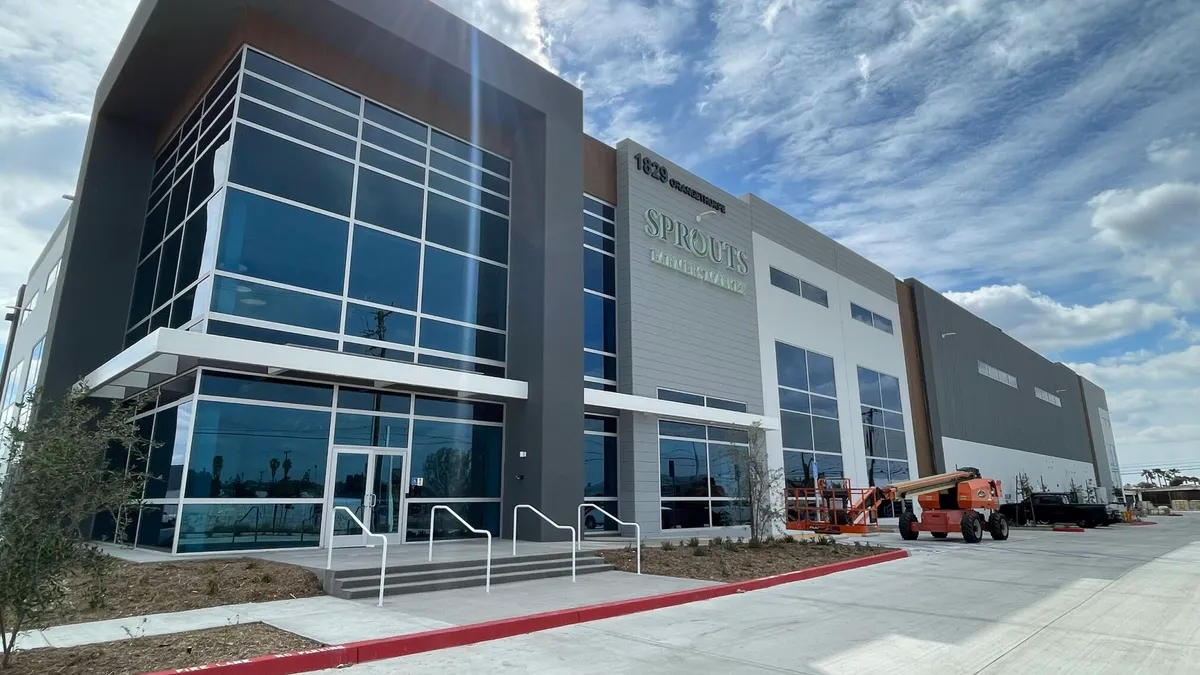
Sprouts is no stranger to robust store growth, having opened at least 30 stores a year since 2023 and currently on track to open more than 40 locations this year. But growing its store footprint is only half the equation as the specialty grocer works to establish a more comprehensive self-distribution network.
Sprouts Chief Development Officer Dave McGlinchey described the process of opening new stores and company-run facilities as “a balancing act.”
“We try to build so, in each individual market, everything’s within a couple hours of each other so you can get marketing efficiencies, operations efficiencies, supply chain efficiencies, etc.,” he said.
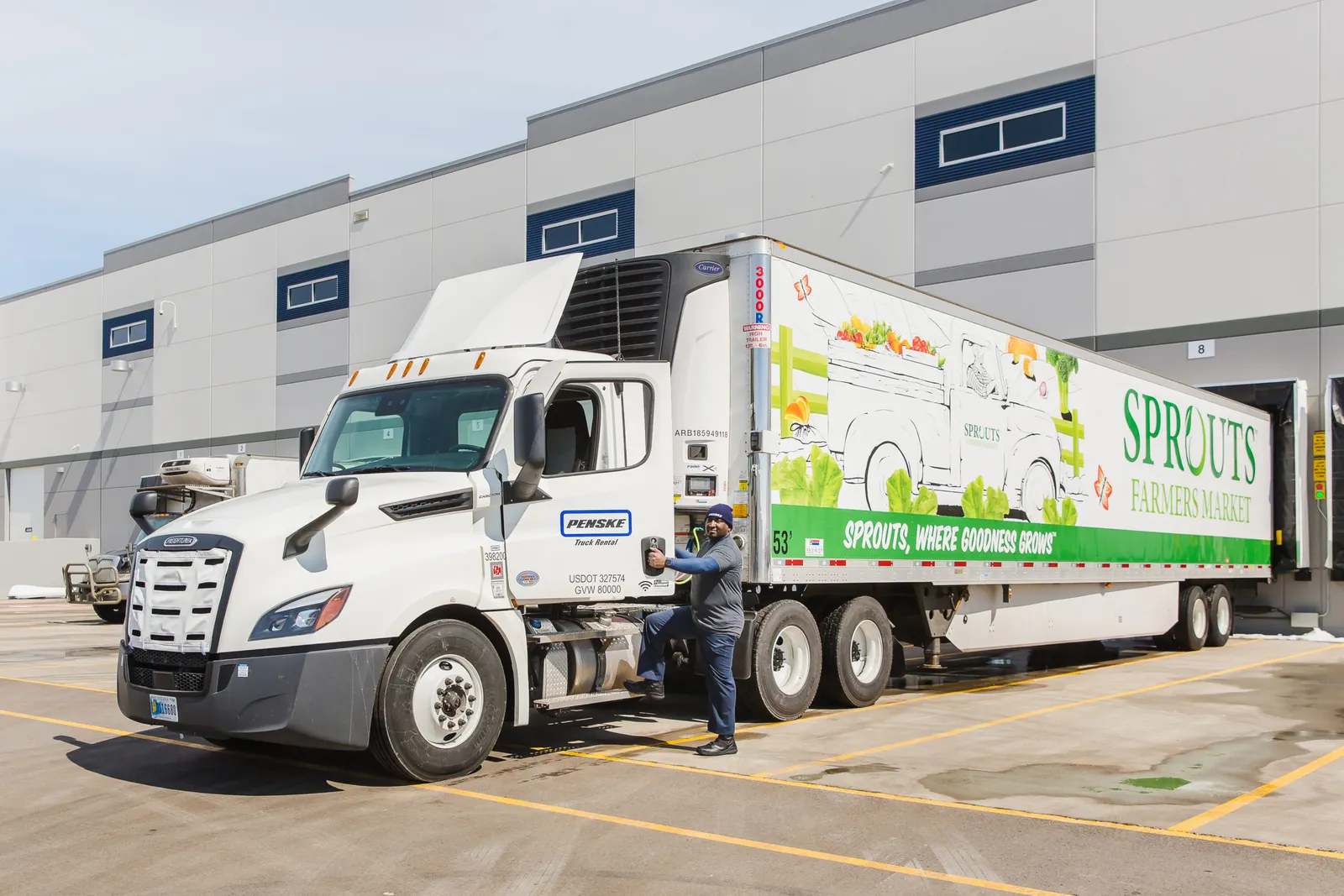
Sprouts’ self-distribution work has become a “strategic priority” for the company, CEO Jack Sinclair said during a company earnings call last summer, and the specialty grocer has recently hit some key milestones on this journey. During its most recent quarter, it completed the rollout of its meat facilities with the opening of a center in Northern California. Now, around 85% of Sprouts’ stores carry fresh meat that flows through its own distribution centers, Sinclair told investors late last month.
So far, Sprouts self-distribution push has focused on produce and meat. Its next steps include bringing select private brand items into existing company-owned facilities, President and COO Nick Konat told investors last month.
As Sprouts works on its self-distribution push, the company has identified key markets — the Midwest, New England and Texas — for store growth over the next few years. In a recent interview, McGlinchey shared how the company coordinates distribution plans with store growth and also elaborated on what exactly needs to fall into place before Sprouts can introduce a distribution center in an operating region — new or old.
McGlinchey noted that Sprouts plans stores within a 250-mile radius of a distribution center — a model that Sinclair has said focuses on identifying where the grocer’s target customers live and ensuring there is a large enough presence to support a Sprouts location.
Here’s a look at how Sprouts is approaching store growth and establishing self-distribution in each region.
The Midwest
Sprouts’ store-to-distribution growth blueprint involves first opening around 35 stores in a market and then introducing a self-distribution facility, according to McGlinchey — and that is exactly what the company has planned for the Midwest.
This expansion will start in Chicago between 2027 and 2028 with 10-plus store openings planned, McGlinchey said. From there, Sprouts aims to head to the region’s next biggest market, Detroit, sometime during 2028 or 2029 to debut around 10 storefronts. Cleveland and Columbus, Ohio, are next in the pecking order, with about half a dozen stores planned starting in 2028, he said.
By 2030, McGlinchey said Sprouts aims to have around 35 stores operating across these four cities — enough to warrant planning a distribution center for the region.
New England
Sprouts is gearing up to open stores in New England, but the planned growth trajectory doesn’t follow the same playbook as in the Midwest.
Sprouts’ near-term New England growth currently includes only the previously announced Weymouth, Massachusetts, store set to debut in 2028. And while Sprouts has confirmed long-term growth involves opening 30 to 40 locations across New England, McGlinchey indicated it’ll “be a while” before the company gets there.
“I’m from Boston, and it’s a hard market from a real estate point of view when you’re [coming in] 20 years after everyone else has already built stores,” McGlinchey said.
However, unlike the Midwest, self-distribution can get underway ahead of a robust New England footprint.
McGlinchey stated that a distribution center Sprouts plans to open in the Mid-Atlantic sometime in the next few years will serve the New England market as well as incoming and existing stores in Virginia, Maryland, Philadelphia and Washington, D.C.
Texas
Sprouts’ growth in Texas highlights how the grocer can adjust an existing self-distribution center to serve an established market.
The grocer recently expanded its facility in Wilmer, Texas, just outside of Dallas, to accommodate meat and other Sprouts products in an effort “to try to get more of our own destiny, particularly on the fresh side of business,” McGlinchey said. He noted that this center also serves Oklahoma, where Sprouts has 11 stores.
With nearly 70 stores in Texas, the Lone Star State is far from new territory for Sprouts. And the grocer aims to open 10-plus stores in Texas this year, McGlinchey said.
Sprouts has had to rationalize its footprint in Houston. A few years ago, Sprouts closed three stores “just to start over” in the market, McGlinchey said. The grocer recently welcomed a few new stores to the metro area and has “a bunch more in the pipeline.”