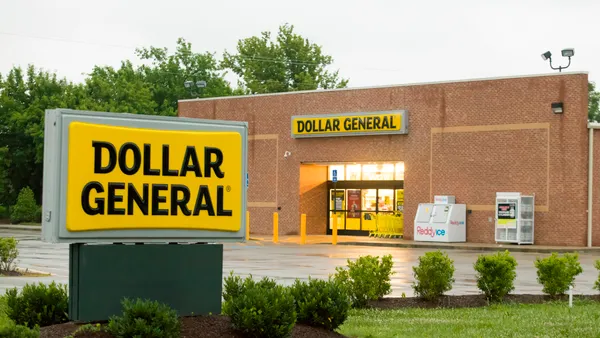


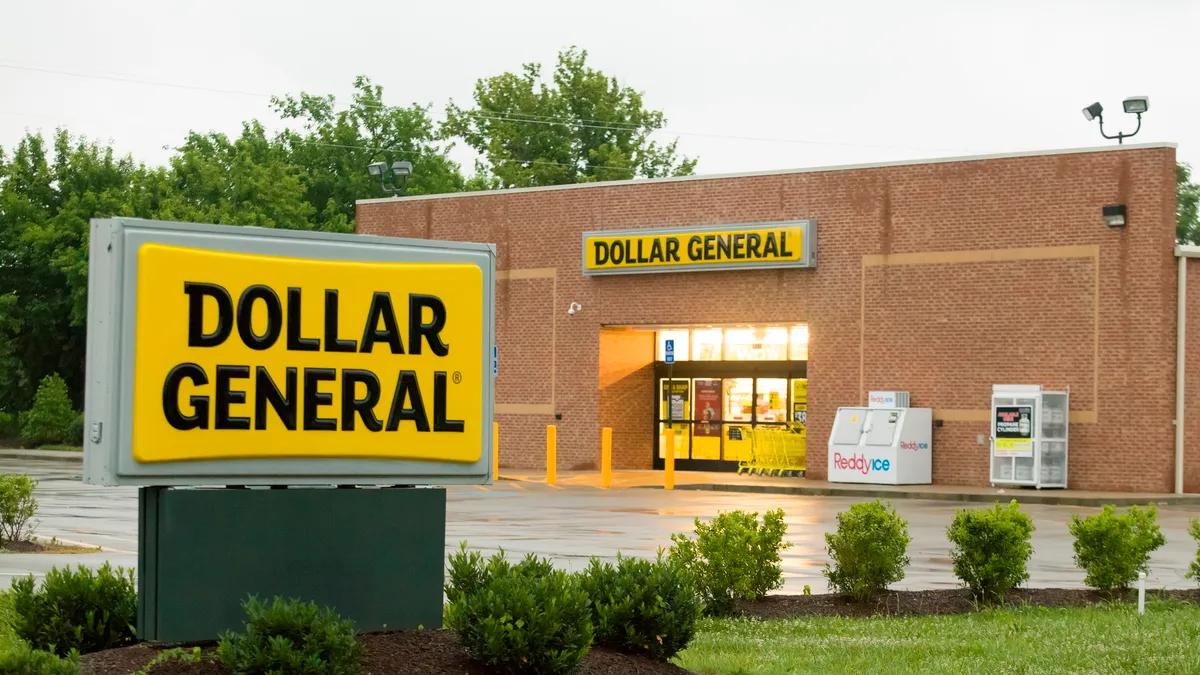

The Federal Trade Commission and 20 U.S. states are suing Dollar General for allegedly engaging in deceptive pricing practices in which the discount chain charges shoppers more at registers than the prices displayed on price tags and advertisements.
“Dollar General has betrayed the trust of millions of American consumers and imposed significant financial harm on communities and consumers who are already struggling to make their paychecks last,” Christopher Mufarrige, director of the FTC’s Bureau of Consumer Protection, said in a statement released Monday.
The FTC’s complaint — which contains partially redacted internal Dollar General emails and company communications — outlines consumer complaints about different prices at the register and outlines an undercover investigation from the federal agency.
In a statement Monday, Dollar General said the lawsuit “suggests that we have abandoned our mission and willfully disregarded the affordability needs of our customers. Nothing could be further from the truth.”
The retailer added that it aims for complete pricing accuracy, but that “occasional price discrepancies” can occur.
The FTC alleges Dollar General has often charged more for products at registers than prices listed in its circulars, on digital channels and in-store displays. The dollar store has received more than 29,000 complaints regarding price honoring between January 2023 and the end of March this year.
Undercover purchases made by FTC investigators from January to April at Dollar General stores in Ohio, Pennsylvania, Missouri and Maryland found that every purchase resulted in the dollar store charging more at the register than advertised elsewhere.
For example, an undercover purchase on Jan. 16 at a Dollar General store in Ohio resulted in 13 out of 58 items acquired having a different price than that listed on a product label or shelf.
The company’s quick moving register screens make it difficult for consumers to catch such inconsistencies at the moment, the FTC’s complaint notes.
Despite being made aware of the alleged pricing inconsistencies via thousands of consumer complaints and failed pricing inspections, Dollar General “has failed to implement policies and practices to adequately address the problem,” the FTC said in its Monday press release.
The agency and states alleged the retailer’s actions violate the FTC Act, the Gramm-Leach-Bliley Act and state laws.
“Dollar General has for years engaged in deceptive conduct that harms the very consumers it claims to serve,” the FTC’s complaint said. “Although Dollar General promises convenience, low prices, and value, the company has routinely charged customers more at the register than the price displayed on shelves, price tags, and advertisements.”
Dollar General, for its part, said it became aware of the investigation in February and has cooperated with the agency by providing data, documents and sworn testimony. The retailer said it received a draft of the complaints last month and took issue with the initial settlement the FTC offered, describing it as containing “many methodological flaws.”
“The FTC staff also demanded a monetary amount that was untethered to – and orders of magnitude larger than – any realistic assessment of amounts attributable to pricing discrepancies,” Dollar General said.
The discount retailer said it would defend the lawsuit “vigorously.”
“We remain ready and willing to engage in reasonable, meaningful discussions to resolve this matter while keeping our focus on what has always been at the heart of Dollar General – serving our customers and the communities we call home,” Dollar General said. “That commitment has not changed and will not change as we navigate this matter.”
Dollar General’s Q2 net sales jumped 5.2% year over year to $11.3 billion as higher-income shoppers have increasingly shopped at the dollar chain. The company’s stronghold in rural areas of the U.S. is a core part of the business, CEO Todd Vasos remarked during an earnings call in August.
“Our mature store base is a unique competitive advantage that enables us to serve customers in smaller, rural communities across the country,” Vasos told analysts.