Dive Brief:
- Connecticut Gov. Ned Lamont last Thursday signed a bill that prohibits retailers from using personally identifiable data to customize prices for shoppers.
- Also last Thursday, New York state lawmakers approved legislation that would bar retailers from using personally identifiable data to customize prices for shoppers. The bill now awaits a decision by Gov. Kathy Hochul.
- Last Tuesday, Colorado Gov. Jared Polis vetoed a bill passed by lawmakers in the state that would have prohibited companies from using consumer data to generate individualized prices.
Dive Insight:
The legislation in Connecticut and New York reflects a mounting effort by politicians and advocacy groups to crack down on practices they claim are unfair to consumers.
Connecticut is the second state to enact a law that restricts how retailers can use information about their customers to set prices. In April, Maryland Gov. Wes Moore signed a bill that made the state the first in the country “to ban price manipulation practices driven by the ability to instantly spike prices based on surveillance data.” Maryland’s law is due to go into effect on Oct. 1.
Consumer Reports, which has championed efforts to restrict the use of data linked to individual shoppers to set prices, hailed the developments in Connecticut and New York last week. The organization pointed to data such as people’s online browsing histories, health conditions and income as examples of information it believes retailers should not be allowed to use to determine individualized prices.
Consumer Reports praised Connecticut’s law, which will go into effect on July 1, 2027, but urged the state to strengthen it, in part by making clear to consumers that they can take legal action on their own.
New York Attorney General Letitia James hailed the decision by state lawmakers to approve the bill, known as the One Fair Price Act. “This is a big victory in our fight to ban surveillance pricing and help make life more affordable in New York,” she said in a Friday statement on her office’s Facebook page.
If Hochul signs the bill, it would take effect six months later.
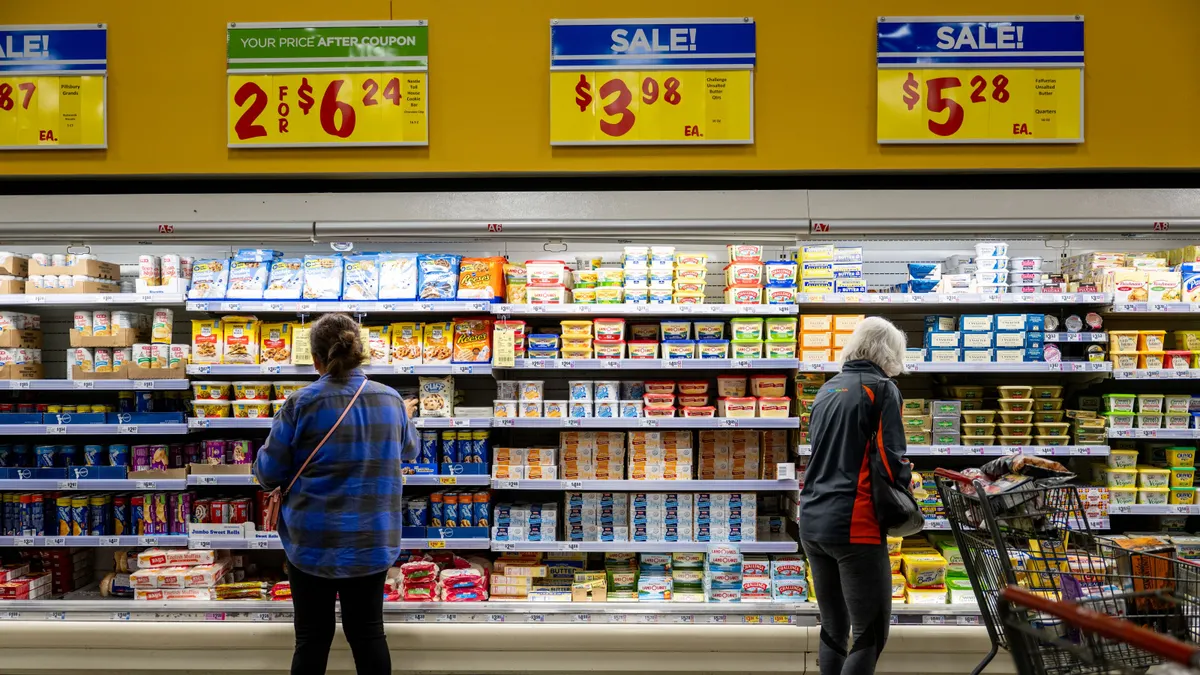
New York state lawmakers are also considering legislation that would prevent food retailers and pharmacies from using electronic shelf labels. James and a coalition including United Food and Commercial International Workers Union Local 1500, AARP New York, and the Retail, Wholesale and Department Store Union have called for the bill to be passed.
The failure to move dynamic pricing legislation forward in Colorado is a reminder of the challenges that these efforts face, however. In a letter to the Colorado State House of Representatives, Colorado’s governor said he rejected the legislation because it was too wide-ranging.
“I support policies to protect consumers from unethical price gouging and save Coloradans money. I am, however, troubled by the broad approach taken by [the bill] and worry about discouraging perfectly acceptable uses of technology to set an appropriate price or wage, or the use of technology to save consumers money through discounts that may not exactly fit within the bill's definition of an acceptable discount,” Polis wrote.