Update April 29, 2026: Maryland Gov. Wes Moore signed the Protection From Predatory Pricing Act on Tuesday. The governor’s office said the legislation makes Maryland the first state in the country “to ban price manipulation practices driven by the ability to instantly spike prices based on surveillance data.”
Dive Brief:
- Maryland’s state legislature has passed a bill aimed at stopping “predatory” pricing based on individuals’ personal data. Gov. Wes Moore posted on X last week that he “can’t wait to sign it.”
- The Protection From Predatory Pricing Act, which cleared the state legislature earlier this month, would ban food retailers and third-party delivery services from using dynamic pricing, which the bill defines as “offering or setting a personalized price for a good or service that is specific to a consumer based on the consumer’s personal data.”
- If signed into law, the legislation would make Maryland the first state to ban the pricing practice that critics call “surveillance pricing,” according to Consumer Reports.
Dive Insight:
Maryland is just a governor's signature away from enacting the Protection From Predatory Pricing Act, which was heavily revised between its introduction and passage in the state’s legislative chambers.
The bill, if signed into law, would take effect on Oct. 1.
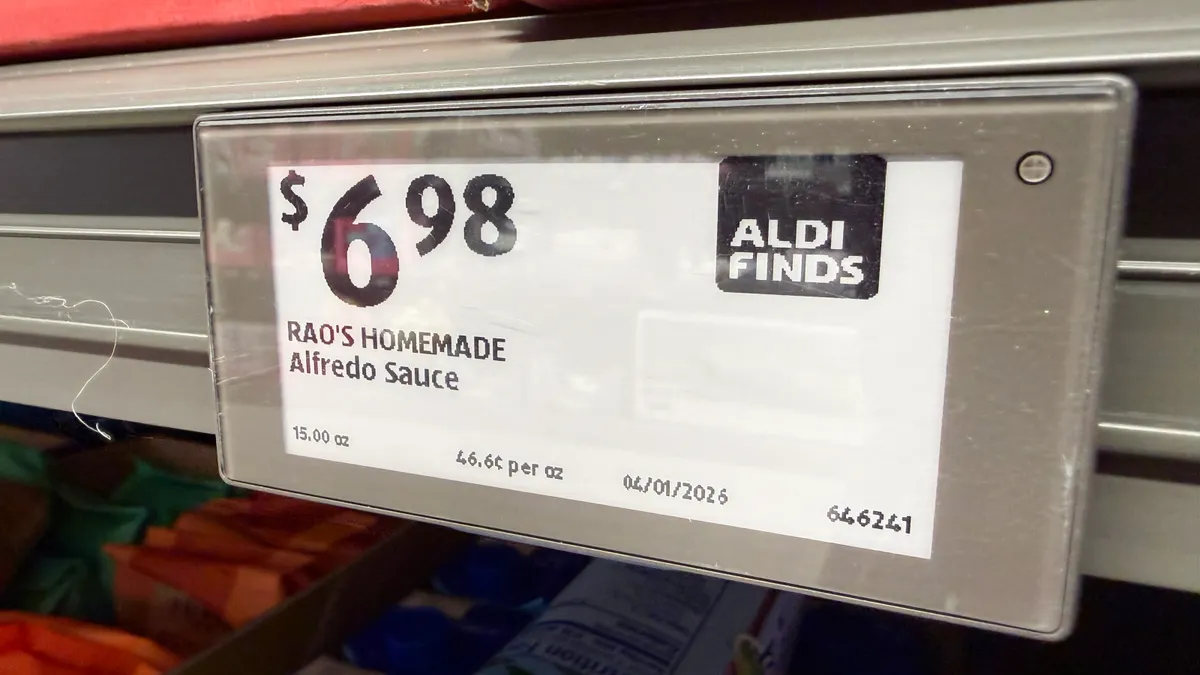
The bill seeks to provide key consumer protections as electronic shelf labels and other pricing technologies roll out at grocery stores. But according to Consumer Reports, the bill falls short of that goal by exempting pricing associated with loyalty programs, memberships and subscriptions, and by applying the ban only to using personal data to set higher prices without establishing a baseline or standard price.
The consumer advocacy organization also said the final version of the bill has “weak” enforcement provisions.
“While it’s encouraging to see the Maryland legislature take up this issue, this bill has loopholes that will limit its real-world impact,” said Grace Gedye, senior policy analyst at Consumer Reports. “We urge other state legislatures considering personalized pricing legislation to build in stronger consumer protections and avoid loopholes that weakened this bill.”
Maryland Delegate Lorig Charkoudian, who is vice chair of the state’s House Economic Matters Committee, told WAMU that the changes tightened what was originally a “broad” bill and that the state’s politicians grappled with “a very fine line” between determining discriminatory versus nondiscriminatory discount practices.
This month, the United Food and Commercial Workers International Union called on Moore to veto the bill and urged the state’s legislature to “go back to the drawing board” because of what the labor organization claims are loopholes in the bill that would allow corporations to engage in predatory pricing practices.
The Maryland Retailers Alliance told Privacy Daily that the retail trade association originally opposed the bill but then switched to a neutral stance following the amendments.
The bill is part of Moore’s current legislative agenda. When unveiling the legislation, the governor’s office noted that it comes in response to the retail industry’s increased adoption of electronic shelf labels — a technology that Moore said could allow the cost of household goods to “surge based on the time of day, the weather, or granular consumer data — allowing stores to calibrate price increases to extract maximum profits on the backs of consumers.”
Maryland is one of several states trying to rein in pricing practices by retailers that consumer advocates claim could harm shoppers. California, Colorado, Illinois, New Jersey and New York are among the other states considering surveillance pricing bans.