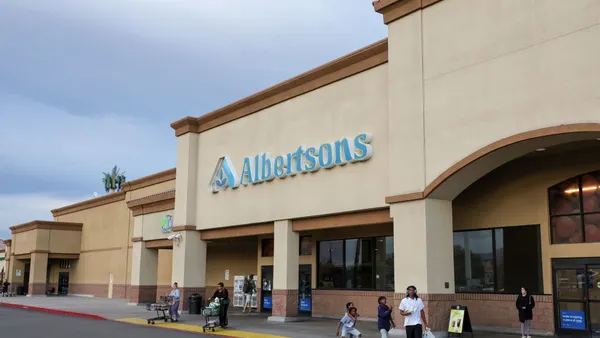


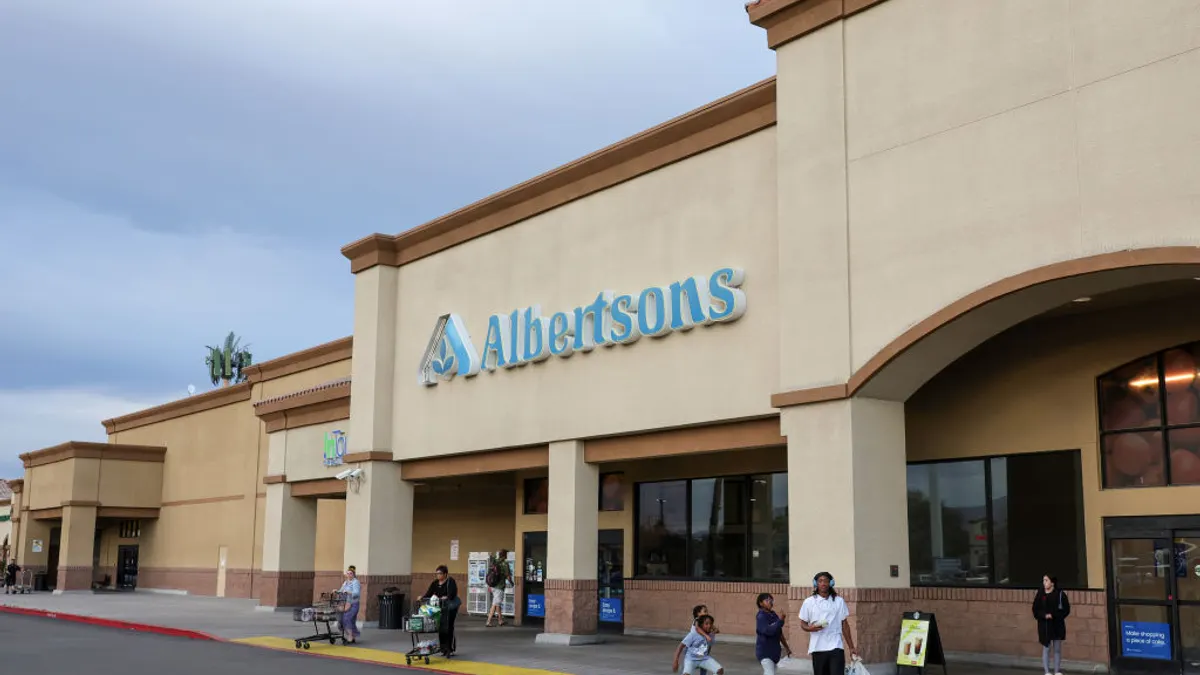

The Interactive Advertising Bureau’s NewFronts, an annual showcase for digital platforms and publishers to pitch for advertising dollars, tends to draw some of the expected faces: The YouTubes, Metas and TikToks of the world, along with a rising fleet of internet-connected TV players. New to the show this year was Albertsons Media Collective, the retail media arm of the grocery giant Albertsons, which focused its presence in New York last week on touting its breadth and a budding number of experiments with in-store ad formats, a channel many retail media networks have struggled to crack.
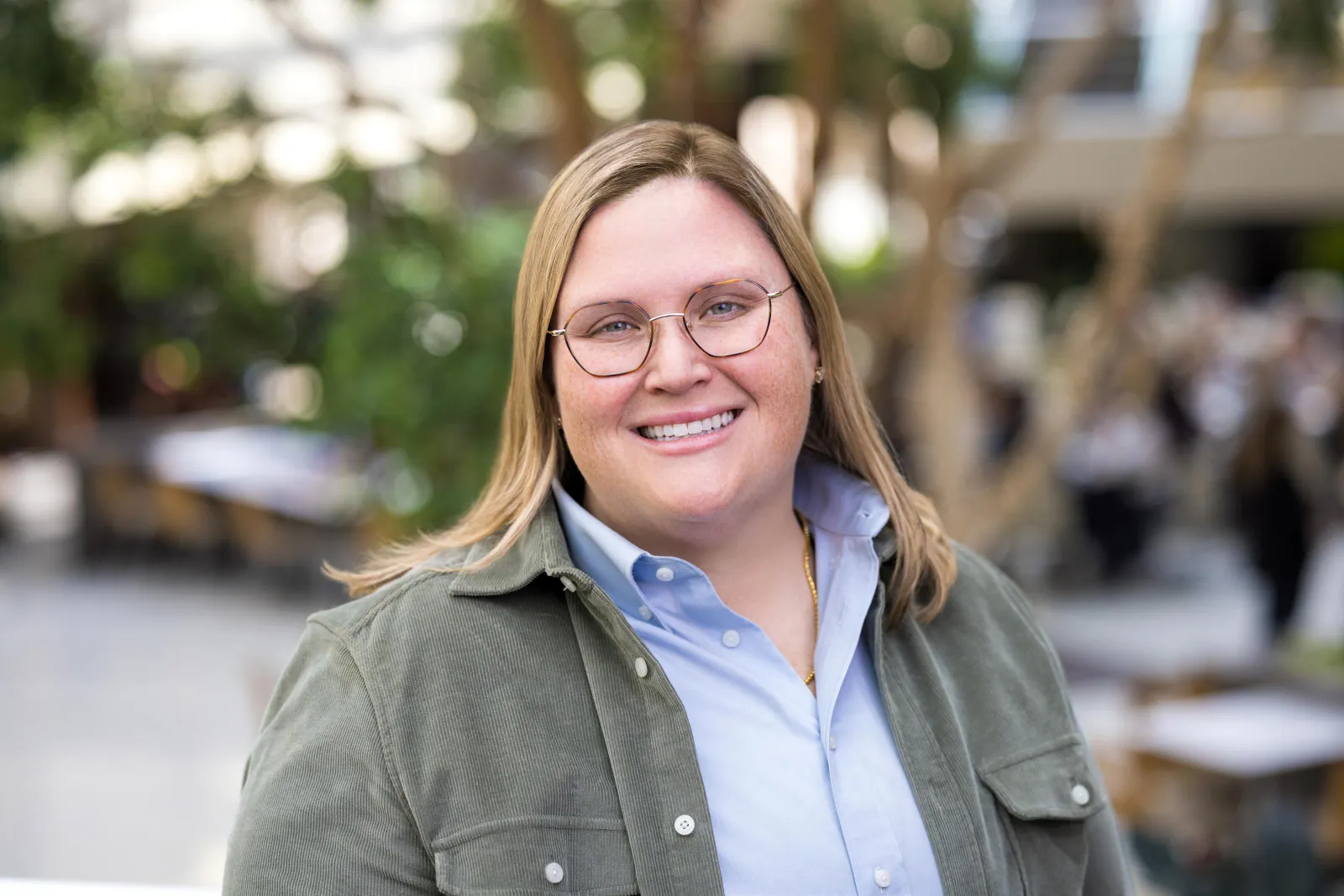
“For us, it’s helping people understand our scale,” said Liz Roche, vice president of media and measurement at Albertsons Media Collective, during a sit-down interview with Marketing Dive at the IAB’s main stage event.
Albertsons, which owns brands including Safeway, Jewel-Osco and Shaw’s, also took the NewFronts as an opportunity to shore up a positioning around measurement consistency and transparency. Its media arm earlier this month published a report in conjunction with Ovative Group and Northwestern University’s Kellogg School of Management that found significant variance in how retail media campaigns report incremental return on ad spend, a closely watched performance metric. Eighty-three percent of the campaigns assessed flipped from positive to negative outcomes based on the methodological choices of the individual network.
“Growth deserves measurement that can withstand scrutiny. And that responsibility sits with all of us,” Roche wrote in a blog post about the research.
Marketing Dive spoke to the executive about her broader thoughts on the media transparency debate in advertising, building out Albertsons’ in-store capabilities through partnerships and her unit’s recent decision to partner with ChatGPT on its advertising pilot.
The following interview has been edited for clarity and brevity.
MARKETING DIVE: Tell me more about why Albertsons is at the NewFronts this year.
LIZ ROCHE: This is our first year at NewFronts. It’s also my first year at NewFronts. We’re here because we have a lot to offer brand marketers and agencies, and they just don't know what we offer yet.
Are you trying to reach a different set of buyers?
We have over 2,200 stores. We’re operating in 13 of the top-15 [designated market areas] in the U.S. There’s a real opportunity for brand marketers to leverage our scale, but also have that accountability that retail media brings to the table to actually understand what the impact is. This is just exposure to folks who are brand marketing buyers and media buyers who are trying to plan their year.
Albertsons just published a report about discrepancies in how incremental return on ad spend is reported. Why do those gaps persist for retail media?
I don’t think it’s specific to retail media, to be clear. I think the gap exists across all media. I just think that retail media is the most accountable media out there, so it’s probably the easiest one to look into with more data.
Discrepancies exist because we’re all doing things in the way that we think is best. One of the biggest issues has been that there hasn’t been enough transparency in methodology. We’re really invested in transparency, we want to build durable solutions, we want to have repeatable results. That was the impetus for publishing this paper. We want folks to know that not all IROAS is the same. You need to dig in and figure out what’s behind those values.
When you talk about Albertsons realizing transparency, what does that look like? How do you assure brands that’s actually what’s happening?
Consider our orientation as a retailer: If our brands sell more and our shoppers are delighted with the product, then we’re all winning. We’re really focused on getting to the most truthful answer and understanding actual business impact. That said, we know that campaign-level metrics are still really important and that’s how [advertisers] are held accountable on their side. A lot of our brand partners need to show campaign to campaign [results]. We’re focused on what’s going to drive the most measurable impact beyond even the campaign, but you have to crack the campaign first before you can take that next step.
You mentioned these problems aren’t specific to retail media. What do you make of the larger media transparency discussion right now? You have Publicis calling out The Trade Desk, you have principal media buying at agencies. Is this advantageous to your positioning?
What I like about scrutiny is that it forces everyone to be a little bit more reflective and to understand their reporting a little bit more deeply. If you’re used to just getting reports, your eyes glaze over and you move on, you’re not really digging deep into what those methodologies are and you’re missing the whole point. The point isn’t just to post metrics. The point is to grow business. We’re a retailer first. Media is absolutely a tool to do that, but we’re here to sell more units.
Scrutiny does beg the question of: Are we so hyper-focused on vanity metrics? And should we be thinking about what’s happening in these businesses and therefore thinking a little bit more broadly, a little bit less myopically? It forces those discussions more. Frankly, those are the discussions we want to be having too. Measuring ROAS as the lowest common denominator across campaigns doesn’t tell us much about business growth. It tells us a bit about efficiency, but it doesn't tell us that much about efficacy.
In terms of how you all are tracking business growth beyond ROAS, what are you most invested?
We’re most invested in longitudinal metrics, trying to better understand how different cohorts are shifting their behaviors. Again, it's one thing to look and say, “What did we do 72 hours before the Super Bowl?” That's a very small thing to look at. Obviously, brands are making big investments into this, and they need to look for those efficiency metrics. But it’s another thing to say, “How are we moving the folks who are occasional shoppers of our brand into [becoming] loyal shoppers of our brand? How are we looking at those cohorts, and how are we moving folks from one place to the next?” These are the things that you can track that are actually growing the full pie, not just share shifting, and not just share shifting in a moment.
The NewFronts are an opportunity to announce ad product innovations. Is there anything on that front you’re excited about?
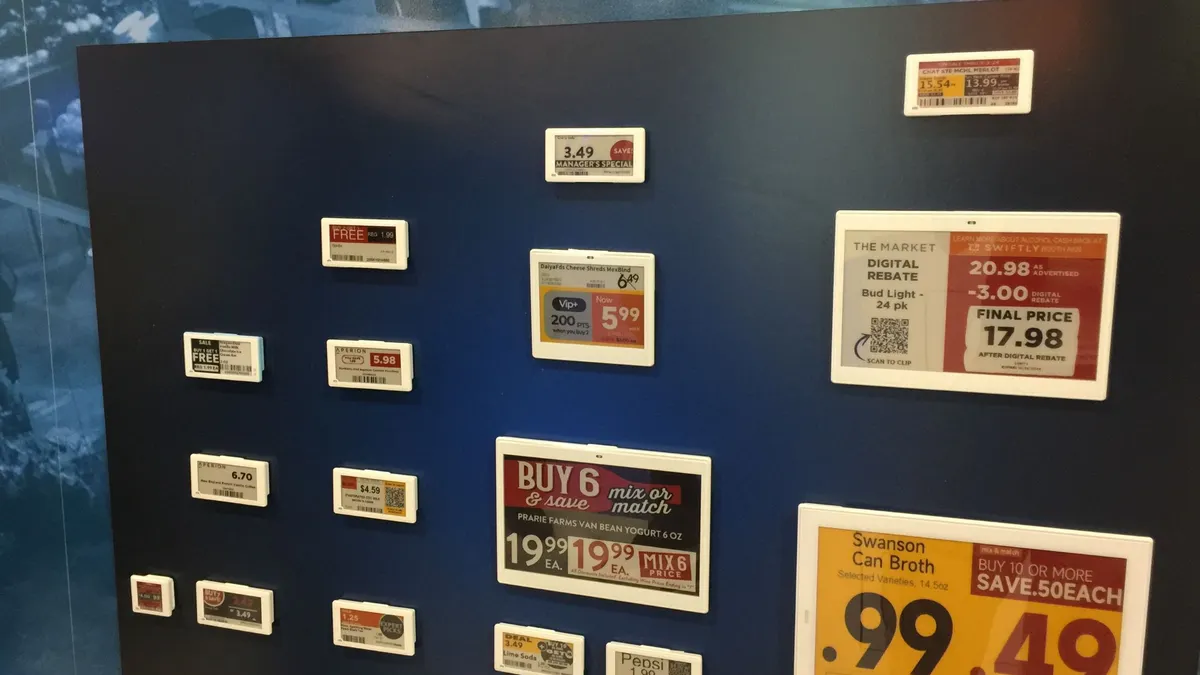
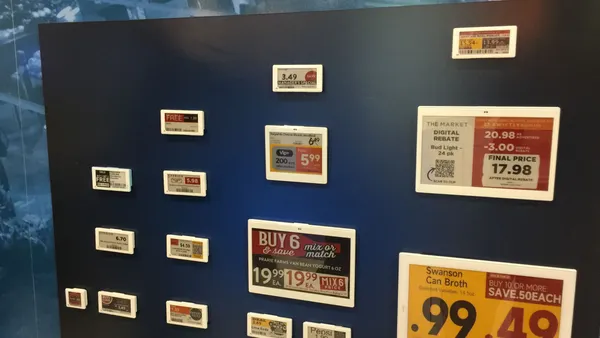
We’re absolutely bullish on our in-store media network. We launched our pilot in June. We started with 80 stores, we're expanding into 800 more. This is one of the huge benefits of being at Albertsons. Our shoppers engage in 25 unique trip missions. They like coming into stores. Grocery hasn’t fully transitioned to e-commerce by any stretch. Being able to put these placements in stores and give our brands an opportunity to connect at the shelf edge, when those decisions are being made, is huge for us. Also, the technology we’re investing in to be able to orchestrate experiences more effectively, we’re trying to create a comparable medium to an e-commerce canvas in a lot of ways. This is the innovation that we're going to continue to push into this year.
Are you leaning into partnerships for in-store?
What I love about in-store is that grocery is old. We have banners that are 100 years old within the Albertsons ecosystem. All of us are trying to figure out: How do we create that accountability measurement for in-store that we have in the digital space? Our marketers are used to really tight feedback loops, and we just don’t have that for in-store yet. We’re partner-agnostic, we're leaning into a lot of different partnerships to execute. It is a land of startups. Ideally though — and what we're working towards — is a very orchestrated experience that can speak to the journey, that can be reactive and that can also optimize in real time.
Albertsons is also a pilot partner on the ChatGPT ads test. What is your strategic thinking in tapping into that channel given that it is so new?
I’ve worked at Albertsons for just over a year, but what attracted me is their willingness to lean into innovation. It’s an environment where we question the status quo. Some of the tests work and some don’t. We’re really bullish on where agentic commerce goes next. Being able to make that an additive experience is the same question that we’ve wrestled with across advertising and across every channel. We’re always trying to figure out what is additive and always trying to obviously weed out anything that takes away from the shopping experience. So for us, it’s really about testing that: How do we make sure that this is so shopper-centric that when we introduce advertising, it becomes a good experience and a better experience than before?
Retail media is in some ways leading the charge on adoption. You have Target with Roundel and Criteo joining the ChatGPT pilot as well. Why do you think that is?
I can only speak to us, but our position as retail-first means making a better shopper experience, and that does mean removing friction. There’s all different ways that people are engaging with these platforms. How do we make sure that we're removing friction and making it fun, helpful and easy for them? If retail media can do that and be a conduit to push retail in general to do that, I think it's a win for everyone.