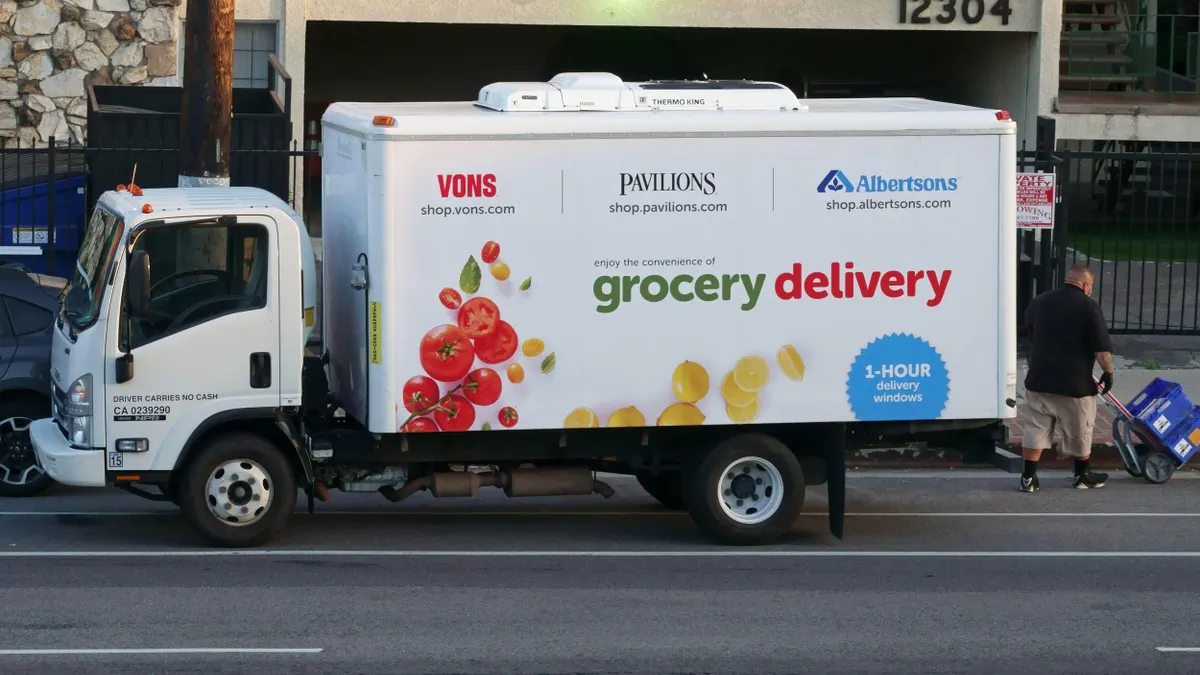
While Albertsons reported a year-over-year net sales increase of almost 3.5% for its most recent fiscal year, its financial results also presented a picture of a company under pressure.
The supermarket operator, which spent the year stabilizing its operations following the implosion in 2024 of its planned merger with Kroger, posted a decline in operating income in fiscal 2025 of over 50%, according to its annual report released on April 27. Net income, meanwhile, was down by more than three-quarters, while the company’s long-term debt and other long-term liabilities climbed nearly 8%, to about $8.4 billion.
Albertsons also reported that it grew more reliant on its pharmacy business to drive its overall sales. Sales of fresh foods and non-perishable foods both lost ground when measured as a share of the company’s net sales and other revenue, while pharmacy sales comprised a larger portion of its revenue for the fifth year in a row.
“As we look ahead, our focus is on building a company that can grow sustainably through all cycles. We have a clear path to accelerating revenue growth, strengthening margins and improving returns while staying true to what makes Albertsons distinctive,” CEO Susan Morris said during Albertsons fourth-quarter earnings call in mid-April.
Here’s a look at some notable numbers from Albertsons’ latest filing and how these figures have changed over the last five years:
Private label growth reignites
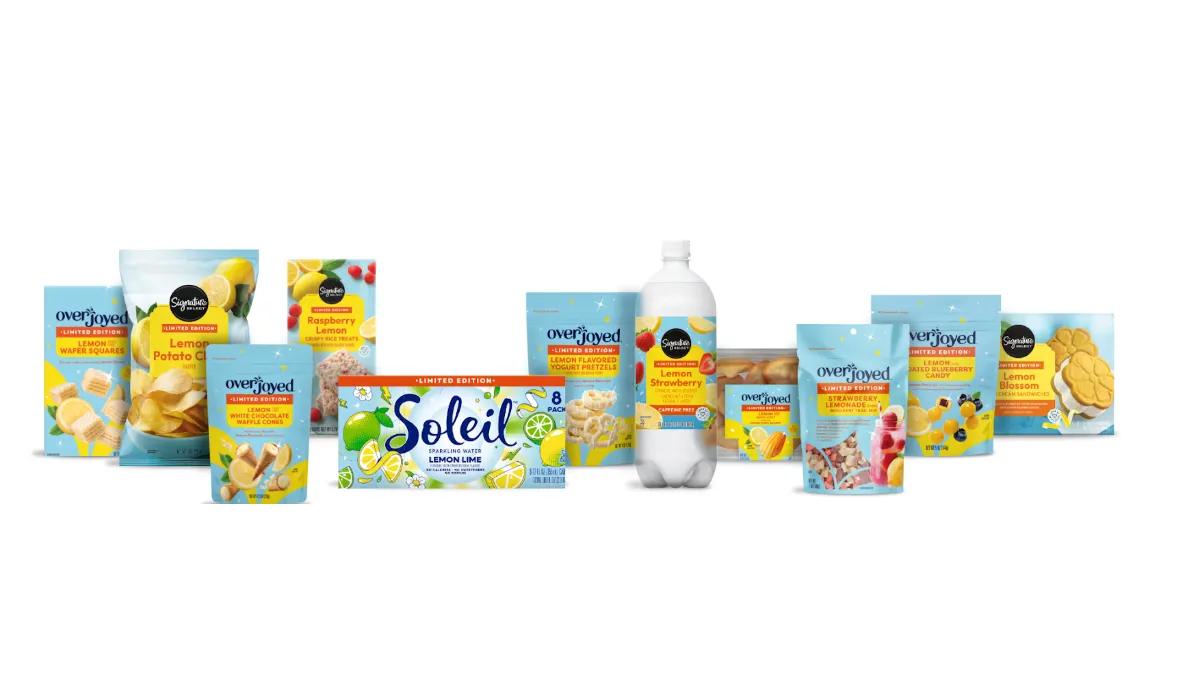
Albertsons’ store brand sales grew once again during its latest fiscal year after seeing relatively flat growth in recent years. Private label sales reached $16.9 billion in fiscal 2025, up 3% from the prior year. The company’s private brand sales hovered around $16.5 billion for the prior three fiscal years.
Albertsons disclosed that it operates 19 food production facilities, which included, as of late February, a soup plant, an ice plant, seven milk facilities, three soft drink bottling centers, three bakery plants, two ice cream plants and two grocery and prepared food facilities. The company makes almost 10% of its store brand items at these company-owned facilities.
Expanding private brand penetration is a top priority for 2026, Morris told investors on the earnings call.
“We are surgically investing where it matters most to our customer. That includes getting sharper on key value items and driving own brand penetration,” Morris said.
While the grocer is seeing “fairly flat penetration” for its private brands, she noted that the company has made major investments in team restructuring and lowering costs with vendors in a bid to increase penetration.
E-commerce growth continues
After skyrocketing during the COVID-19 pandemic, Albertsons’ e-commerce growth has moderated in recent years.
In fiscal 2025, the company’s e-commerce sales grew 21% year-over-year — a slower pace than the 24% rate the prior year. However, the grocer is optimistic about making further inroads with shoppers through e-commerce.
Morris told investors that the grocer’s store-based fulfillment model is a key asset, and that more than half of online orders are fulfilled in under three hours. The vast majority of delivery households are eligible for the company’s 30-minute delivery service, which is its fastest-growing digital segment, she added.
Albertsons’ digital penetration came in above 10% during the final quarter of fiscal 2025 — a first for the company. Last week, the grocer added prescriptions as an option for DriveUp & Go curbside orders at its approximately 1,700 stores with pharmacies.
Albertsons noted in its latest annual report that it offers delivery services in more than 2,200 of its stores and Drive Up & Go curbside pickup service at more than 2,100 locations. Morris told investors in April that its first-party business, which includes its pickup and in-house delivery services, “continues to scale rapidly” and contributed nearly 90% of its 16% digital growth in the fourth quarter. The company also partners with Instacart, DoorDash and Uber on third-party delivery.
“Digital continues to be a powerful engine as we expand our base of loyal, engaged customers and scale the business in a disciplined and increasingly profitable way,” President and CFO Sharon McCollam said on the earnings call, noting that the company is seeing improvement in the profitability of its digital business.
Pharmacy sales keep rising
Albertsons’ pharmacy business has grown at a brisk clip in recent years, with sales for the category representing nearly 14% of the company’s total sales fiscal 2025, or about $11.4 billion.
As Albertsons’ pharmacy business has grown in recent years, it has commanded an increasing share of the grocer’s overall sales. During fiscal 2024, pharmacy sales accounted for almost 12% of the company’s total sales. By comparison, Albertsons’ pharmacy business represented 10.4% and 8.7% of its sales in fiscal 2023 and fiscal 2022, respectively.
Albertsons has become increasingly reliant on pharmacy sales to drive its top line
But while Albertsons’ pharmacy sales are on the rise, the company is dealing with multiple challenges that are hampering its ability to make money filling prescriptions, the company noted in its annual report. Albertsons also pointed out that pharmacy sales offer lower margins than other categories.
Albertsons, which runs more than 1,700 pharmacies in its stores, indicated in its annual report that it is facing pressure from pharmacy benefit managers, which sit between pharmaceutical manufacturers and health plans in the drug supply chain and play a central role in determining the amounts pharmacy operators receive for products and services they sell.
“If these pressures result in reductions in our prices, we will become less profitable unless we are able to achieve corresponding reductions in costs, increase productivity or develop profitable new revenue streams,” Albertsons warned.
Albertsons is also confronting headwinds posed by a federal law passed in 2022 that authorizes the government to directly negotiate prices for some drugs paid for by Medicare. The supermarket chain reported earlier this month that the law, known as the Inflation Reduction Act, weighed on its pharmacy sales during its most recent quarter and crimped its comparable-store sales growth during the period.