
A grapefruit’s journey to the produce aisle begins with the health of the tree that grows it.
For Florida growers, protecting that health has required persistence, research and a willingness to adapt. Citrus greening has challenged the industry for more than two decades, prompting them to refine their practices and explore new ways to protect the harvest.
One promising approach puts a physical barrier between the trees and the insect that spreads the disease.
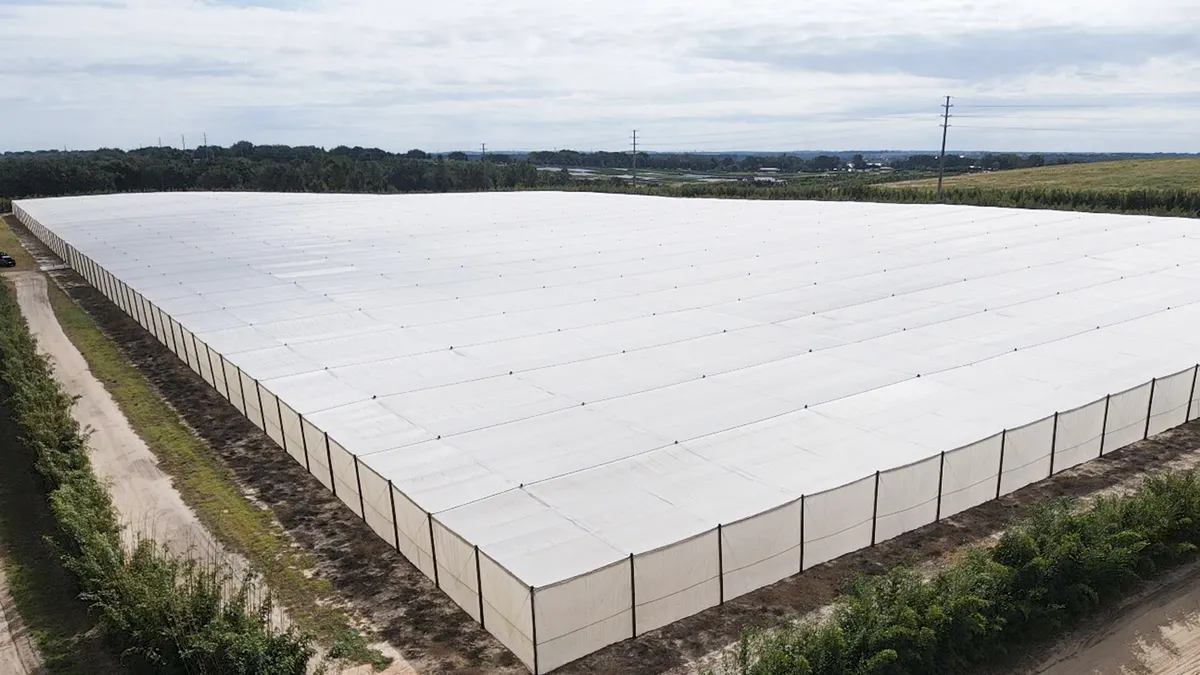
A form of microclimate agriculture, Citrus Under Protective Screen, or CUPS, surrounds groves with fine mesh to exclude the Asian citrus psyllid and other pests while allowing air and rain to pass through. Sunlight can pass through, too, and the screen serves to diffuse the light, scattering the sun’s rays for a more uniform distribution throughout the canopy.
Under those screens, growers are cultivating grapefruit with an eye toward the qualities that grocery shoppers can see and taste.
For retailers, fruit grown under CUPS converts an investment in the grove to an opportunity in the produce aisle. Appealing fruit and a distinctive growing story are more reasons to give Florida grapefruit a place in the seasonal assortment.
Protecting the grove by keeping the psyllid out
The Asian citrus psyllid was first detected in Florida in 1998. Citrus greening, also known as Huanglongbing, or HLB, was identified in the state in 2005. The insect carries the bacteria responsible for the disease, spreading it as it feeds on citrus trees.
A healthy grapefruit tree could live for 50 to 100 years. After exposure to citrus greening, many trees die within three to five years.
CUPS addresses the problem by preventing exposure.
Protective mesh surrounds and covers the growing area, establishing a barrier that helps keep psyllids from reaching the trees. The approach is preventive, protecting healthy trees from infection and giving them the opportunity to grow and produce to their full fruit potential.
That protective environment is supported by consistent care and monitoring. Growers maintain the screens, eliminate invasive weeds, manage access to the structure and monitor tree health. The process has become an ongoing part of operating many Florida citrus groves.
That work is yielding significant benefits. A healthier tree is better positioned to produce grapefruit that reaches the shopper in the most appealing condition, visually inviting and flavorful on the plate or in the cup.
What healthier trees can mean for the fruit
Appearance earns immediate attention in the produce display. Flavor gives shoppers a reason to choose the fruit again on their next visit.
The Florida Department of Citrus reports that growers using CUPS have observed strong internal color, balanced sweetness, lower acidity and attractive external appearance in their grapefruit. Some producers have even built premium grapefruit brands around fruit grown with CUPS.
For a produce buyer, those attributes offer a useful starting point for evaluating the fruit. How does it look when cut? What sizes and grades are available for display?
The answers connect the growing method to the product itself. Since Florida grapefruits are typically in season between November and March, it offers a unique opportunity throughout the winter.
An appealing exterior supports a prominent place in the produce department. Inside, colorful flesh and juicy flavor make Florida grapefruit a welcome addition not just to the breakfast table but to a wide variety of winter dishes and drinks, including holiday favorites, including winter citrus salads or festive cocktails and mocktails.
The screens are one part of delivering that experience. Variety selection, growing practices and harvest decisions also matter. Buyers can work with suppliers to understand the characteristics of the fruit available for their particular program.
Protection beyond the psyllid
The benefits of the screened environment can extend beyond its primary purpose.
CUPS structures can also reduce exposure to other insects . They also shield trees from harmful weather events, particularly strong winds. Inside the mesh, wind speeds are reduced by up to 75%, resulting in less wind-scarred fruit, lower evaporative loss and more stable canopies.
That does not make a screened grove fully immune to weather, but it helps growers manage conditions that can negatively impact the crop.
For retailers planning seasonal promotions, these efforts matter because crop protection and supply planning are intertwined. Growers’ ability to limit damage can help ensure a sufficient amount of fruit is available for the market. Buyers can then discuss expected harvest timing and volumes with their suppliers as plans take shape.
Expanding investment in Florida’s grapefruit future
The University of Florida Institute of Agriculture and Food Sciences reports that more than 2,000 planted acres of citrus are growing beneath CUPS in 2026, an increase from the previous year. That figure covers citrus broadly, rather than grapefruit alone, but it demonstrates the commercial investment behind the approach.
The structures allow for much higher planting densities without compromising on sun exposure, which also helps boost per-acre yields.
CUPS structures can also speed up photosynthesis and cell division. This helps trees grow at faster rates and can reduce the time needed to reach commercial production.
Yet to achieve all those benefits, CUPS requires substantial upfront investment followed by specialized management as growers continue to refine production practices.
For grocery buyers, that expanding footprint should instill confidence and provide reasons to maintain ongoing conversations with Florida citrus suppliers. Availability will vary by producer, depending on the maturity of its plantings and the season’s harvest. Early discussions can help buyers identify offerings that fit their assortment and promotional calendar.
Traditional growing practices remain part of that conversation. CUPS complements the work taking place across the full range of Florida’s citrus industry, where growers using different production methods all strive to protect their trees and deliver the highest-quality fruit.
Bring the growing story to the produce aisle
The idea behind CUPS is easy to explain: protective screens help keep a disease-spreading insect away from citrus trees.
That simplicity gives retailers a useful starting point in shopper communications. For a verified CUPS-grown offering, a display message or digital feature can convey how the fruit was grown, connecting it to the care that growers have bestowed upon the product they are considering.
Keep the fruit at the center. Pair the growing story with an inviting serving suggestion, a clear Florida origin message or an opportunity to sample the grapefruit in store.
Buyers can begin by asking suppliers about CUPS-grown grapefruit, expected seasonal volumes and noteworthy product characteristics. Those discussions can establish which growing claims and supporting visuals are appropriate for the fruit being sold.
Visit the Florida Department of Citrus website for more information on Florida grapefruit, including recipes, nutrition information and additional retail resources.