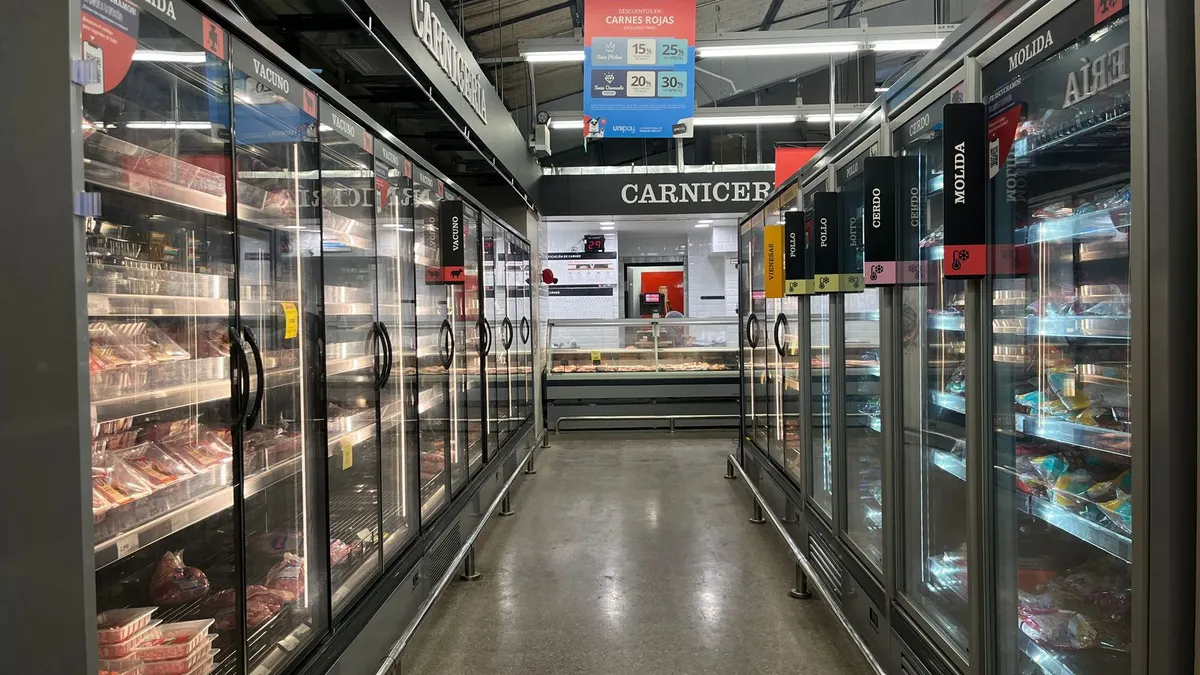

In every grocery store, the compressors, fans, and cases that keep product cold run around the clock, and the steady hum never stops. That hum has a price.
Refrigeration is typically the largest single draw on electricity in a grocery store, often estimated at 40 to 60 percent of total energy use. With utility rates climbing and margins tight, the refrigeration systems behind the sales floor are one of the few places where a grocer can cut operating costs without changing the shopping experience. No shopper has ever walked out because the compressor got more efficient.
The obstacle is that much of that equipment is old. Systems installed 15 or 20 years ago were designed to earlier efficiency standards, and many predate the industry's shift toward natural refrigerants. Replacing them is a major capital decision, so operators keep patching what they have, like a car that still runs but burns more fuel every year. Leasing offers another way to approach the problem.
Where the efficiency comes from
Gains in refrigeration come from several places at once: higher-efficiency compressors, better evaporator fans and motors, case designs that hold temperature with less air loss, lower-heat lighting, and controls that adjust to actual store conditions. Each improvement pays off on its own, and together they compound into real savings.
A recent store-level analysis shows how much. It compared the manufacturer-rated annual energy use of an existing refrigeration system against a like-for-like replacement with current natural-refrigerant equipment. Estimated consumption fell from about 746,700 kWh to about 675,100 kWh a year, a reduction of 9.6 percent.
The low-temperature side stood out. The new freezer lineup was efficient enough that one low-temperature compressor was no longer needed, and low-temperature compressor energy dropped by about a quarter. Those results also came before the rack itself was replaced. The analysis held the existing rack's performance constant, so further gains are expected from a new one.
Those figures come straight from manufacturer ratings, which leaves room for even more. But the direction is clear: newer equipment does the same job on less power.
Savings start when the equipment does
Energy savings do not accumulate on paper. They begin the day efficient equipment is running, and every month an older system stays in service is a month of savings that never comes back.
In the analysis above, a 71,700 kWh reduction works out to roughly 6,000 kWh a month. At $0.135 per kWh, the rate used in the study, that is about $800 a month, or just under $10,000 a year for a single store. That figure assumed no increase in electricity prices. When the cost model applied a 6 percent annual escalation, the savings grew each year, and across a ten-year term the gap between old and new widened considerably.
Energy is also only part of the picture. The same store was spending an average of $90,000 a year on maintenance. Aging systems tend to push that figure higher, and older refrigerants leaving circulation can make servicing older systems more expensive and harder to schedule. Rising refrigerant costs compound the problem. As older refrigerants age out of circulation, they become more expensive to obtain, so every leak and recharge costs more, so aging systems that already need frequent attention add disproportionately to maintenance spend. Stores that stand still are penalized twice: once by higher service bills, and again by the energy savings they are not capturing.
Waiting does not hold costs steady. It usually adds to them.
New refrigerant management and reporting rules add a compliance burden of their own, estimated at $80,000 per year per store. The sooner a store exits the systems that hold it liable to that reporting, the sooner that bill shrinks.
Removing the capital barrier
Few grocers doubt that newer equipment is more efficient. The harder question is how to make the move without stalling other priorities. A full refrigeration replacement can be a major investment for even a single store, compete with remodels and new locations for the same capital, and require long lead times.
Leasing changes the structure of that decision. Instead of a large upfront purchase, the retailer pays a fixed monthly rate that can cover the equipment, the rack, maintenance, and monitoring. In the cost model behind this analysis, the lease rate included all of these, which made monthly spending predictable and kept capital available for other priorities.
Because the efficiency gains start immediately, they offset part of that monthly cost from the first year rather than after a payback period. Available rebates and incentives can still be applied on top of that, lowering a cost profile the as-a-service model has already reduced.
Connected equipment adds another layer. Lowe Rental units are monitored remotely over a cellular connection that needs no store Wi-Fi, so performance can be tracked and adjusted without a technician visit. Small problems, such as a defrost cycle running too long or a compressor working harder than it should, show up in the data before they show up on the utility bill.
When a long-term lease is not the route
If a long-term lease isn't an option right now, there are still ways to keep a project moving. During remodels and renovations, Lowe Rental can help in the meantime. Temporary refrigerated cases and walk-ins keep product merchandised and food safe while existing fixtures are pulled out and new ones are installed, so a store can stay open and sales can continue through the work.
That flexibility also helps with timing. When new equipment is purchased outright, a lease bridge can cover delays in delivery or installation, which keeps an energy upgrade from waiting on the rest of the project schedule.
A practical place to start
Grocers weighing an equipment change can begin with a baseline. Compare the rated energy use of the current refrigeration systems against current models, review the last few years of reactive service spending, and model electricity costs with an annual increase instead of a flat rate. Those three numbers show what waiting costs.
The savings from newer refrigeration are real, but they are also time-sensitive. The sooner the equipment is in place, the sooner they start, and the sooner the reporting burden tied to older systems begins to shrink.